Sourcing Lab Drying and Temperature-Control Equipment Online
Finding a reliable lab drying and temperature control equipment supplier online starts with a clear purchasing brief. Drying equipment and a refrigeration and heating cycle device address different process needs, but their documentation, delivery arrangements, and support requirements can be planned together.
Start with the workflow, not just the product name
A coordinated purchase does not mean choosing two machines from the same catalog and assuming they work together. It means defining what each unit must accomplish, which utilities the laboratory can provide, and what information is needed before an order is approved. Drying requirements should be described separately from the requirements for an external temperature-control circuit.
For drying, record the material, batch size, intended operating temperature, desired endpoint, and any restrictions associated with vapors or residues. For temperature control, record the connected equipment, target operating temperatures, thermal load, circulation requirements, and available electrical supply. If the equipment serves separate stages of a workflow, explain those stages rather than implying a direct connection.
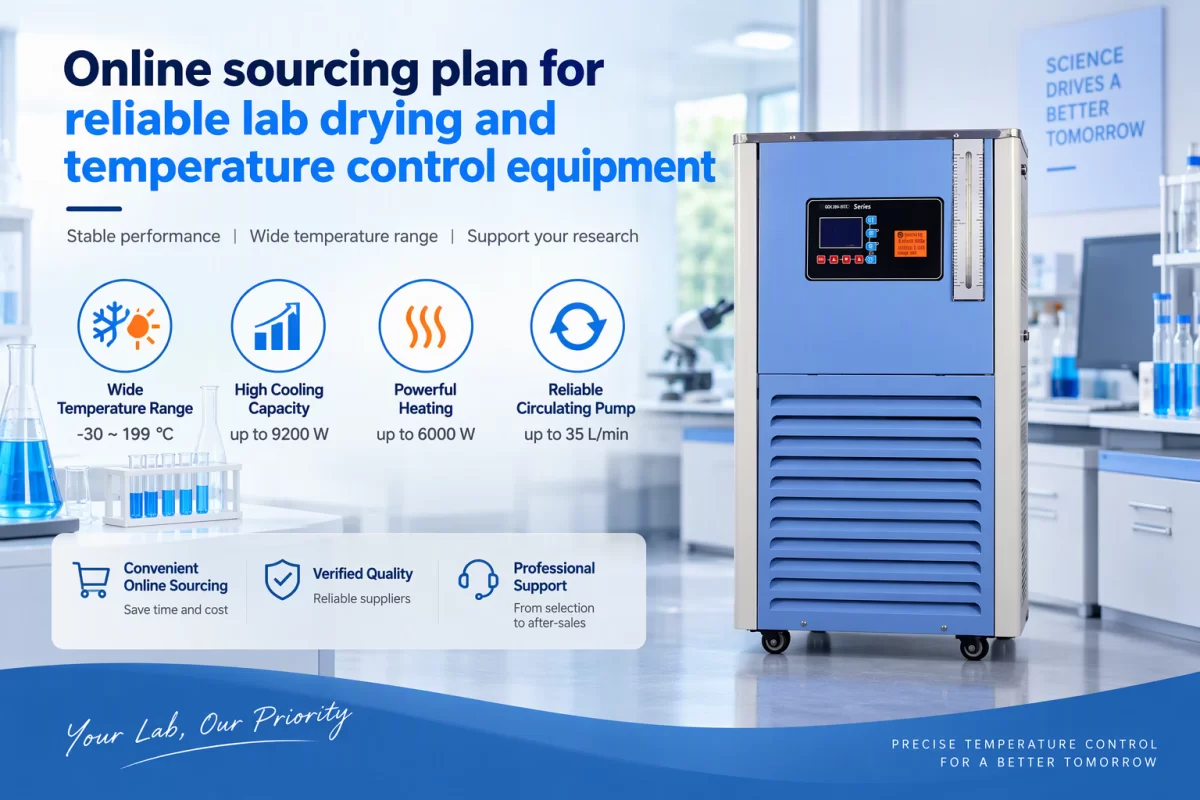
Can drying and temperature-control equipment be sourced in one purchasing project?
I recommend treating them as one procurement project with two distinct technical schedules. This makes it easier to coordinate documentation and delivery while keeping each unit’s operating requirements, accessories, and acceptance criteria clearly separated.
Drying equipment: define the chamber and accessory scope
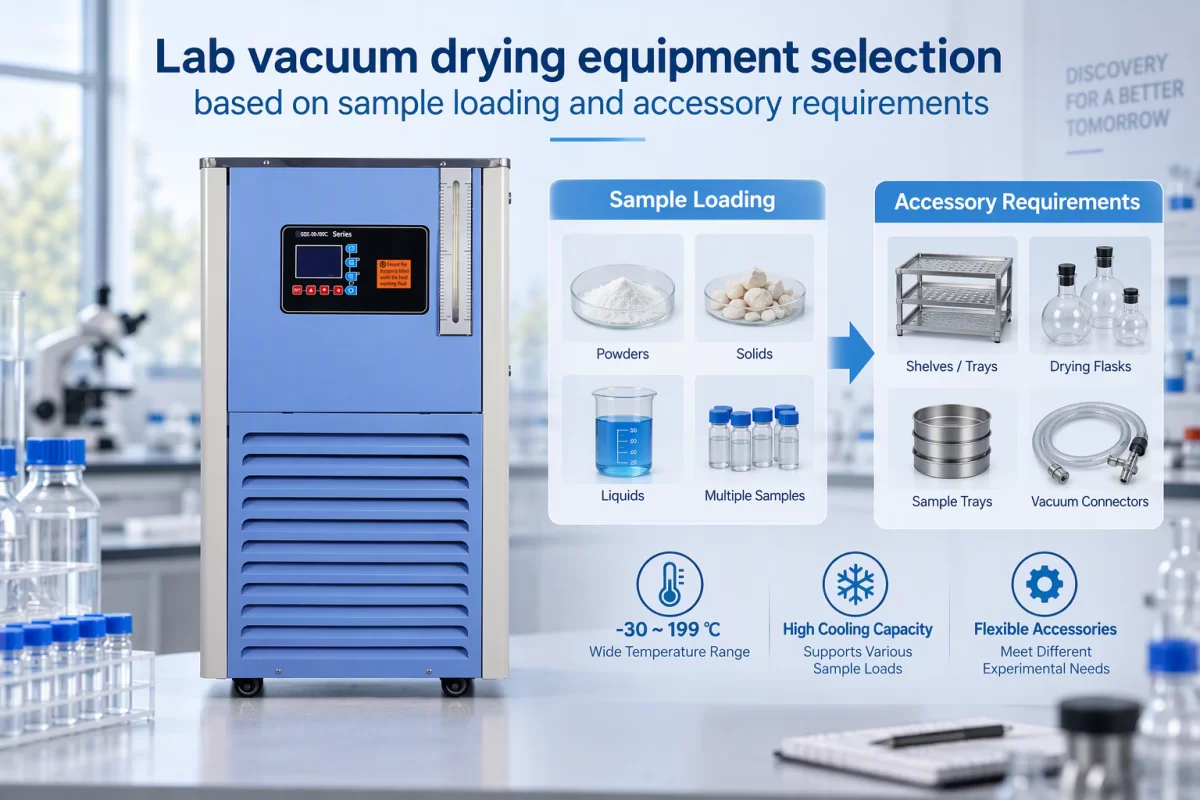
The Lab Vacuum Drying Oven product page is a relevant starting point for the drying portion of an inquiry. Build the request around the material and process rather than selecting a chamber solely by its nominal size. Sample containers, shelf spacing, loading arrangements, and cleaning access can all affect the suitability of a proposed configuration.
Ask for a model-specific specification sheet and a written accessory list. The quotation should distinguish the oven from any proposed vacuum pump, tubing, fittings, traps, or other auxiliary items. Where materials release vapors, describe their composition and request an application review covering the proposed equipment and handling arrangements. Do not assume a standard configuration is appropriate for every material.
- Loading requirements: State the quantity, container dimensions, and intended batch arrangement.
- Process requirements: Describe the desired drying conditions and how the endpoint will be assessed.
- Documentation: Request operating instructions, utility requirements, and the accessory schedule for the quoted model.
- Installation scope: Identify who will provide any required vacuum connections and laboratory-side services.
Temperature-control equipment: compare named models
A refrigeration and heating cycle device should be selected against the intended operating envelope and the connected system. The GDX models below have different listed temperature ranges, heating powers, circulation flows, and electrical requirements. Keeping these specifications together by model helps prevent a purchasing decision based on a single attractive number.
| Model | Temperature range (°C) | Heating power (W) | Total power (W) | Circulation flow (L/min) | Voltage (V) |
|---|---|---|---|---|---|
| GDX-5/10 | −9 to 199 | 1,000 | 1,600 | 20 | 220 |
| GDX-5/30 | −30 to 199 | 1,000 | 1,800 | 25 | 220 |
| GDX-10/30 | −30 to 199 | 2,000 | 2,900 | 20 | 220 |
| GDX-20/30 | −30 to 199 | 3,000 | 4,300 | 25 | 220 |
| GDX-30/30 | −30 to 199 | 4,000 | 6,400 | 25 | 220 |
| GDX-50/80 | −80 to 199 | 6,000 | 16,400 | 35 | 380 |
| GDX-100/60 | −60 to 199 | 9,000 | 22,000 | 35 | 380 |
These temperature ranges describe the listed models; they are not a promise that a connected process will reach every temperature under any load. Likewise, a listed circulation flow should not be treated as a guaranteed flow through an arbitrary hose-and-vessel arrangement. Selection should account for the working fluid, circuit resistance, heat load, and operating conditions.
For another temperature-control product inquiry, the GDSZ Series Refrigeration And Heating Cycle Device page provides a relevant destination. Keep the requested series and model explicit: the GDX specifications in this article apply to the named GDX models, not to GDSZ equipment.
Is a wider temperature range enough to justify a larger temperature-control unit?
I would compare the required operating temperature, process heat load, circulation circuit, and electrical supply together. A wider range alone does not establish suitability, and a higher total power rating also changes the laboratory’s utility planning.
Coordinate documentation, delivery, and installation
Online equipment procurement becomes more manageable when the commercial offer describes what will actually arrive. Request separate line items for the drying unit, temperature-control unit, accessories, documentation, and any proposed services. Each line should identify the model and configuration so that purchasing, receiving, and laboratory staff work from the same equipment list.
Ask for the expected dispatch schedule, shipping terms, packaging details, and shipment dimensions and weights for the selected equipment. If both units are ordered together, establish whether they will ship together or separately. Delivery planning should also address building access, movement to the installation location, and responsibility for unpacking and positioning.
Before installation, obtain the electrical and other utility requirements for each selected configuration. The GDX table shows a meaningful distinction between models listed at 220 V and those listed at 380 V; the laboratory should review the complete connection requirements before purchase. For the drying package, include any auxiliary equipment in that same utility review.
Assess online supplier reliability through defined support
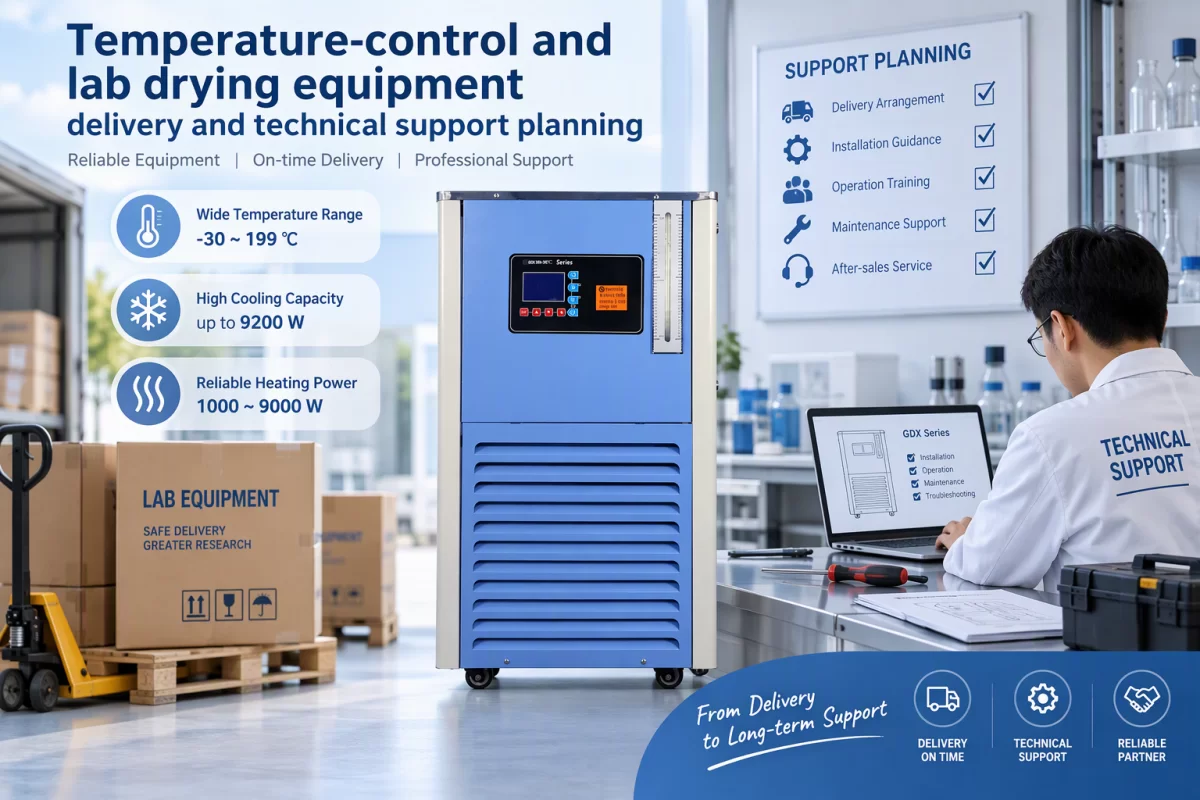
A reliable online supplier relationship depends on clear responsibilities as well as product selection. Ask what operating guidance, startup assistance, troubleshooting support, and spare-parts information are included in the offer. Establish the support contact method, the information required for a service request, and the written warranty terms rather than assuming a particular response time or coverage.
What should a useful equipment quotation include beyond the machine price?
I look for the exact model, included accessories, utility requirements, delivery terms, documentation, warranty conditions, and the scope of startup support. An itemized quotation makes comparisons more meaningful and helps reveal laboratory-side costs before the order is placed.
Request a configuration-specific quotation for the complete purchasing package. Keep equipment, accessories, shipping, and optional services distinguishable so that the budget reflects the intended installation. If the laboratory requires particular compliance documentation or acceptance records, include those requirements in the inquiry and ask for the applicable documents for the offered configuration.
Build a complete drying and temperature-control inquiry
Sourcing from a reliable lab drying and temperature control equipment supplier online is most effective when the request connects the process, equipment configuration, delivery plan, and support expectations. Start with the drying material and working batch, then define the temperature-control duty and available utilities. Use model-specific specifications to narrow the selection and an itemized quotation to establish the purchasing scope.
For an inquiry through KD Instrument, prepare the material description, batch requirements, target operating conditions, connected equipment details, destination, and required accessories. This gives the supplier a practical basis for proposing a drying package and a refrigeration and heating cycle device suited to the intended workflow.