Vacuum Drying Heat-Sensitive Pharma Samples: Recording a Trial Method
Selecting a lab vacuum drying oven for heat-sensitive pharmaceutical samples is only one part of a useful drying trial. The method record must also explain what was loaded, which temperature and pressure conditions were applied, how elapsed time was defined, and how samples were collected and assessed.
A vacuum drying trial is not a universal pharmaceutical drying recipe. Actual conditions require sample-specific validation, including evidence that the proposed exposure and drying endpoint are acceptable for the material. The following record structure helps make individual trials understandable and comparable without assuming that one method suits every drug substance or formulation.
1. Record loading before the drying cycle begins
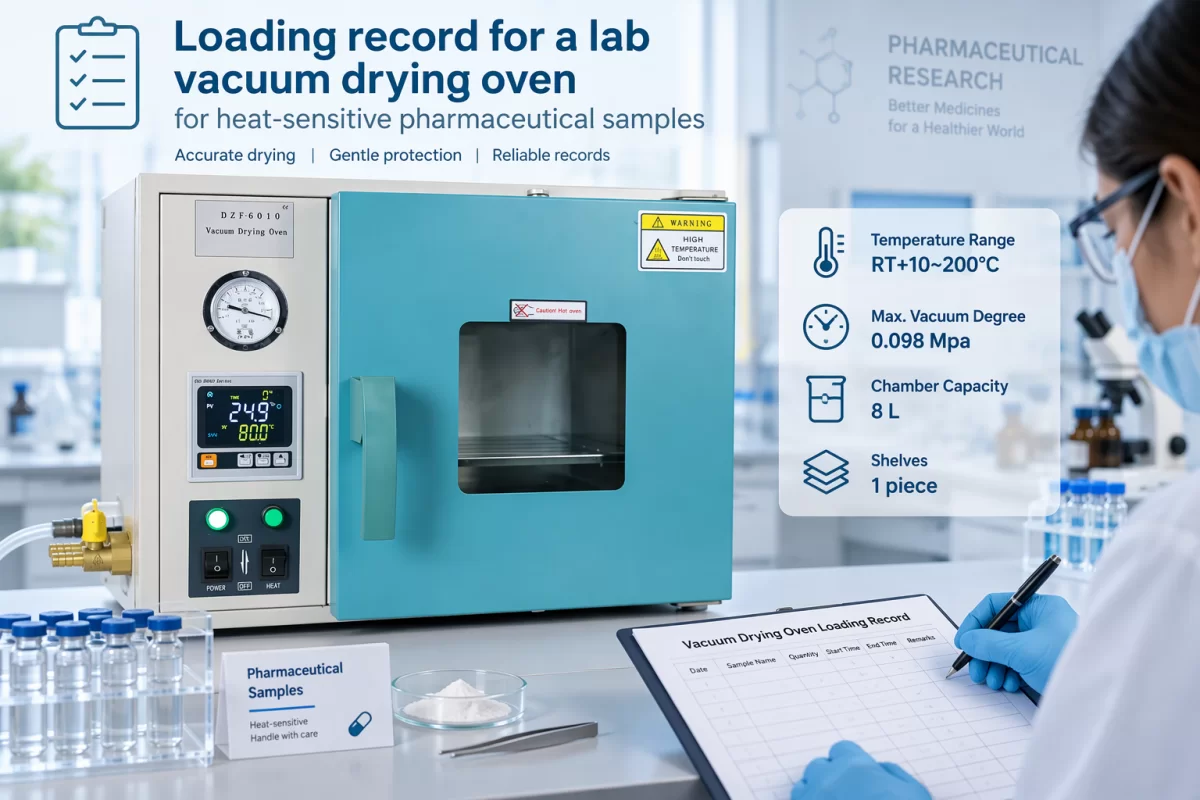
Loading details establish the physical starting point of the trial. Two runs with the same oven settings can still produce different results when the sample mass, layer thickness, container geometry, or shelf position changes. Record the load as it was actually arranged, rather than describing it simply as “one batch.”
- Sample identity: material name or code, batch identifier, trial identifier, and relevant pretreatment or storage history.
- Initial condition: initial mass, physical form, and starting moisture or solvent result when measured, together with the analytical method.
- Container details: container identifier, material, dimensions, empty mass, and whether it was open or covered.
- Load geometry: mass per container, exposed area, measured layer thickness, and any visible differences in distribution.
- Chamber arrangement: shelf position, container count, spacing, and a simple load map or photograph reference.
Why does layer thickness belong in a pharmaceutical drying record?
I include layer thickness because a change in sample depth can change the path moisture or solvent must travel before leaving the material. Recording it helps distinguish a loading effect from a temperature or pressure effect when comparing trial results.
Also identify the oven and the vacuum equipment used. Equipment identifiers connect the trial to the applicable operating procedure, measurement records, and installed configuration. For volatile or hazardous materials, use an approved risk assessment and a suitable vapor-handling arrangement before starting the trial.
2. Separate temperature and pressure targets from observations
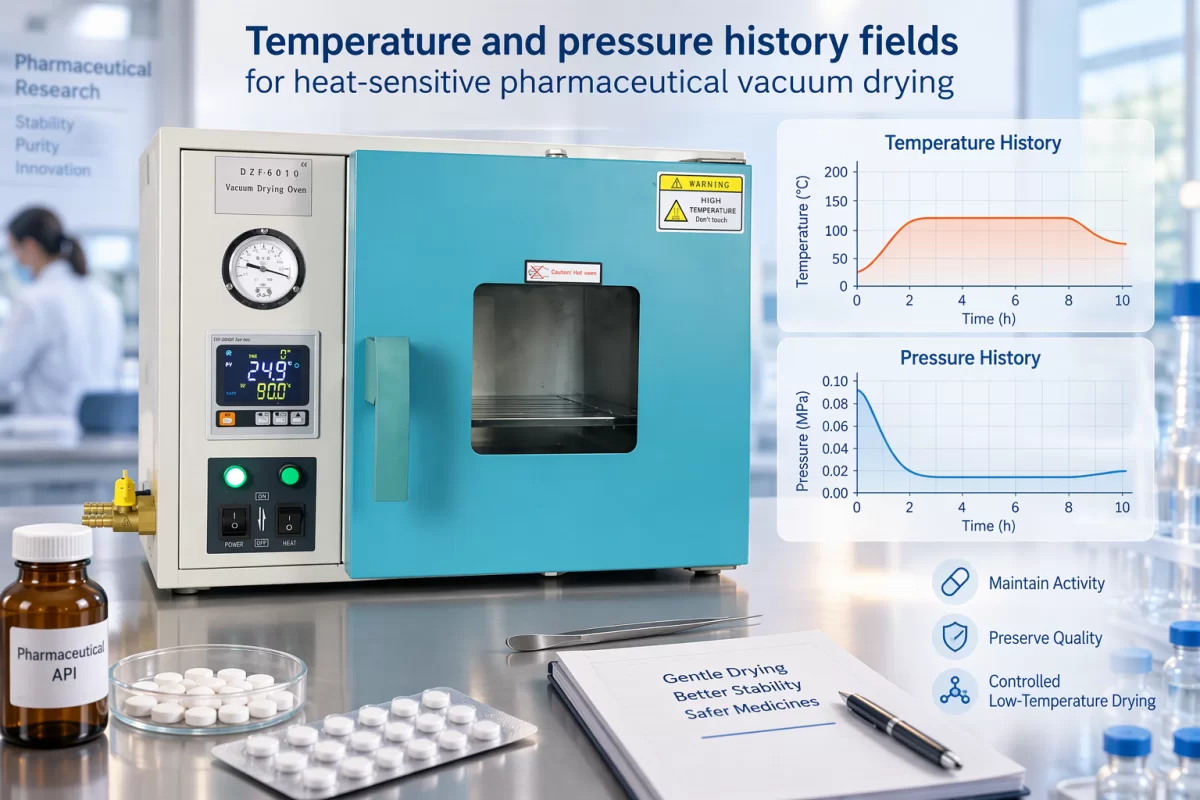
Use separate fields for planned settings and observed readings. A temperature setpoint describes the controller instruction; it does not automatically establish the temperature throughout the sample. Where the trial uses additional temperature measurements, identify the sensor, its location, and the measurement interval. Record sample temperature only when it is actually measured.
The pressure record should state the unit and reference convention, such as absolute pressure or gauge pressure. A number described only as “vacuum” is difficult to interpret. Keep the same pressure convention across a comparison series, and record the instrument identifier and measurement location.
- Temperature fields: planned setpoint, observed chamber reading, measurement timestamp, sensor location, and any changes during the trial.
- Pressure fields: planned target, observed reading, unit, absolute or gauge convention, and evacuation or venting events.
- Transition fields: start and end of each stage, sequence of heating and evacuation, and observed deviations from the planned method.
- Observation fields: foaming, splashing, discoloration, crust formation, or other visible changes, linked to the time of observation.
Does a lower pressure always make a heat-sensitive sample safer to dry?
I would not treat lower pressure as a universal safeguard. Reduced pressure can support evaporation at lower temperatures, but sample behavior, thermal exposure, and equipment compatibility still matter. The record should show what happened under the selected conditions and link that exposure to the sample’s analytical results.
3. Define time zero, hold periods, and interruptions
A single “drying time” entry can hide important differences between trials. Define whether time zero means loading completion, heater activation, evacuation start, or the beginning of an established hold condition. Then record the other events separately. This makes it possible to distinguish total exposure from the period spent at the intended trial conditions.
Where the method includes staged conditions, give each stage its own start time, end time, temperature target, and pressure target. Record sampling interruptions, loss of vacuum, venting, and recovery periods. Do not silently count interrupted time as an uninterrupted hold.
| Record block | Essential entries | Unit or convention |
|---|---|---|
| Loading | Initial mass, container ID, layer thickness, shelf position | Declared mass and length units |
| Temperature | Setpoint, observed readings, sensor location | °C; timestamp for each reading |
| Pressure | Target, observed readings, instrument ID | Declared pressure unit; absolute or gauge |
| Time | Time-zero definition, stage boundaries, interruptions | Clock time and elapsed min or h |
| Sampling | Sample ID, location, amount, handling, analytical result | Declared mass and result units; method reference |
4. Link sampling events to the drying endpoint
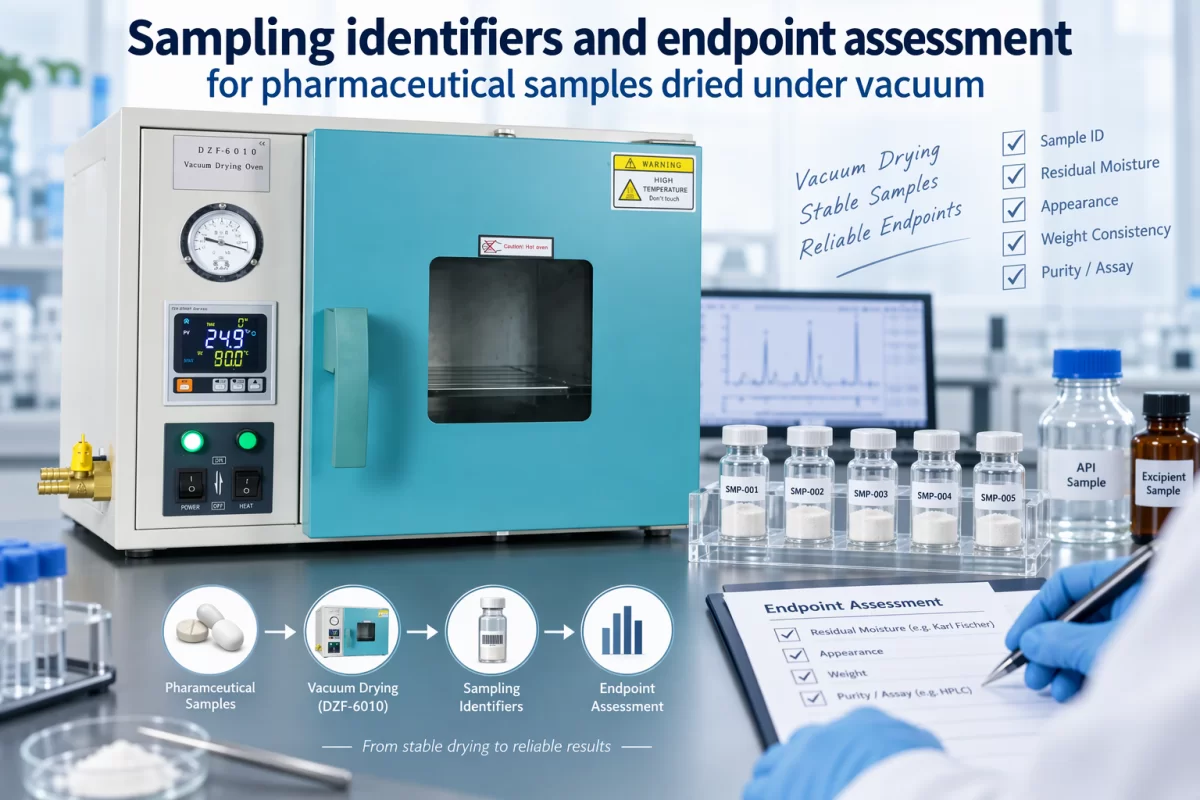
Define the sampling plan before the run. Identify the intended collection times or decision points, sampling locations, required sample amounts, and tests. Depending on the material and trial objective, assessment may include moisture, residual solvent, assay, impurities, or a relevant physical attribute. The acceptance criteria and analytical methods must come from the sample’s development or validation plan, not from the oven specification.
Each collected sample needs an identifier that connects it to the trial, container, location, and collection time. Record how it was cooled, transferred, sealed, and stored before analysis. Exposure during handling can affect a result, particularly where a material takes up moisture or retains volatile components.
Is stable mass enough to establish a pharmaceutical drying endpoint?
I use stable mass only when it is an appropriate criterion within the sample-specific plan. It does not, by itself, establish acceptable residual solvent, moisture, assay, or impurity levels. I would link the endpoint decision to the required analytical evidence and record the basis for stopping the trial.
If sampling requires opening the chamber, record the venting method, opening duration, and return to trial conditions. Document the final recovered mass and distinguish analytical samples removed during the trial from other material losses when calculating recovery.
Choosing a lab vacuum drying oven for a sample-specific trial
The DZF Lab Vacuum Drying Oven product page provides a relevant starting point for an equipment inquiry. Match the chamber to the intended containers and loading arrangement rather than choosing by nominal volume alone. The selected DZF model data below can support this initial comparison; they are equipment specifications, not pharmaceutical drying conditions.
| Model | Chamber capacity (L) | Inner W × D × H (mm) | Input power (W) |
|---|---|---|---|
| DZF-6010 | 8 | 200 × 200 × 200 | 400 |
| DZF-6020 | 25 | 300 × 300 × 270 | 700 |
| DZF-6050 | 55 | 400 × 400 × 345 | 1400 |
| DZF-6090 | 90 | 450 × 450 × 450 | 2000 |
These four models have a specified 304 stainless steel liner. Chamber dimensions help screen container fit, but the trial plan must also address spacing, handling access, and the intended load. Neither chamber capacity nor input power establishes a validated drying rate or a safe exposure limit for a pharmaceutical sample.
Our company reference price: US$610. This is a company-level reference, not a quotation for a specific model or complete vacuum drying installation. The actual quotation depends on configuration and the inquiry result.
For an equipment proposal and quotation, provide the material description, working batch size, container dimensions, proposed operating conditions, and vacuum-system or vapor-handling requirements.
Make the trial record the basis for the next decision
A lab vacuum drying oven for heat-sensitive pharmaceutical samples should be selected alongside a clear, sample-specific recording method. Keep loading geometry, temperature and pressure histories, timing definitions, and sampling evidence connected in one trial record.
This approach supports meaningful comparisons and informed equipment inquiries without promising universal pharmaceutical suitability. Establish the actual drying conditions and endpoint through validation for the material, and retain enough detail to explain both the result and the exposure that produced it.