Overview
Under the set constant temperature conditions, the glass reactor system is stirred and reacted in a closed container under normal or negative pressure, and can control the evaporation and reflux of the reaction solution. Generally, there are single-layer glass reactor systems and double-layer glass reactor systems.
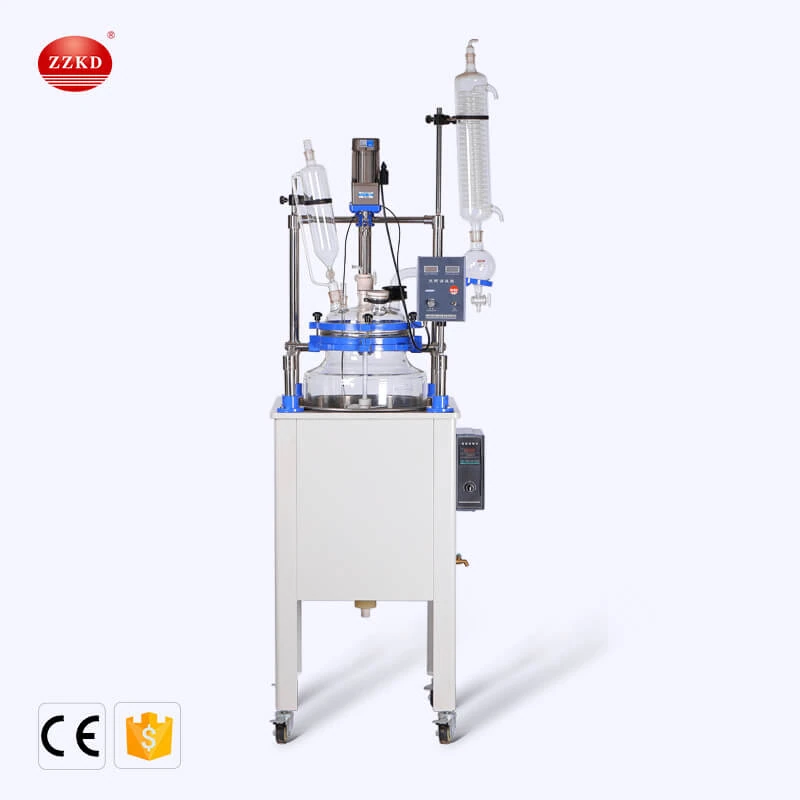
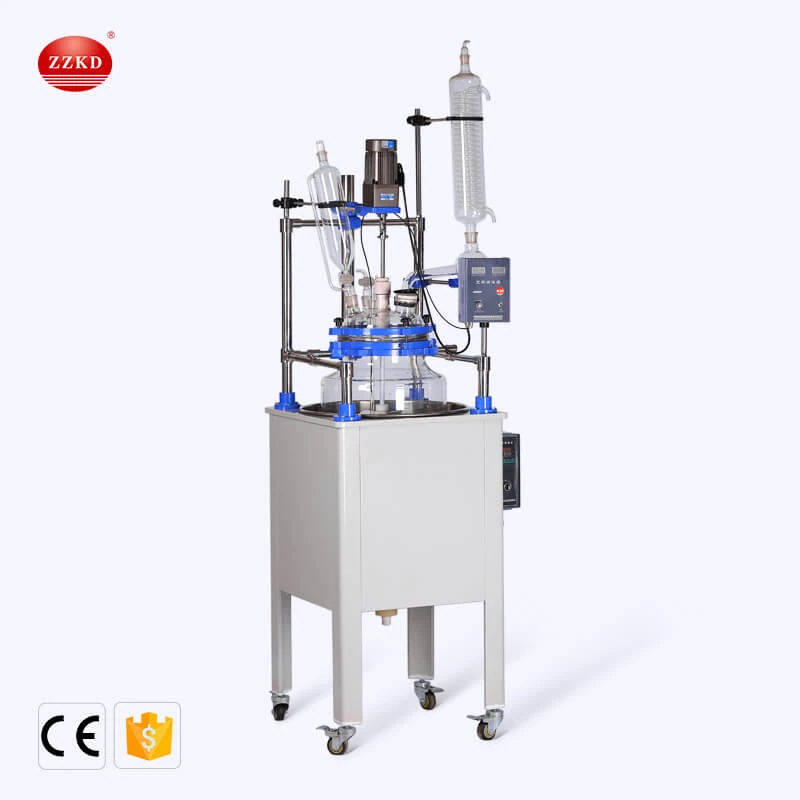
The single-layer glass reactor system can be used for high temperature reaction (the maximum temperature can reach 300 ℃); it can also be evacuated to perform negative pressure reaction. The single-layer glass reactor system can carry out various solvent synthesis reactions under constant temperature conditions. The reaction part of the instrument is a controllable and fully sealed structure, which can continuously inhale various liquids and gases by using negative pressure, and can also perform reflux or distillation at different temperatures. .
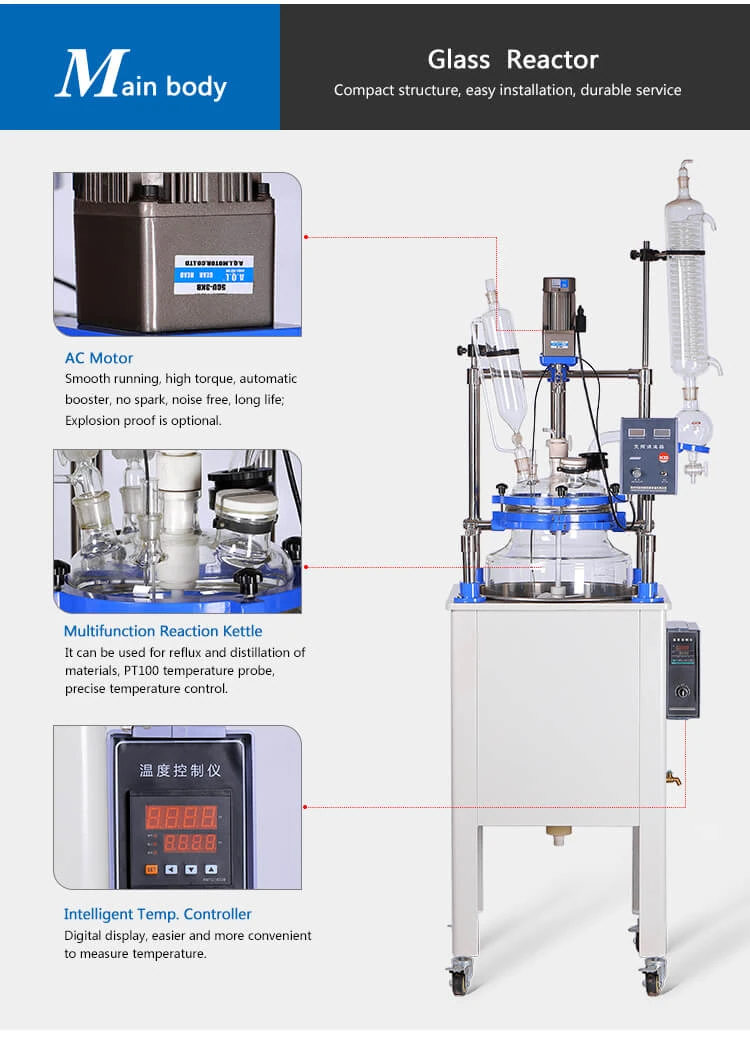
Working principle of single layer glass reactor system:
The reactor body is directly heated by the silver film heating sheet, so that the materials in the reactor can be heated at a constant temperature, and stirring can be provided. The materials are reacted in the reactor, and the evaporation and reflux of the reaction solution can be controlled. After the reaction is completed, the lid and the motor part of the single-layer glass reactor system are mechanically lifted (electric lift is optional), and the kettle body can be rotated 360 degrees to facilitate the dumping and discharging of materials, and the operation is extremely convenient. It is an ideal equipment for modern chemical small sample, medium sample experiment, biopharmaceutical and new material synthesis.
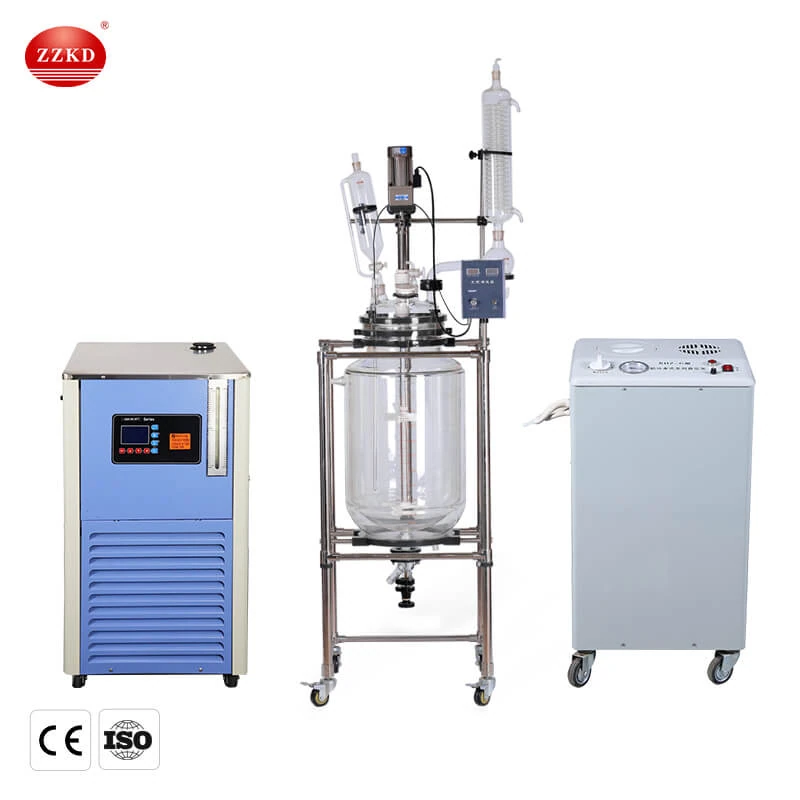
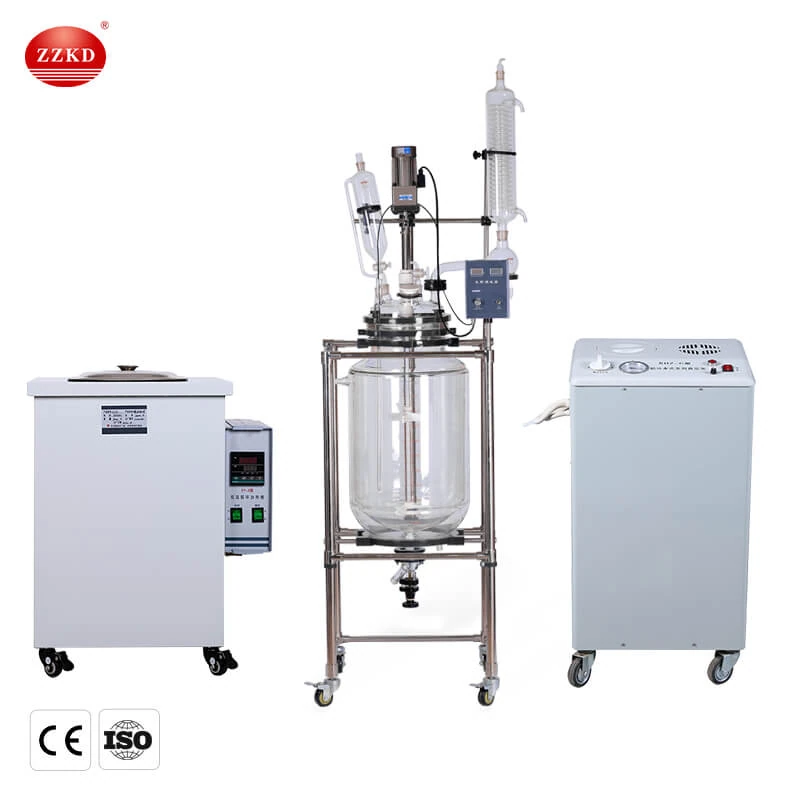
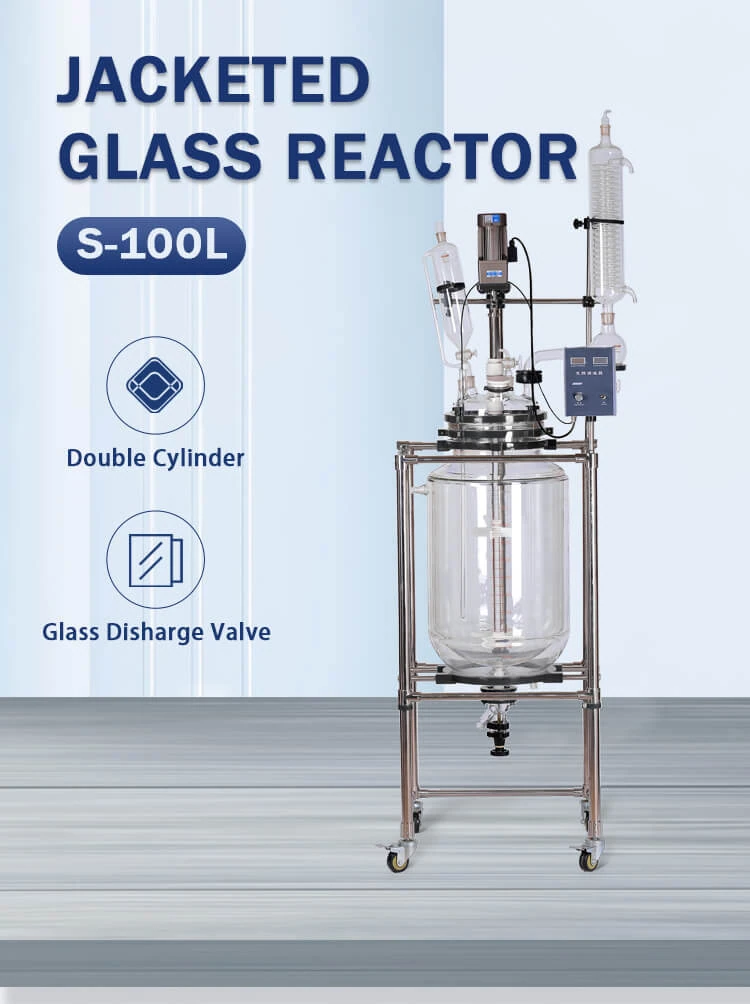
The interlayer of the jacketed glass reactor system can be used for high-temperature reactions (the maximum temperature can reach 300°C), and it can also be used for low-temperature reactions (the temperature can reach -80°C); the double-layer glass reactor can be vacuumed for negative pressure reactions. The double-layer glass reactor can carry out stirring reaction at room temperature, high temperature reaction, negative pressure vacuum distillation reaction, separation and extraction, distillation reflux reaction, and concentration reaction.
The working principle of the jacketed glass reactor system:
The jacketed glass reactor system is designed with double-layer glass. The reaction solvent can be placed in the inner layer of the glass for stirring reaction, and different cold and heat sources (refrigerated liquid, hot water or hot oil) can be connected to the interlayer for cyclic heating or cooling reaction. . Through the interlayer of the jacketed reactor a constant temperature (high or low temperature) hot solution medium or cooling medium is injected to heat or cool the materials in the reaction kettle at a constant temperature. At the same time, stirring reaction can be carried out under normal pressure or negative pressure according to the requirements of use. The materials are reacted in the reactor, and the evaporation and reflux of the reaction solution can be controlled. After the reaction, the materials can be released from the outlet at the bottom of the reactor, which is very convenient to operate.
Differences between single and jacketed glass reactor systems:
The single-layer and jacketed glass reactor system can complete high temperature, low temperature, and vacuum reaction experiments at the same time. It is easy to operate, the reaction process is clear at a glance, and it is convenient to control the reaction process. It is an ideal test and production equipment for modern synthetic chemicals, biology, and new material preparation.
The jacketed glass reactor system is designed with double-layer glass, and the inner layer puts the reaction solvent, which can be used for stirring reaction. The interlayer of the glass reactor can be connected to different cold and heat sources (refrigerated liquid, water or hot oil) for cyclic heating or cooling. reaction. The jacketed glass reactor system is in a sealed glass reactor under the set constant temperature condition, which can be stirred and reacted under normal pressure or negative pressure according to the requirements of use, and can be used for reflux and distillation of the reaction solution. Jacketed glass reactor It is an ideal equipment for the synthesis of modern fine chemicals, biology and new materials.
The jacketed glass reactor system is based on a multifunctional single reactor. And after years of improvement, it has achieved convenient high and low temperature control, rapid heating, cooling requirements for the experimental process, modern laboratories, chemistry and other requirements.
In terms of difference, the kettle body of the jacketedglass reactor system is divided into two layers, and the middle part between the outer layer and the inner layer is called the interlayer. The heating of the double-layer glass reactor system is done through the interlayer.
Specifically, the jacketed glass reactor system is connected to the interlayer of the circulating oil bath to pass through the heat conduction oil, and the material can be heated by plugging in the power supply; the same is true for low-temperature reactions, only need to replace the solvent in the interlayer with Ethanol will do. The interlayer can make the material heated evenly, and at the same time, it is convenient to directly observe the stirring reaction process of the material. Through the interlayer, the double-layer glass reactor system can not only complete high-temperature experiments, but also complete low-temperature reactions. The single-layer glass reactor system has its own heating device and does not need to use the interlayer to complete the heating.
Features
Features of the glass reactor system:
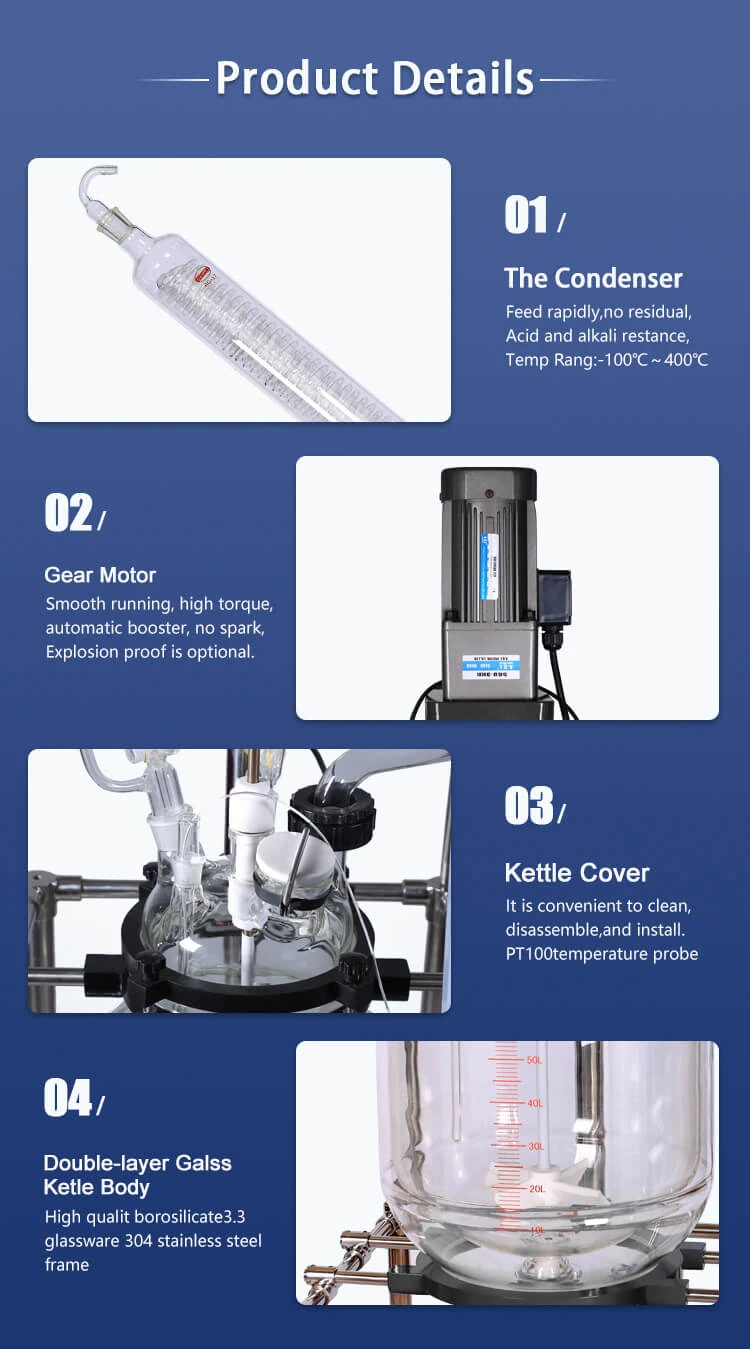
1. GG17 high-borosilicate glass with nice physical-chemical properties; experiment temperature -100 to 400 degree C; Resistant to strong acidic properties of materials; only touching with glass parts & PTFE, no cross-contamination. Precision Mechanical seal stirring to keep high vacuum degree.
2. Glass(PTFE)discharge valve, no-dead angle mixing, fast no residue discharge.Frequency control speed gear motor, smooth running,high torque, automatic booster , no spark, noise free, long life.
3. SUS frame and cast aluminum material kettle body support, simple as well as strong; stable structure. Circulating water/oil bath, heating mantle can supply the heating origin; Cooling mode machine:cool chiller, convenient and practical
4.Scientific & innovative structure, practical, strong. Explosion-proof is optional.
How to maintain the glass reactor system:
1. Check the instrument carefully before use, whether the glass bottle is damaged, whether the interfaces are consistent, and handle with care.
2. Wipe each interface with a soft cloth (you can replace it with a napkin), and then apply a little vacuum grease. (Vacuum grease must be covered after use to prevent lime sand from entering.)
3. The interfaces of the glass reactor system should not be tightened too tightly, and should be loosened regularly to avoid the connectors being seized by long-term locking.
4. Turn on the power switch first, and then let the machine run from slow to fast. When stopping, make the machine stop, and then turn off the switch.
5. The PTFE switches everywhere should not be over-tightened, as it is easy to damage the glass.
6. After each use, you must use a soft cloth to wipe off all kinds of oil stains, stains, and solvent residues left on the surface of the machine, and keep it clean.
7. Unscrew each PTFE switch after stopping the machine, and the PTFE piston will be deformed if it is still in the working state for a long time.
8. Clean the sealing ring regularly. The method is: take off the sealing ring, check whether there is dirt on the shaft, wipe it off with a soft cloth, apply a little vacuum grease, and reinstall it to keep the shaft and the sealing ring smooth.
9. The electrical part must not enter the water, and it is strictly forbidden to be damp.
10. The authentic accessories of the original factory must be purchased. Random use of other accessories will cause fatal damage to the machine.
11. When doing any repair or inspection on the glass reactor system, be sure to cut off the power supply and water source first.
Specifications
Technical Parameter
| Model | F-100L |
| Voltage(V) | AC220V |
| Mixingpower(W) | GM250W1/3 |
| Speed | 60~600rpm |
| Torque | 30000g/cm |
| Capacity | 100L |
| Heatingpower | 7.5KW |
| Temperatureusingrange | 0-250℃ |
Tips:
1.Voltage 110V or 380V is available.
2.Stirring power, torgue, refrigeration components can be customized.
3.Cusomized configuration is available.