Buying a Mini Rotovap for Lab Concentration: Planning the Receiving Side
When considering where to buy a mini rotary evaporator for laboratory concentration, start with what happens after the solvent leaves the rotating flask. The receiving flask, condenser arrangement, and cooling supply determine how collected distillate is handled—and how easily the valuable concentrate can be retained without unnecessary transfers.
A compact rotovap purchase should therefore be planned as a complete workflow, not simply as a choice of evaporating flask size. Define the solvent, working batch, desired endpoint, and available laboratory services before requesting a configuration.
Mini rotary evaporator buying starts with the receiving side
In a typical concentration task, solvent evaporates from the rotating flask, passes into the condenser, and collects as liquid in the receiving flask. The concentrated sample normally remains in the evaporating flask. These two destinations serve different purposes: one retains the material of interest, while the other collects the removed solvent.
Before choosing equipment, decide whether the distillate will be discarded, retained for analysis, or evaluated for reuse. Mixed-solvent distillate should not automatically be treated as purified solvent. Its composition and suitability depend on the feed, operating conditions, and any required testing.
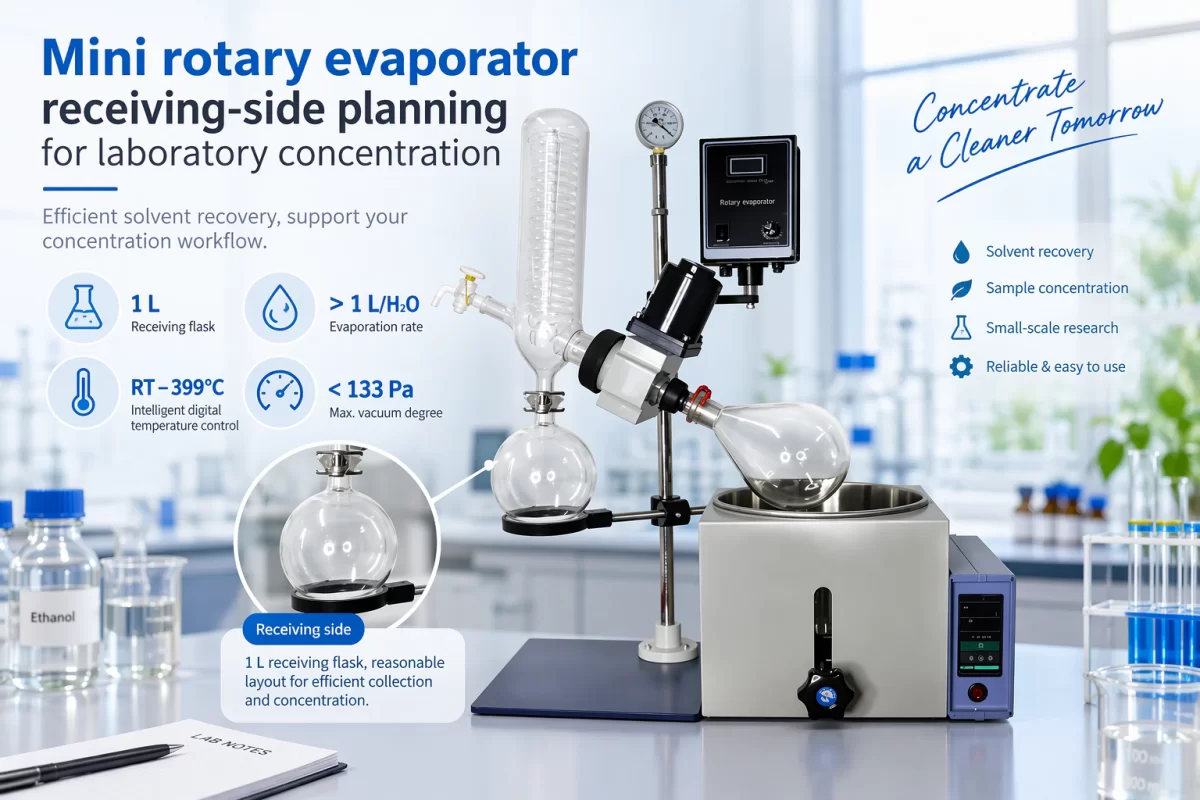
Look beyond the receiver's nominal capacity. Its position should allow the operator to observe liquid accumulation, support the glassware, and remove the vessel using the equipment's prescribed shutdown procedure. A receiving flask that fits physically but is awkward to access can complicate routine sample changes.
Compare flask capacities without confusing them with working volume
The RE-201D, RE-301, and RE-501 offer different evaporating and receiving flask pairings. These capacities provide a useful starting point for comparing laboratory-scale options, but they do not establish a safe charge volume or a guaranteed throughput for a particular solvent.
| Model | Evaporating flask (L) | Receiving flask (L) |
|---|---|---|
| RE-201D | 2 | 1 |
| RE-301 | 3 | 2 |
| RE-501 | 5 | 3 |
Values describe the named flask capacities, not recommended operating fill levels or solvent-specific processing rates.
For a small-batch concentration inquiry, the 2L rotary evaporator product page is a relevant starting point. Include the required model and glassware in the inquiry so the proposed equipment can be evaluated against the intended work.
Batch size also includes frequency. Several small samples processed separately create different receiving-side needs from a single extended solvent-removal task. Provide the starting solution volume, approximate solvent quantity to remove, number of batches, and whether each batch requires its own distillate collection vessel.
Match the condenser layout to the solvent and cooling supply
The condenser must be considered together with the coolant source and vacuum equipment. Solvent volatility, vapor load, coolant temperature, and coolant flow all influence condensation. A low boiling point does not, by itself, establish which cooling arrangement will suit the task.
For volatile solvent work, describe the solvent or mixture and intended pressure conditions to the supplier. For aqueous concentration or less volatile solvents, describe the sample's thermal sensitivity and desired endpoint as well. These details help frame the equipment discussion without assuming that one operating recipe suits every material.
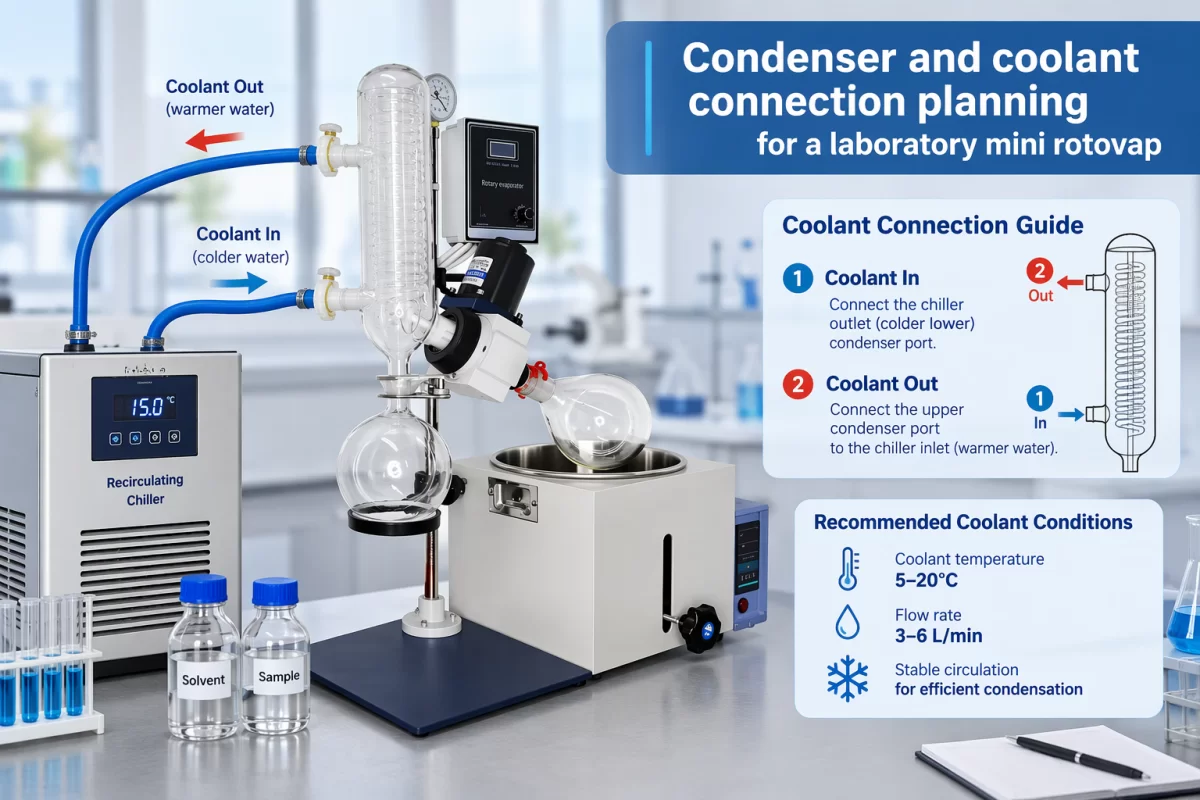
- Condenser clearance: Allow room for assembly, inspection, and cleaning without straining the glass connections.
- Coolant routing: Follow the specified inlet and outlet arrangement, support hoses, and avoid sharp bends.
- Vacuum protection: Assess whether a compatible trap is needed between the apparatus and pump for the intended solvent.
- Laboratory controls: Plan ventilation, waste handling, and solvent-compatible components using the laboratory's risk assessment and solvent safety data.
If the laboratory needs a dedicated cooling source, review the low-temperature cooling liquid circulating pump as part of the supporting-equipment inquiry. Selection should account for the required coolant conditions and heat load, rather than assuming that any circulating unit will suit the chosen rotovap.
Plan sample retention before the first concentration run
Successful concentration is not just solvent removal. The workflow must also preserve sample identity and permit recovery of the retained material. Label the evaporating flask and receiver separately, record the batch identifier, and define whether the endpoint is a smaller solution volume, a specified concentration, or another validated laboratory criterion.
Foaming or bumping can carry sample into the vapor path and receiver. The purchasing discussion should therefore include the sample's tendency to foam, any suspended solids, and the availability of suitable bump-protection accessories. An accessory should be evaluated for compatibility and cleaning access; it should not be assumed to eliminate carryover.
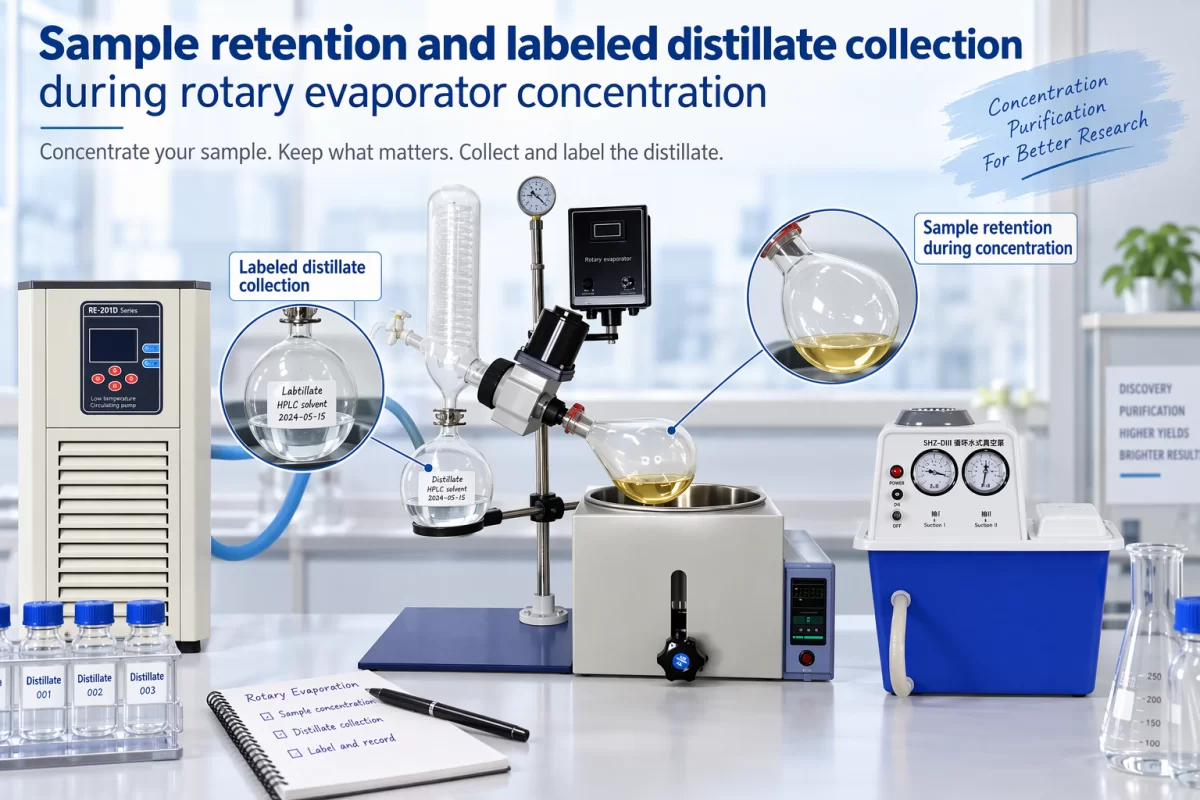
Consider how the concentrate will leave the flask. A viscous residue, a readily soluble concentrate, and a sample intended for subsequent analysis may require different transfer procedures. Reducing unnecessary transfers can help limit handling losses, but the recovery method should remain appropriate to the material and analytical requirements.
Receiver removal also belongs in this plan. Follow the manufacturer's procedure for stopping the run, releasing vacuum safely, and handling glassware. Do not assume that a standard receiving assembly permits vessel exchange while the system remains under vacuum.
Where to buy a mini rotary evaporator for laboratory concentration
KD Instrument provides a product inquiry route for laboratories considering a compact rotary evaporator. Make the request specific enough to cover the receiving side and the supporting services, not just the main instrument. A useful inquiry includes:
- The solvent names or mixture composition, sample characteristics, and relevant handling hazards.
- The starting batch volume, expected solvent removal, batch frequency, and concentration endpoint.
- The proposed evaporating and receiving flask capacities, plus any requirement to collect batches separately.
- The available coolant source, vacuum equipment, electrical supply, ventilation, and bench clearance.
- The desired scope of supply, including glassware, cooling equipment, pump, traps, hoses, and replacement parts.
Budgeting reference
Our company's reference price: US$1,480
This is a general purchasing reference, not a quotation for the RE-201D, the linked 2L product, or a complete concentration package. The actual quotation depends on the selected configuration and inquiry result.
When reviewing an offer, check what is included and what must be supplied by the laboratory. The receiver, condenser, vacuum connection components, and coolant equipment should be identifiable in the scope of supply. Also request the relevant operating instructions, cleaning guidance, and replacement-glassware information.
Choose a mini rotovap around collection, cooling, and retention
The practical answer to where to buy a mini rotary evaporator for laboratory concentration begins with a well-defined application. Compare the evaporating and receiving flask pairing, evaluate the condenser and cooling arrangement, and decide how both the concentrate and distillate will be handled.
For a compact laboratory setup, begin a KD Instrument inquiry with the solvent, working batch, concentration endpoint, and available supporting equipment. A clearly scoped proposal is more useful than choosing by flask size or reference price alone.
Plan the receiving side first, then select the rotary evaporator configuration that supports the complete laboratory workflow.