Laboratory procurement · Project coordination
Coordinating Reactors, Rotovaps and Dryers Through One Equipment Supplier
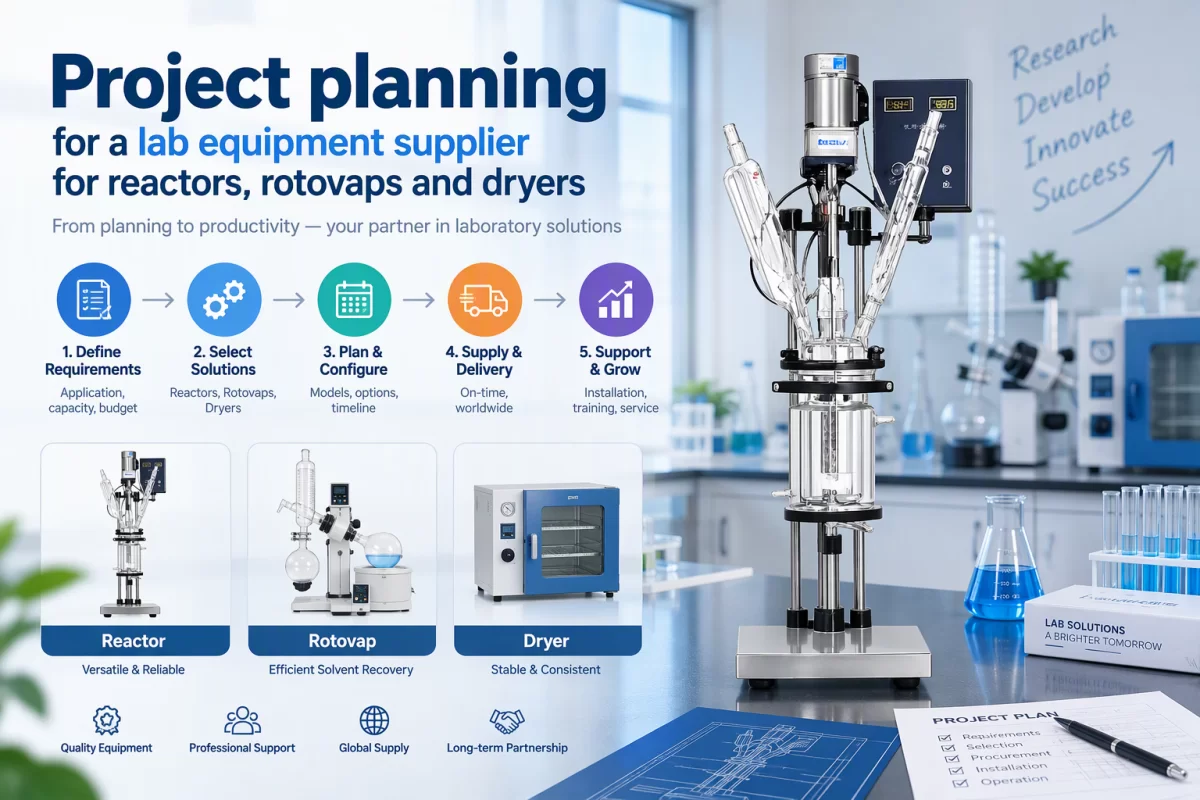
Choosing a lab equipment supplier for reactors, rotovaps and dryers is about more than grouping equipment on one purchase order. It is an opportunity to coordinate process requirements, utility interfaces, delivery milestones and technical files before separate machines arrive at the laboratory.
Start with the workflow, not three separate equipment lists
KD Instrument’s product range includes jacketed glass reactors, rotary evaporators and laboratory vacuum drying ovens. These categories provide a starting point for a coordinated procurement discussion. However, purchasing them together does not automatically make them a connected processing system.
Begin with a short process brief describing the material, solvent composition, intended reaction conditions, expected liquid volume after reaction and the form of the material entering the drying stage. Include the desired batch schedule and any intermediate filtration, separation or storage steps. Some projects may use reaction, evaporation and drying in sequence; others may use the equipment independently.
A useful brief separates process objectives from equipment requirements. For example, a target residual-solvent level is a process objective, while a proposed drying temperature is an operating requirement to evaluate against the material and equipment. This distinction helps purchasing staff, laboratory operators and the supplier discuss the same scope.
Use jacketed glass reactor capacity as a selection starting point
The Laboratory Jacketed Glass Reactor is the starting point for the reaction stage of this procurement plan. The S-series reactor capacities below give purchasers a model-based shortlist. Vessel capacity should not be treated as the permitted working charge: the proposed batch must also account for mixing, foaming, additions and the intended process.
| Reactor model | Reaction kettle capacity (L) |
|---|---|
| S-1L | 1 |
| S-2L | 2 |
| S-3L | 3 |
| S-5L | 5 |
| S-10L | 10 |
| S-20L | 20 |
| S-30L | 30 |
| S-50L | 50 |
| S-100L | 100 |
After identifying a candidate capacity, describe the required stirring duty, material-contact requirements, temperature-control arrangement and discharge method in the inquiry. Keep the reactor’s role distinct from downstream equipment sizing. A larger reactor does not necessarily require an equally sized evaporator if the process allows several evaporation runs, but those runs must fit the laboratory’s schedule.
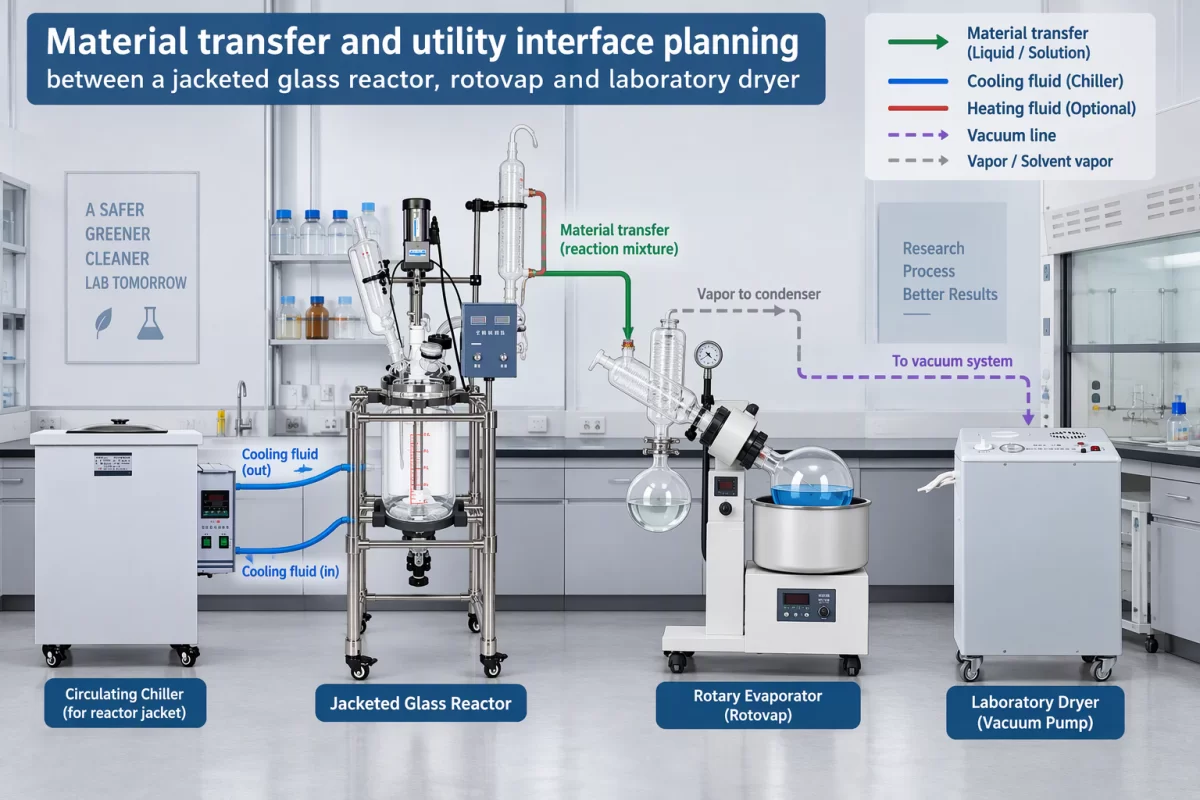
Connect reactors, rotovaps and dryers through clear interface information
The 2L Rotary Evaporator product page provides a relevant next equipment category for solvent-removal planning. Selection should consider the feed entering evaporation, solvent behavior, collection needs and the number of runs available within the batch schedule. Do not assume that the reactor outlet can connect directly to the evaporator.
For the drying stage, include the Lab Vacuum Drying Oven in the requirements discussion. Describe the material’s form, tray or container arrangement, moisture or solvent-removal objective and handling method. A drying oven should be evaluated for the intended material and operating conditions rather than selected only because it completes an equipment list.
| Interface | Information to record | Planning purpose |
|---|---|---|
| Material transfer | Material form, transfer vessel, connection type and cleaning method | Define handling between process stages |
| Vacuum and exhaust | Required operating pressure (with units), solvent vapors, isolation and exhaust routing | Assess pump scope and vapor handling |
| Heating and cooling | Target temperatures (°C), fluid requirements and connection details | Plan temperature-control equipment and utilities |
| Electrical supply | Site voltage (V), frequency (Hz), circuit availability and connection requirements | Match the quoted configuration to the laboratory |
| Installation space | Equipment dimensions, service clearance and access-route dimensions in consistent units | Prepare placement and maintenance access |
Set delivery milestones before arranging shipment
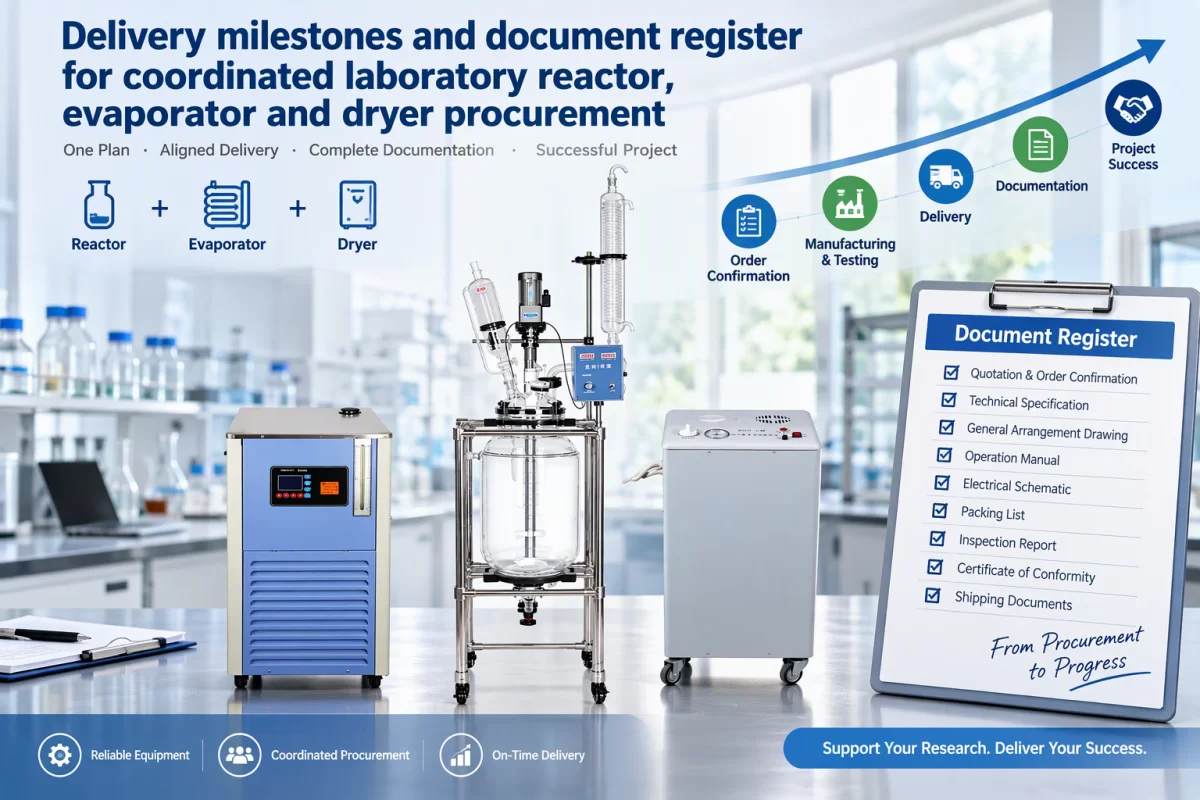
A coordinated order benefits from an agreed sequence of decisions. Equipment arrival is only one milestone; laboratory readiness, accessory availability and acceptance activities also determine when the project can move into operation.
- Approve the process brief. Establish the intended workflow, candidate models, site conditions and responsibilities.
- Agree the supply scope. List each instrument and accessory separately, identifying what the supplier will provide and what the laboratory will source.
- Review interfaces and documents. Align model identifiers, connection information, utility requirements and the proposed equipment arrangement before dispatch.
- Prepare the receiving site. Arrange bench or floor space, access, utilities and appropriate handling resources before delivery.
- Receive and inspect equipment. Check shipment contents against the packing list and record condition, model identity and accessory allocation.
- Complete agreed acceptance activities. Follow applicable instructions and site procedures before introducing process materials, then retain the resulting records.
Staged delivery may suit a laboratory with limited space, while a coordinated shipment may simplify receiving. Ask for a proposed schedule that distinguishes dispatch, arrival, installation support and acceptance responsibilities. Neither delivery timing nor support scope should be assumed from the product names.
Build one project register with separate equipment records
Use a shared document register for the procurement project, but preserve an individual record for every reactor, evaporator, dryer and supporting device. Each record should connect the ordered model and configuration with its quotation, approved technical information, packing list, operating instructions and receiving checks.
Assign a revision identifier and responsible contact to each controlled file. When a configuration changes, update the affected equipment record and interface schedule together. This reduces the risk of an installation team working from an earlier utility list while purchasing uses a revised order.
- Commercial record: quotation revision, agreed supply scope and delivery responsibilities.
- Technical record: model-specific requirements, connections and operating instructions.
- Receiving record: equipment identity, contents, condition and accessory assignment.
- Operational record: agreed acceptance checks, training records where arranged, and maintenance information.
Choose a supplier around a coordinated project scope
A lab equipment supplier for reactors, rotovaps and dryers can provide a common point for procurement discussions across these equipment categories. The practical value comes from defining the workflow, recording interfaces, agreeing delivery responsibilities and keeping model-specific documents organized—not simply ordering several instruments together.
For a project inquiry with KD Instrument, provide the material and solvent details, intended working batch, target operating conditions, site utilities and configuration needs. Include the desired delivery sequence and document requirements so the proposed equipment scope and quotation can be discussed against the laboratory’s actual project.