Synthesis equipment · Selection guide
Jacketed Glass Reactors for High-Temperature Synthesis: Verify System Limits
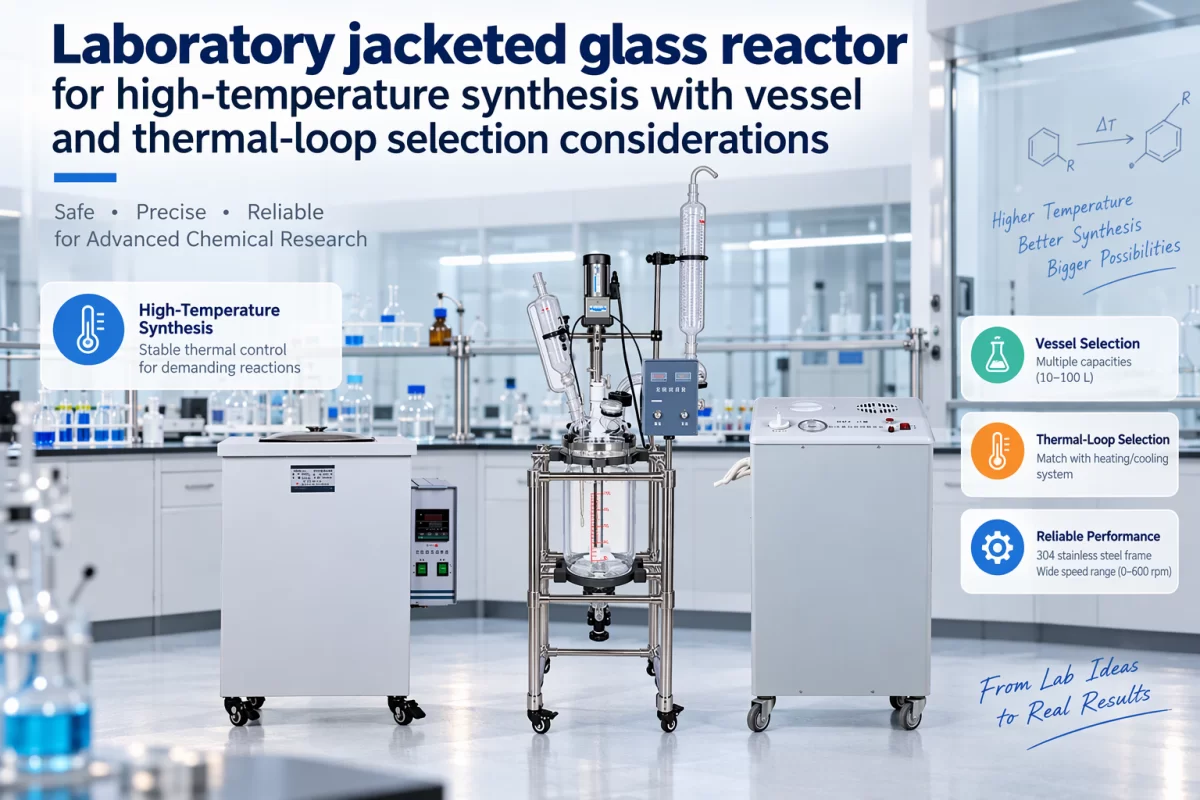
Selecting a laboratory jacketed glass reactor for high-temperature synthesis starts with the process, not a heater setpoint. A jacketed glass reactor can be considered for this application when the selected model and complete assembly are suitable for the intended temperature, pressure, chemistry, and operating sequence. The vessel, seals, thermal fluid, circulation equipment, and connected accessories must be evaluated together.
High-temperature synthesis requires a complete system review
A jacket transfers heat between a circulating fluid and the reaction vessel. This arrangement allows heating and cooling to be planned around the reaction, but it does not establish a universal operating limit. The allowable conditions depend on the specific reactor model, its fitted components, and the conditions stated for those components.
Start with the intended reaction temperature, expected hold time, solvent composition, and possible heat release. Then distinguish the reaction mixture temperature from the jacket inlet temperature and the circulator setpoint. These temperatures can differ during heat-up, cooling, and exothermic stages. A suitable design must account for those differences rather than treating all temperature readings as interchangeable.
The laboratory jacketed glass reactor product page is a relevant starting point for discussing vessel selection. The final operating envelope should be tied to the model and assembly selected for the application.
Does a high circulator setpoint establish the reactor’s allowable temperature?
I would not use the circulator setpoint as the reactor rating. I recommend checking the permitted conditions for the vessel, jacket, seals, hoses, valves, and other connected components. The operating plan must remain within every applicable component limit, including any restrictions on temperature differences or heating and cooling rates.
Choose reactor capacity around the working batch
The S-series model options below provide a starting point for capacity selection. Vessel capacity is not the same as a recommended working charge. A synthesis may need additional space for stirring, foaming, reagent addition, vapor disengagement, or changing liquid volume. Select the working batch only after considering the process and the fitted internals.
| Reactor model | Reaction kettle capacity (L) |
|---|---|
| S-1L | 1 |
| S-2L | 2 |
| S-3L | 3 |
| S-5L | 5 |
| S-10L | 10 |
| S-20L | 20 |
| S-30L | 30 |
| S-50L | 50 |
| S-100L | 100 |
Moving to a larger vessel also changes the mixing and thermal-control task. Impeller geometry, liquid viscosity, solids loading, and operating volume influence circulation inside the vessel. Evaluate the motor, shaft, and impeller combination for the selected configuration; capacity alone does not demonstrate adequate mixing or predictable heat-up time.
Check temperature, pressure, and seal compatibility together
High-temperature selection requires separate consideration of the reaction chamber and the jacket circuit. Solvent vapor, gas generation, inert-gas supply, blocked outlets, and pump discharge can create different pressure conditions in different parts of the assembly. A vacuum application must not be treated as evidence of positive-pressure suitability.
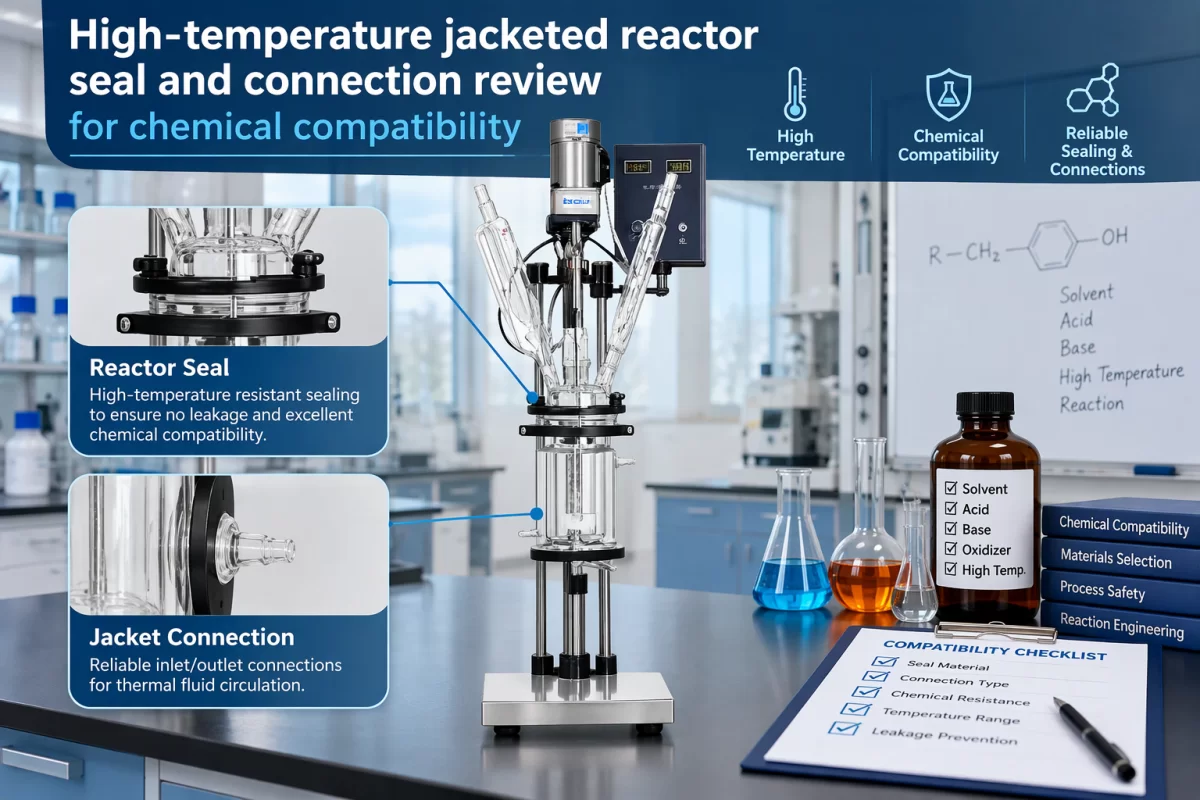
Sealing components deserve the same attention as the glass vessel. The rotating shaft seal, lid seals, drain valve, and connection seals must suit the chemicals and the temperatures they actually encounter. Chemical compatibility at room temperature is not enough to establish suitability during a heated synthesis. Include cleaning agents and any expected reaction by-products in the compatibility review.
Does vacuum operation demonstrate suitability for pressurized synthesis?
I treat vacuum duty and positive-pressure duty as separate selection questions. I would specify the intended pressure conditions for the reaction chamber and jacket independently, then select an assembly with documented suitability for those conditions. An application requiring pressure containment may need a different reactor design.
Match the heat-transfer fluid to the full temperature cycle
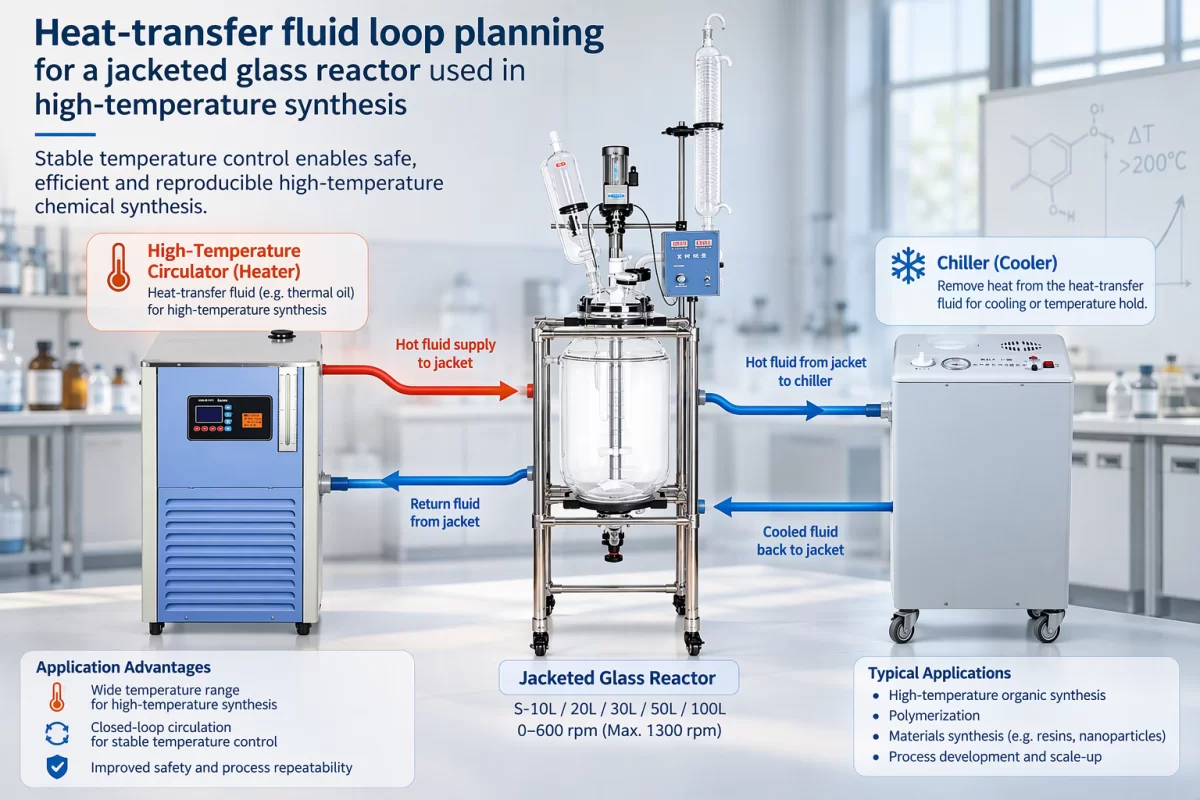
Select the thermal fluid for the entire process, including startup, the synthesis hold, cooldown, and any low-temperature stage. Review its stated operating range, viscosity, thermal stability, and compatibility with wetted components. Where relevant, consider flash point and the fluid supplier’s requirements for handling and ventilation. No single fluid should be assumed suitable for every high-temperature application.
Circulation performance also depends on hose length, connection size, fluid viscosity, and resistance through the jacket. Heating capacity alone does not describe temperature control performance. For reactions that release heat, cooling capacity at the relevant operating conditions is an important part of the selection.
The GDSZ Series refrigeration and heating cycle device is a relevant product option to discuss when planning the thermal-control loop. Select the particular device and fluid against the process temperature profile and the reactor’s jacket requirements, rather than assuming compatibility from the product category.
Which thermal-fluid temperature range matters during selection?
I recommend evaluating the full expected fluid-temperature range, not only the target reaction temperature. That includes the temperatures needed to drive heat into or out of the batch and the conditions encountered during startup and shutdown. The fluid and every component in its circuit must remain suitable throughout that sequence.
Build a useful configuration request and budget
A focused inquiry helps connect the reactor configuration to the actual synthesis. Provide the following information so the proposed vessel and supporting equipment can be considered together:
- Materials: solvents, reagents, solids content, anticipated by-products, and cleaning chemicals.
- Batch details: starting charge, final volume, reagent-addition sequence, viscosity, and foaming tendency.
- Operating profile: target temperatures, hold times, heat-up and cooldown objectives, and expected heat release.
- Pressure conditions: intended vacuum or pressure duty, gas supply, vapor handling, and jacket-circuit conditions.
- Configuration needs: stirring arrangement, condenser requirements, temperature measurement, utilities, and site-specific electrical safety requirements.
Our company’s reference price
US$1,699
This is a reference price for initial budgeting, not a quotation for a particular S-series model or a complete high-temperature synthesis installation. The actual quotation depends on the selected configuration and inquiry results.
Select a high-temperature synthesis reactor around verified limits
A laboratory jacketed glass reactor for high-temperature synthesis should be selected as a complete, application-specific assembly. Begin with the batch and chemistry, choose an appropriate vessel capacity, and establish the permissible conditions for temperature, pressure, seals, and the thermal-fluid circuit.
Share the material list, working batch, target operating profile, and required accessories when requesting a proposal. This gives the equipment discussion a clear basis and helps align the reactor, thermal-control device, and quotation with the intended laboratory process.