Pharmaceutical laboratory equipment · Selection guide
Mini Rotary Evaporators for Pharma Solvents: Checking Material Compatibility
The best mini rotary evaporator for pharmaceutical solvent recovery is not determined by flask size or a promotional ranking alone. Selection starts with the actual solvent mixture, the materials it contacts, the intended working batch, and the cooling and vacuum equipment available in the laboratory.
A compact rotary evaporator can be considered for small-scale solvent removal and collection, but suitability must be assessed for the complete process. A glass flask does not establish compatibility for the rotary seal, receiving connections, vacuum hose, or pump. This guide focuses on those interfaces without promising universal solvent compatibility.
Start with the pharmaceutical solvent profile
Build a solvent-contact list before comparing equipment. Include the principal solvent, water content, co-solvents, dissolved substances, and cleaning agents. Record the proposed liquid temperature, operating pressure, contact duration, and how often the equipment will be cleaned. Residues become more concentrated during evaporation, so the starting solution is not the only composition that matters.
Compatibility information should match the material grade and operating conditions. A room-temperature chemical-resistance rating may not describe repeated exposure to warm solvent, concentrated residues, or alternating process and cleaning solutions.
| Solvent or mixture | Material-contact review | Supporting-equipment review |
|---|---|---|
| Ethanol or methanol mixtures | Check seals and tubing against the full mixture, including water, additives, and cleaning exposure. | Assess vapor capture, pump exposure, ventilation, and the applicable flammable-solvent controls. |
| Acetone or ethyl acetate | Evaluate the specified elastomer and hose grades for swelling, softening, and permeation. | Match condenser operation and vacuum regulation to the intended evaporation conditions. |
| Dichloromethane-containing mixtures | Review every vapor-contact component, not just the evaporating flask. | Plan effective condensation, suitable exhaust handling, and pump protection. |
| Acetonitrile or mixed process solvents | Assess the combined formulation and changes in composition during concentration. | Check cooling demand, pressure control, and the suitability of collected solvent for its intended reuse. |
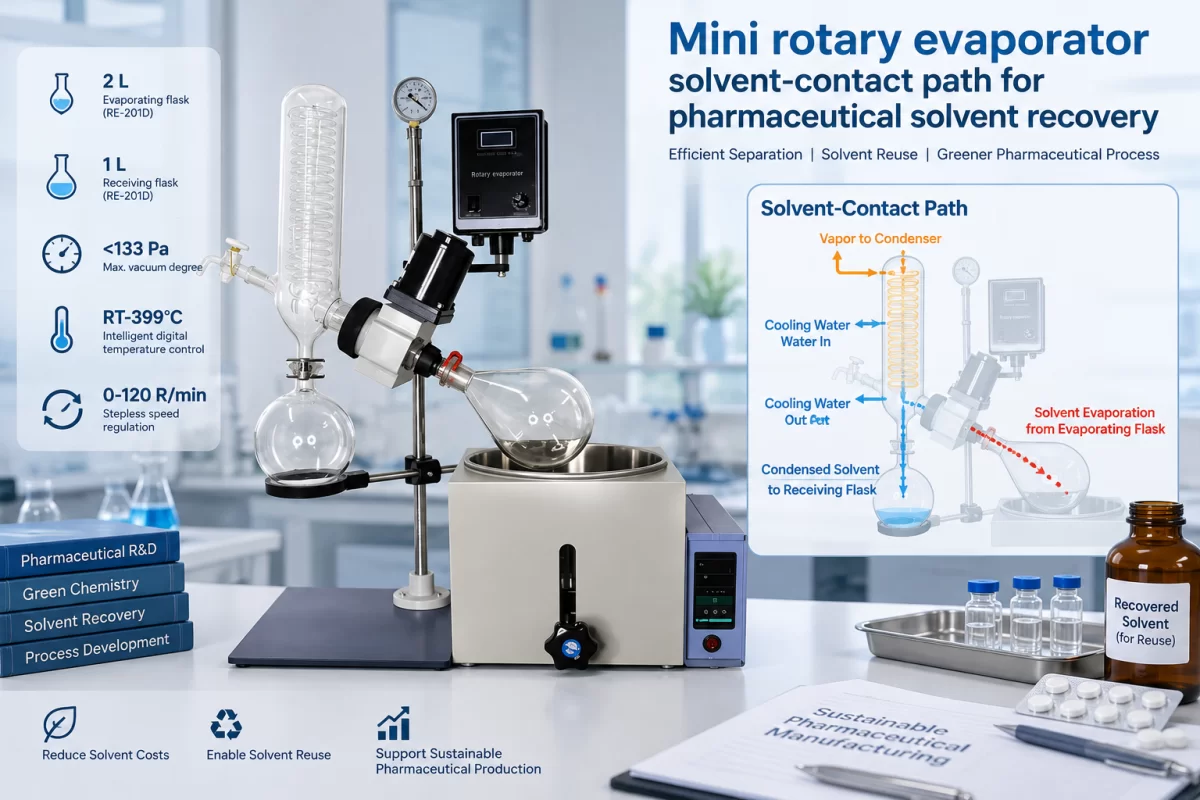
Does compatibility with ethanol establish suitability for a mixed pharmaceutical solvent?
My answer is no. I assess the complete formulation and expected operating exposure. A co-solvent, dissolved reagent, or cleaning agent can change the material requirements, and evaporation can alter mixture proportions throughout the run.
Check rotary evaporator seals, glassware, and tubing separately
Seals: identify the exact contact materials
Request material identification for the rotary seal, O-rings, gaskets, valve seats, and any sealing surfaces in the collection path. Broad descriptions such as “fluororubber” do not establish the exact compound or its suitability for a particular solvent mixture. Review chemical-resistance information for the specified grade under the intended temperature and exposure conditions.
Seal assessment should cover function as well as chemical attack. Swelling, compression changes, abrasion, or hardening may affect vacuum retention and contribute particles. For pharmaceutical work, consider whether the process requires extractables and leachables assessment, documented cleaning procedures, or dedicated contact components.
Glassware: consider chemical exposure and mechanical condition
Obtain the glass specification and the permitted operating conditions for the selected assembly. Do not assume that all laboratory glass has the same resistance or vacuum suitability. Include concentrated residues and cleaning chemistry in the review; hydrofluoric acid and aggressive alkaline exposure require particular attention rather than a generic “glass-compatible” conclusion.
Inspect flasks, condenser connections, and joints for chips, cracks, or damage before use. Support the glass assembly properly, avoid abrupt temperature changes, and follow the equipment operating instructions. Chemical resistance cannot compensate for damaged glass under vacuum.
Tubing: distinguish coolant lines from solvent-vapor lines
A coolant hose and a vacuum hose perform different duties. Solvent-vapor tubing needs a suitable material, secure connections, and resistance to collapse under the intended vacuum. Review permeation, cleaning exposure, and any condensate that may collect inside the line. The pump’s wetted components and exhaust path also belong in the compatibility assessment.
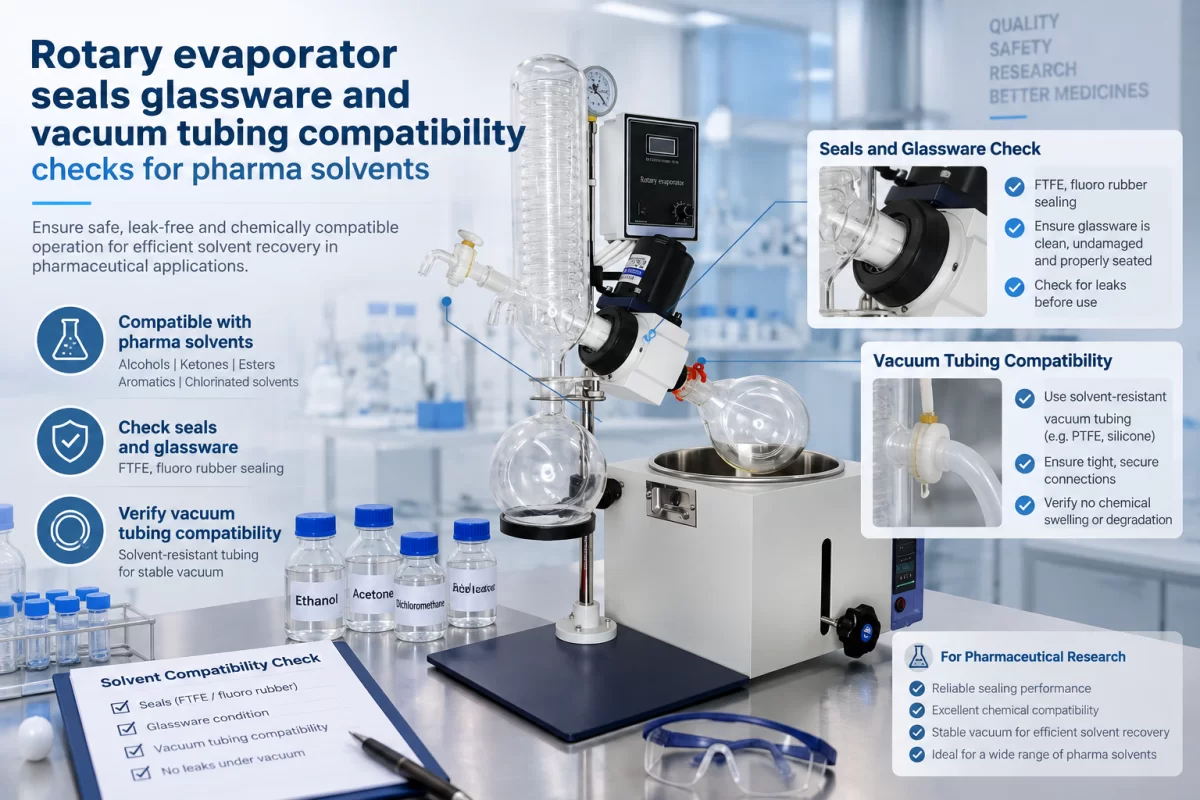
Can a chemically resistant seal establish pharmaceutical process suitability?
I would not use seal resistance as the sole acceptance criterion. I also consider glass integrity, hose materials, cleanability, contamination risks, vapor containment, and the documentation required by the intended pharmaceutical workflow.
Choose a mini rotary evaporator by working batch—not nominal flask volume
The RE-201D provides a small-capacity starting point for equipment selection. The capacities below describe the evaporating and receiving flasks for each listed model; they are not recommended fill volumes or solvent-specific throughput claims.
| Model | Evaporating flask capacity (L) | Receiving flask capacity (L) |
|---|---|---|
| RE-201D | 2 | 1 |
| RE-301 | 3 | 2 |
| RE-501 | 5 | 3 |
For a compact laboratory project, the 2L Rotary Evaporator product page is a relevant starting point for discussing the intended setup. Select the working charge according to the operating instructions, foaming behavior, viscosity, and the headspace needed to limit entrainment.
Receiver capacity also affects the workflow. Plan collection and emptying around the expected amount of distillate, with an appropriate procedure for safely interrupting the run. Increasing flask capacity does not by itself resolve insufficient cooling, unstable vacuum, or material incompatibility.
Is a 2 L evaporating flask intended for a 2 L working charge?
My selection approach treats nominal flask capacity and working charge as separate values. I allow for vapor space, rotation, and the material’s behavior, then use the permitted filling guidance for the chosen equipment and process.
Match solvent recovery to cooling and vacuum conditions
Condenser performance depends on the solvent, vapor load, coolant temperature, and coolant circulation. Select cooling equipment for the planned duty rather than assuming that any recirculating unit will be sufficient. The low-temperature cooling liquid circulating pump page offers a relevant route for discussing a supporting cooling arrangement.
Vacuum selection needs the same care. Review the pump’s solvent-contact materials, control method, vapor handling, and exhaust arrangements. A suitable trap may help protect the pump, but its design and operating conditions must match the solvent. Avoid treating the deepest attainable vacuum as the preferred operating pressure for every formulation.
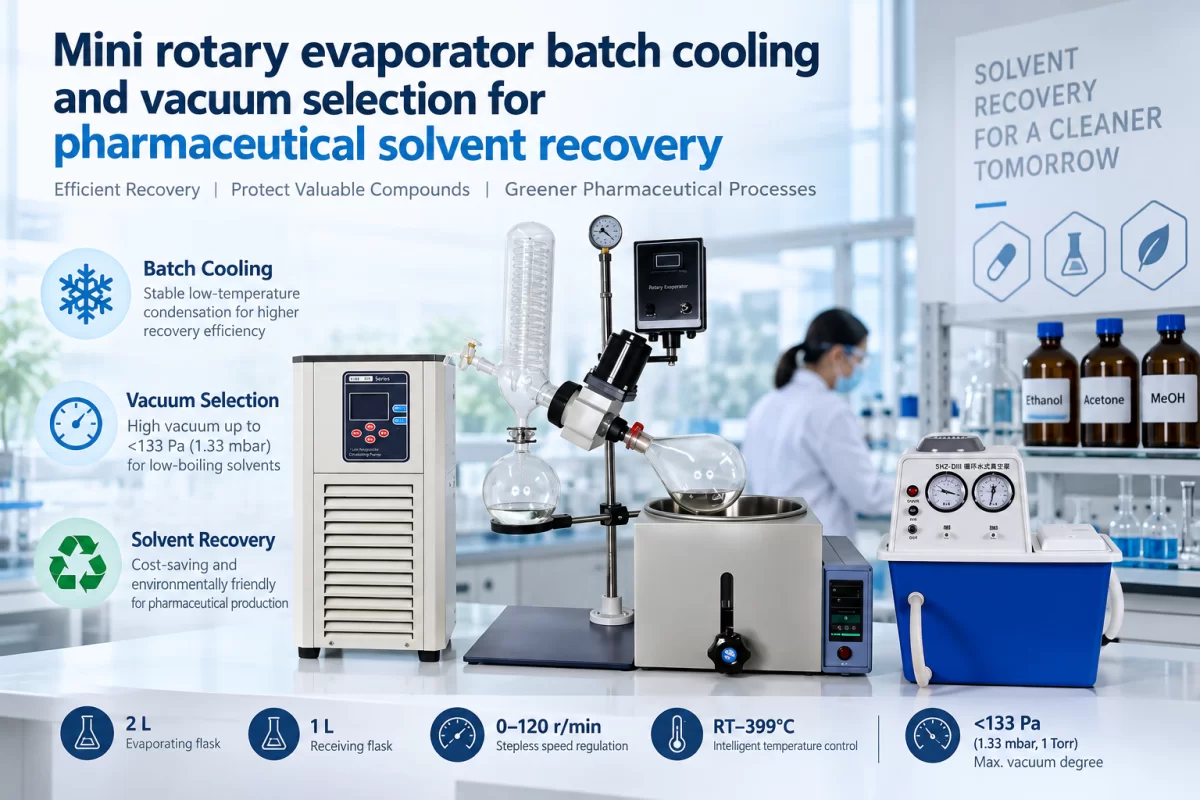
For flammable solvents, chemical compatibility and ignition protection are separate decisions. Equipment selection should follow the laboratory’s risk assessment, ventilation provisions, and applicable electrical requirements. Do not infer hazardous-area suitability from a solvent-resistant contact material.
Budget for the complete solvent-recovery configuration
A useful inquiry describes the solvent formulation, starting batch volume, expected distillate volume, target operating conditions, and available utilities. Include cooling equipment, vacuum control, traps, contact-material requirements, and any cleaning or documentation needs. This allows the proposed configuration to be evaluated against the actual workflow.
Our company reference price: US$1,480. This is a reference across our listed equipment offerings, not a model-specific price for the RE-201D or a complete 2L recovery package. The actual quotation depends on the selected configuration and inquiry results.
What makes the best mini rotary evaporator for pharmaceutical solvent recovery?
The strongest choice is the configuration that answers the process questions: Are all liquid- and vapor-contact materials suitable for the formulation and cleaning cycle? Does the flask arrangement suit the working batch? Can the cooling and vacuum systems manage the intended vapor load? Are recovery quality and operating safety addressed?
Start with the solvent-contact path, then match batch size and supporting equipment. Provide the solvent composition, working volume, target conditions, and configuration needs to request a rotary evaporator proposal and quotation tailored to the pharmaceutical solvent-recovery task.