Chemical synthesis · Equipment sourcing
Sourcing a Jacketed Glass Reactor for Chemical Synthesis
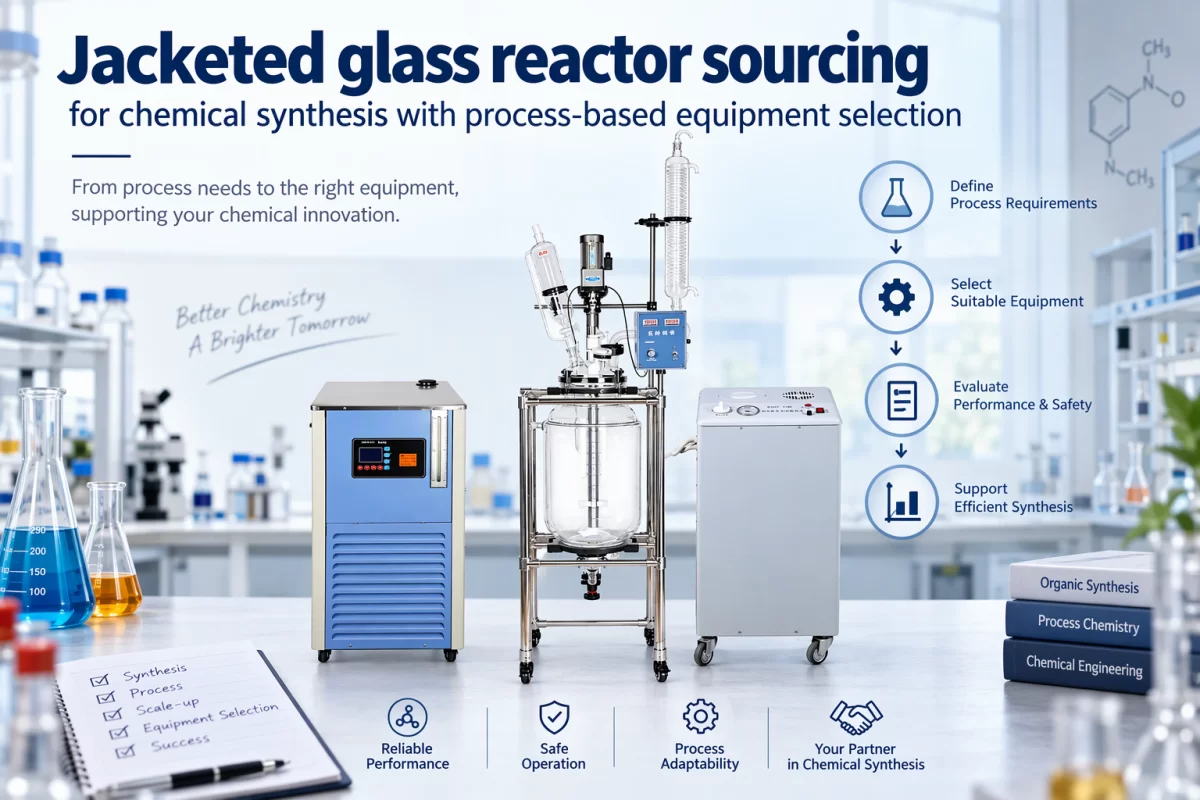
Where to buy jacketed glass reactor for chemical synthesis is best treated as an equipment-selection question, not simply a search for an ordering page. A suitable supply proposal must connect the chemistry, intended working batch, temperature and pressure requirements, and supporting equipment.
Where to Buy a Jacketed Glass Reactor for Chemical Synthesis: Start with Process Fit
KD Instrument offers a Laboratory Jacketed Glass Reactor as a starting point for laboratory reactor sourcing. The useful next step is to define the intended synthesis duty so that a model and configuration can be proposed against it. Temperature limits, pressure limits, and included accessories are specific to the selected model and configuration.
A jacket provides a separate path for circulating a heat-transfer fluid around the reaction vessel. This arrangement can support heating or cooling when paired with appropriate temperature-control equipment. It does not, by itself, establish a particular temperature range, cooling rate, or ability to handle an exothermic reaction.
Before comparing proposals, describe whether the operation involves a homogeneous solution, suspended solids, changing viscosity, gas evolution, or a reaction followed by solvent removal. These distinctions influence mixing, connections, vapor handling, and the overall equipment scope.
Screen the Proposal Against Reactant Properties
Material compatibility is a first-stage selection condition. Provide the identities and concentrations of reactants, solvents, catalysts, and cleaning agents. Review all wetted components, including the vessel, stirrer, seals, valves, and any transfer tubing. A glass vessel should not be assumed suitable for every corrosive mixture; hydrofluoric acid and strongly alkaline conditions require particular attention to glass compatibility.
- Low-viscosity solutions: Describe the mixing objective, such as bulk blending, controlled addition, or maintaining a uniform composition.
- Slurries and crystallizing mixtures: State the anticipated solids loading, particle behavior, and whether material may settle or obstruct discharge.
- Viscous or changing mixtures: Provide the expected viscosity profile through the reaction, rather than only the starting condition.
- Volatile or flammable solvents: Identify vapor-handling requirements and the installation area's electrical safety requirements.
Can the same reactor configuration serve every solvent-based synthesis?
I would not select a configuration on that assumption. I recommend reviewing the complete wetted-material list and the process hazards first. A configuration suitable for one solvent and mixing duty may need different seals, agitation, or vapor-handling arrangements for another.
If crystal formation is a central part of the process rather than an incidental outcome, include it in the equipment brief. The crystallization reactor product page is a relevant alternative to discuss when comparing process-specific equipment options.
Match Nominal Vessel Capacity to the Working Batch
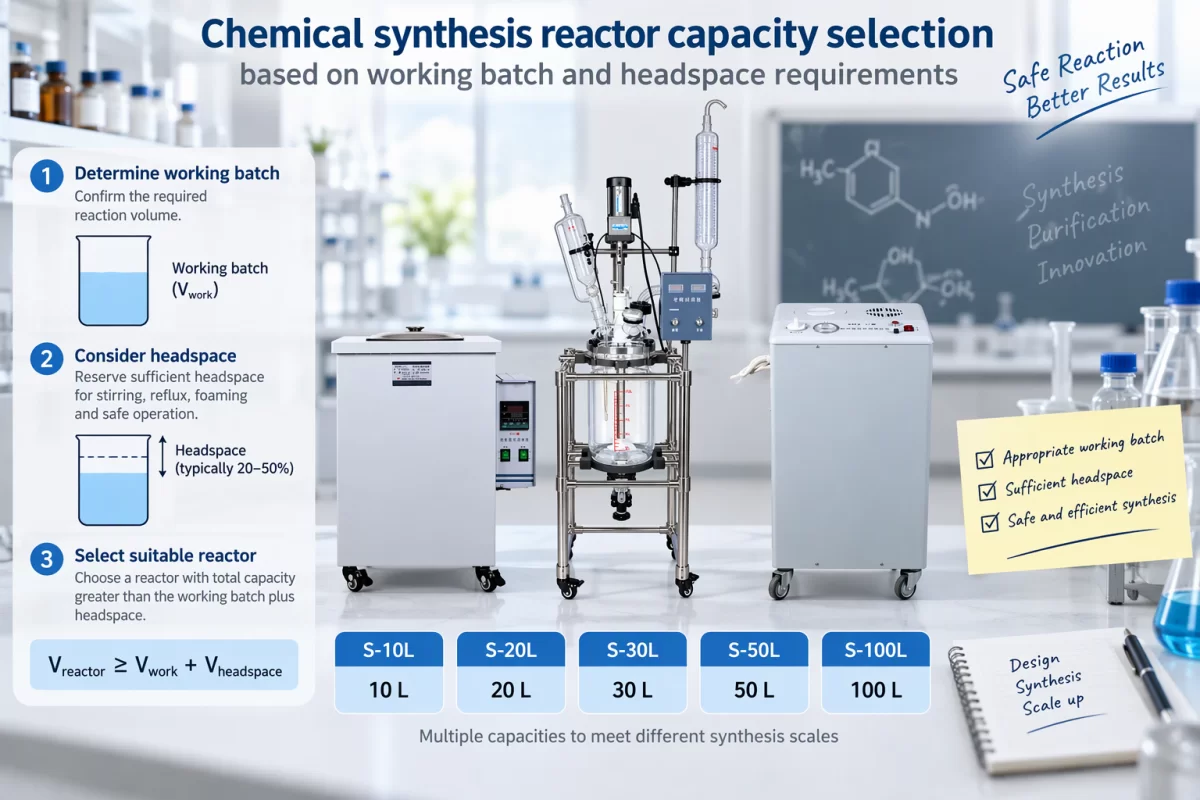
The S-series model capacities below provide a starting point for comparing vessel sizes. Nominal capacity is not a recommended working charge. The appropriate working volume depends on the process, including headspace needed for additions, foaming, vapor disengagement, and agitation.
| Model | Nominal vessel capacity (L) |
|---|---|
| S-1L | 1 |
| S-2L | 2 |
| S-3L | 3 |
| S-5L | 5 |
| S-10L | 10 |
| S-20L | 20 |
| S-30L | 30 |
| S-50L | 50 |
| S-100L | 100 |
Is a larger vessel automatically a better choice for synthesis development?
I prefer to match the vessel to both the minimum and maximum planned working batches. Excess vessel capacity can make small-batch mixing and probe placement less suitable, while insufficient headspace can restrict additions or vapor handling. The useful choice is the size that fits the actual operating sequence.
For development that may progress beyond laboratory batches, discuss scale-up expectations early. The overview of glass reactors for pilot-plant work offers a related starting point for considering a broader operating setup.
Define the Operating Envelope Before Selecting Accessories
A useful sourcing brief distinguishes the normal process conditions from the equipment's permitted operating limits. State the starting temperature, target reaction temperature, heating and cooling stages, expected heat release, and whether the operation includes reflux, vacuum, or gas addition. Do not infer pressure capability from the presence of a jacket, condenser, or vacuum connection.
For temperature control, describe the reaction-side requirement and the available circulation equipment. The suitability of a heating or cooling unit depends on more than its temperature setting: fluid compatibility, circulation requirements, and the process heat load also matter. For an exothermic synthesis, cooling provision should be assessed against the planned addition rate and reaction behavior.
For agitation, request a configuration matched to viscosity, solids content, and the mixing objective. A speed figure alone does not establish whether the system can maintain suspension or mix a thickening batch. Impeller arrangement, drive capability, and vessel geometry should be considered together.
Where flammable vapors or hazardous-area installation are involved, specify the required electrical protection and supporting documentation. An explosion-protected component should not be treated as proof that the complete assembled system meets a particular site requirement.
Use the Reference Price as a Budget Starting Point
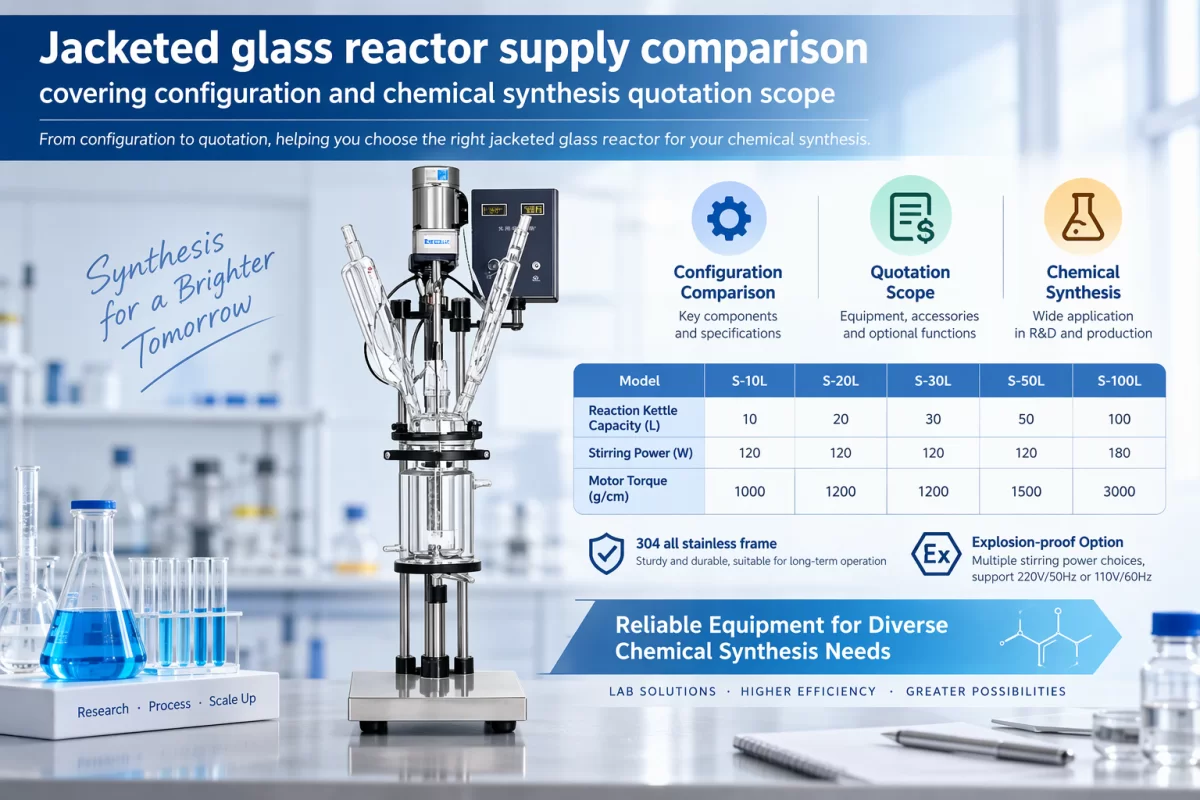
KD Instrument company reference price
US$1,699
This is a company reference price, not a quotation for a particular S-series model or complete synthesis system. The actual quotation depends on the selected configuration and the inquiry result.
Compare proposals by their stated scope. Ask whether the quoted package includes only the reactor assembly or also temperature-control equipment, a vacuum system, condensation components, collection vessels, and required connections. Accessories needed for the process should be identified separately from optional additions.
Does the reference price represent a complete, ready-to-run synthesis installation?
I would use it only for initial budgeting. I recommend requesting an itemized quotation tied to the chemical duty and installation requirements, so that the included equipment and any additional needs are clear before purchase.
Prepare a Process-Based Inquiry
A concise technical brief helps turn a general product inquiry into a relevant supply proposal. Include:
- Chemical duty: Reactants, solvents, concentrations, cleaning agents, and known compatibility concerns.
- Batch requirements: Minimum and maximum working volumes, additions during operation, and headspace needs.
- Operating conditions: Target temperatures, pressure or vacuum requirements, reaction stages, and expected heat release.
- Mixing and handling: Viscosity, solids content, gas evolution, discharge needs, and sampling requirements.
- Installation and scope: Available utilities, electrical safety requirements, existing auxiliary equipment, and requested package contents.
Ask for a model-specific proposal that identifies the vessel capacity, wetted materials, operating limits, agitation arrangement, and included accessories. This provides a practical basis for assessing whether the proposed equipment fits the synthesis rather than simply resembles the desired product.
Source the Reactor Around the Chemistry
When deciding where to buy a jacketed glass reactor for chemical synthesis, prioritize a supply proposal that addresses reactant compatibility and the complete operating envelope. KD Instrument's laboratory jacketed glass reactor is an option to discuss against those requirements, with vessel sizes selected around the intended working batch.
Provide the material list, batch range, target conditions, and configuration needs to obtain a corresponding proposal and quotation. The goal is not simply to buy a vessel, but to select a defined reactor setup suited to the planned synthesis work.