Overview
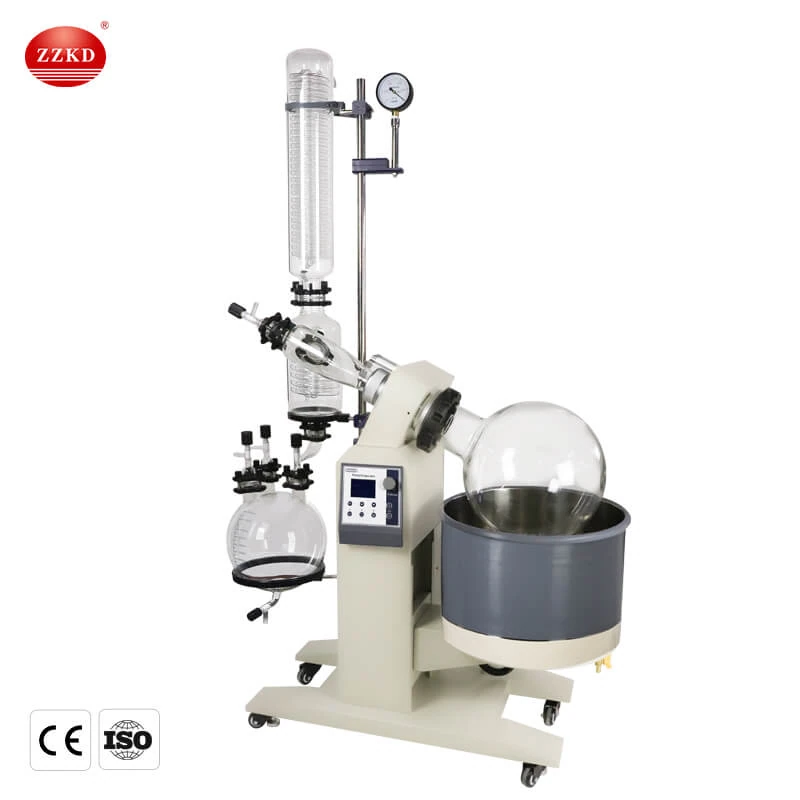
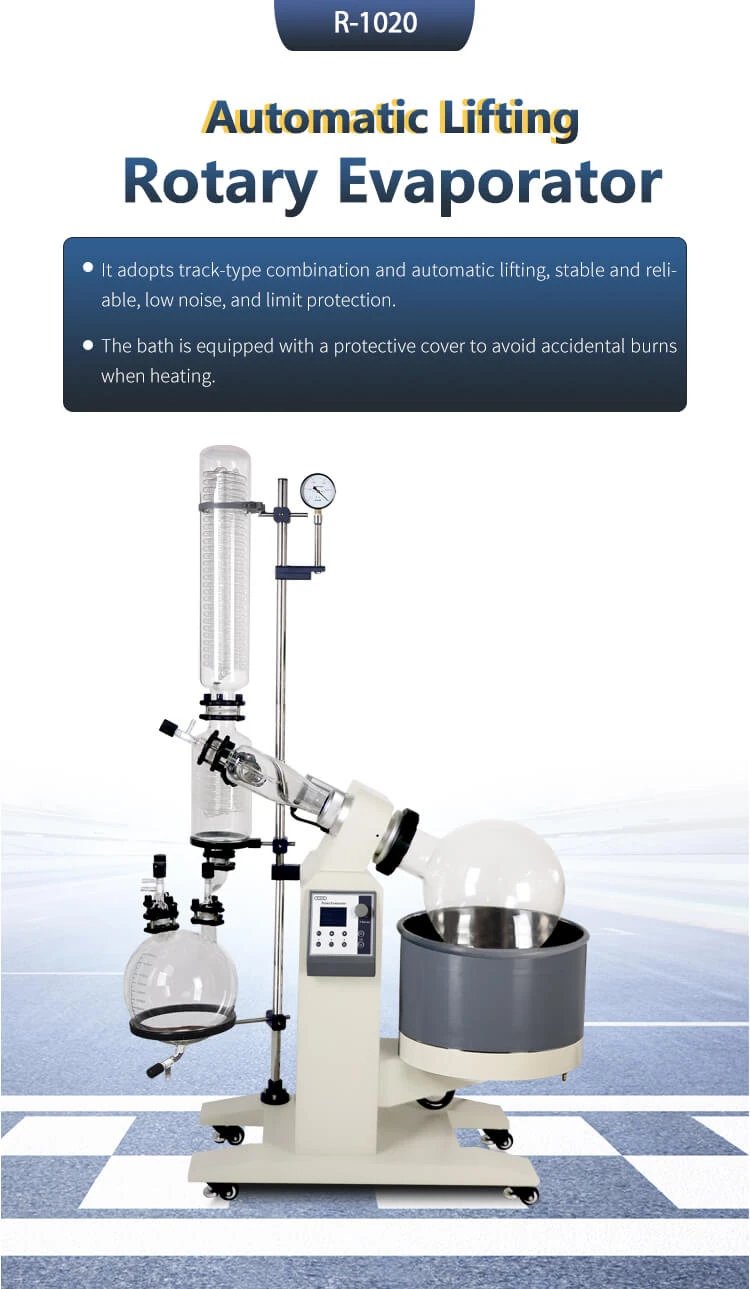
The 20L rotovap is electronically controlled to make the flask rotate at a constant speed at a suitable speed to increase the evaporation area. The evaporating flask was kept under negative pressure by a vacuum pump. The evaporation flask is placed in a water bath for constant temperature heating while rotating, and the solution in the bottle is heated, diffused and evaporated in the rotating flask under negative pressure.
The 20L rotovap system can be sealed and decompressed to 400~600 mm Hg; the solvent in the distillation bottle is heated with a heating bath, and the heating temperature can be close to the boiling point of the solvent; at the same time, it can also be rotated at a speed of 50~160 rpm, so that The solvent forms a thin film, increasing the evaporation area. In addition, under the action of the cooler, the hot vapor can be quickly liquefied to speed up the evaporation rate.
How to use 20L rotovap?
1. Turn on the power, turn on the cooling system - turn on the main switch, power switch, wait for the self-test of the instrument for 60s, when the cooling light is not flashing, turn on the circulation pump button, the cooling button, and set the cooling temperature;
2. Connect the rotary evaporator, make the water bath pot flush with the liquid level in the bottle, turn off the deflation button of the rotary evaporator, turn on the vacuum pump, and let go only when the vacuum degree is greater than 0.04 MP;
3. Turn on the rotary button and adjust the speed. The speed should not be too high at the beginning to prevent bumping. Turn on the temperature button and set the appropriate temperature according to the boiling point of the solvent to be evaporated;
4. When there are liquid droplets falling evenly in the distillation bottle, the rotary steaming starts;
5. Hold the flask with your right hand, and slowly open the air valve with your left hand to deflate; when the vacuum degree drops by 0.04MP, turn off the vacuum pump and remove the rotary steamer;
6. Turn off the water bath heating; turn off the condensation cycle; (turn off the refrigeration button, circulation pump button, power button, and rear main switch in turn);
7. Dispose of condensed waste liquid in time and clean up the instrument area;
8. When you stop using it, turn the rotary knob to a small position, turn off the rotary switch, and unplug the power plug in time.
Advantages of 20L rotovap:
1. International advanced EL gas-tight system keeps high vacuum degree. Gas-liquid separator separator, no reflux.
2. Double condenser, collection rate over 95%. The evaporating flask is easy to install and setup.
3. Continuous feeding is available.(Inlet Value). Explosion-proof system is optional. 110V/60Hz can be customized.
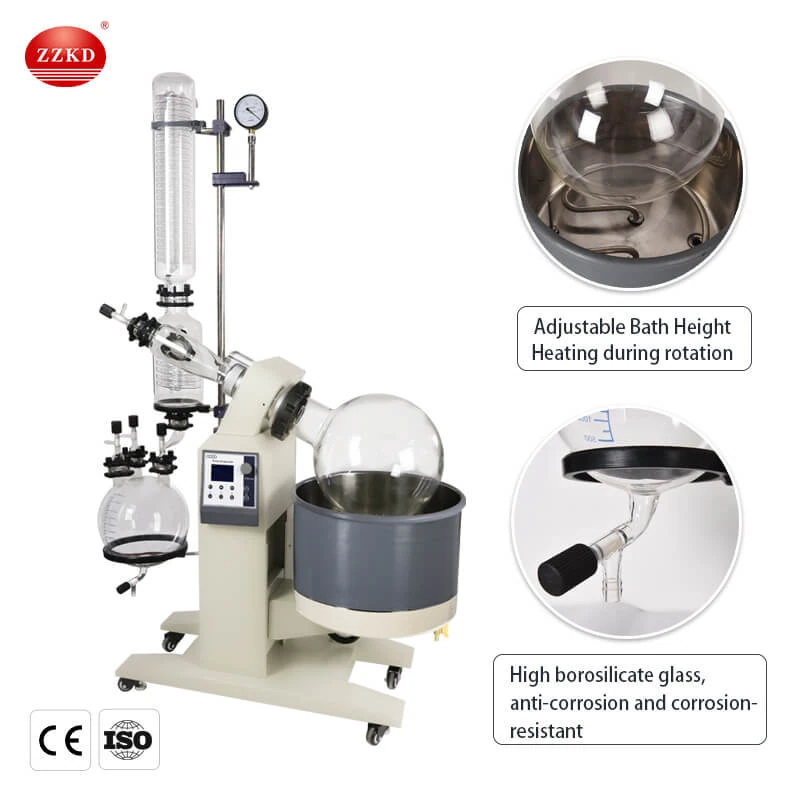
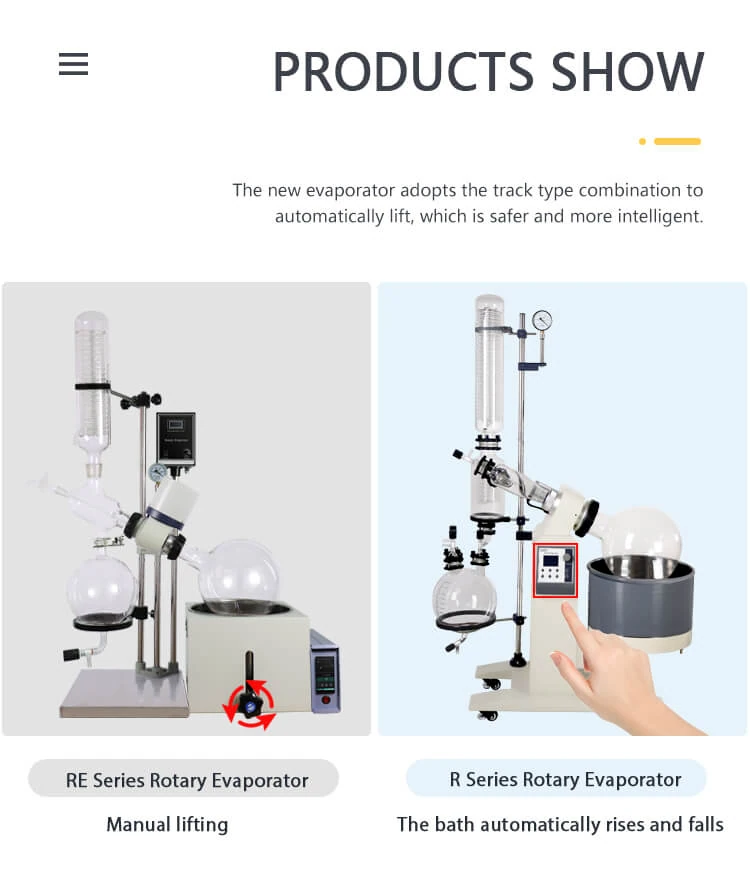
4. Water bath, intelligent PID temp. cintroller, can be lifted up and down.
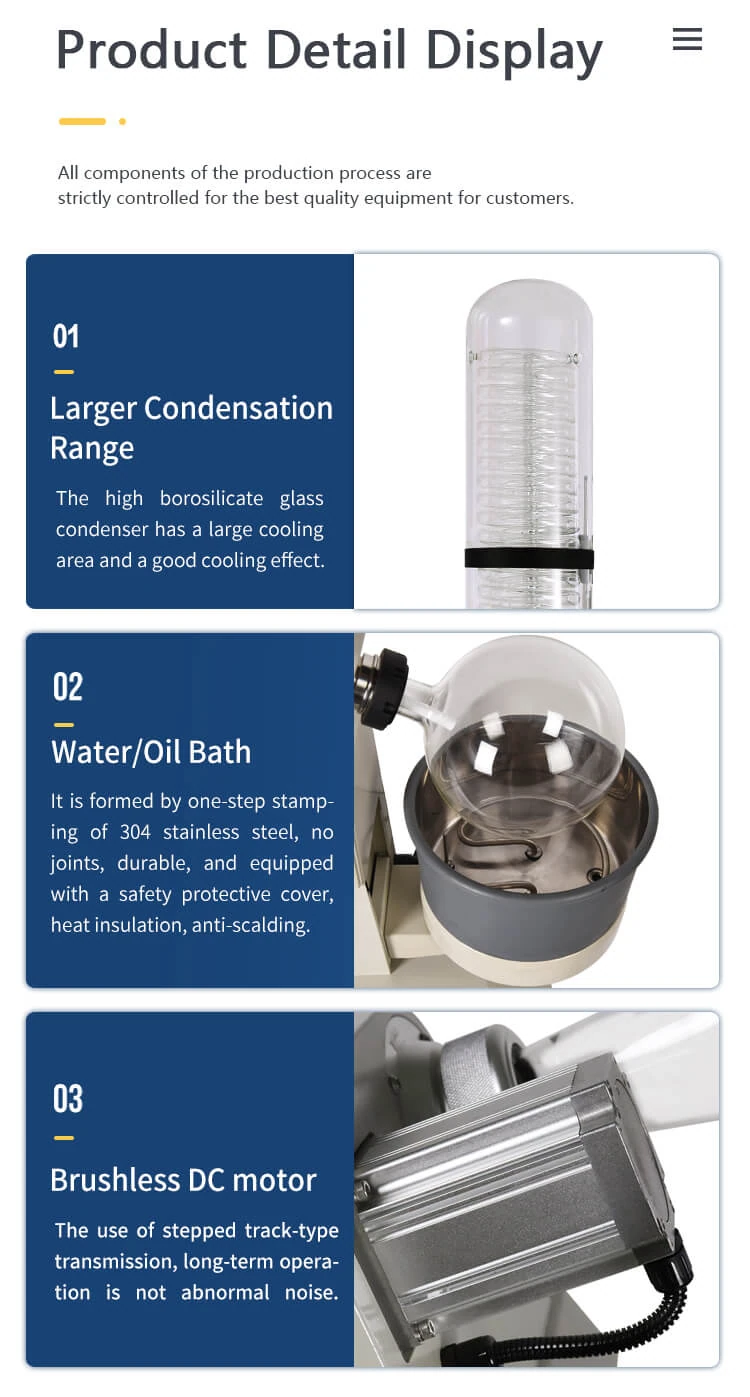
5. Reasonable structure, exquisite material. Mechanical parts are made of stainless steel and aluminum die casting.
6. Glass parts are made of corrosion resistance, high temperature resistance, borosilicate glass.
7. Rubber parts adopt new standard materials, easy to change for users.
8. Built-in transmission system, frequency conversion speed regulation, stable and reliable speed.
What are the precautions during the use of 20L rotovap?
1. During the installation process, the degree of vacuum must be ensured, and there will be no air leakage after the flat-bottomed flask is put in.
2. The method of checking whether the instrument is leaking: pinch off the external vacuum leather tubes one by one, and observe the vacuum gauge on the instrument to see if it can keep airtight for five minutes. If there is air leakage, check whether the sealing rings on the sealing joints and the rotating shaft are effective. On the contrary, if the instrument is normal, it is necessary to check the vacuum pump and vacuum pipeline.
3. Each interface, sealing surface, sealing ring and joints need to be coated with a layer of vacuum grease before installation.
4. The heating tank must be energized before heating to avoid dry burning; the liquid level in the tank should not be too high to avoid water overflow during rotation.
5. The height of the flat-bottomed flask in the liquid level should not exceed 1/3 of the bottle body.
6. The speed setting should be reasonable, not too fast to prevent air leakage from being thrown out or sucking back; the speed should not be set too low, which will affect the work efficiency.
7. Slowly reduce the rotation speed to 0 after the evaporation is completed, and then take down the flat-bottomed flask. Do not take it down before the rotation is complete, so as to prevent danger.
8. The receiving liquid in the receiving bottle should be disposed of in a waste liquid bottle in time, and should not be poured directly into the sewer.
9. If the sample to be rotary evaporated is very easy to boil, we can slow down the rotary evaporation speed or prepare a special condenser tube to prevent the situation of boiling back suction.
10. After the rotary steaming work is over, turn off the switch and unplug the power supply.
Features
Key factors affecting the distillation efficiency of 20L rotovap:
1. Vacuum value of the system
The closed space of the rotary evaporator is composed of glass components such as evaporating bottles, evaporating tubes, sealing rings, condensing tubes, vacuum buffer bottles, vacuum pumps and vacuum pipelines. Among them, the most critical and variable factors affecting the vacuum of the system are: vacuum pump, Seals and vacuum tubes.
Vacuum pump and vacuum controller: The lower the limit of the vacuum pump, the lower the vacuum value of the system. During distillation, it is necessary to set a reasonable vacuum value through the vacuum controller to ensure distillation efficiency and avoid bumping. At present, the ultimate vacuum of the diaphragm vacuum pump can reach as low as 2mbar, and the ultimate vacuum of the circulating water pump is about 50mbar (0.095kpa). If the budget allows, a vacuum controller or vacuum valve is necessary to control the system vacuum required for distillation.
Sealing ring:
As a key seal for evaporating tubes and condensing tubes, its wear resistance and corrosion resistance are key. The materials commonly used as sealing rings are: PTFE and rubber. Obviously, PTFE has better wear resistance and corrosion resistance. Some manufacturers add stainless steel buffer shrapnel to the sealing ring, which has better wear resistance. Vacuum tube material: Generally, various manufacturers do not have standard vacuum tubes. When purchasing by yourself, silicone tubes are naturally optional, because their aging efficiency is slower than rubber tubes.
2. Heating pot temperature
The higher the temperature of the heating pot, the faster the distillation effect of the solvent, but considering the heat sensitivity of the target components and the safety of operation, the commonly used temperature is 60°C. Furthermore, if the temperature is above 80°C, switching to silicone oil as the medium will cause cleaning problems. Generally, it is recommended to reduce the vacuum value to achieve faster distillation efficiency. At present, the ultimate vacuum of good diaphragm vacuum pumps on the market can reach 2mbar, and DMF can be distilled out at room temperature.
3. The speed of the evaporating flask
The faster the rotating speed of the evaporating flask, the larger the wetting area of the inner surface of the flask, and the larger the heating area; but at the same time, the thickness of the liquid film is also thicker, which increases the heat transfer temperature difference. For materials with different viscosities, there is an optimal rotation speed. And the rotation power is provided by the motor. There are DC brushless motors, AC motors and stepping motors on the market, and they are uneven. The feedback of the DC brushless motor is good, and it is maintenance-free for 10 years.
4. The temperature of the cooling medium
In order to ensure the best distillation efficiency, it is generally recommended to maintain a temperature difference of 40°C between the cooling medium and the heating pot temperature, so as to quickly condense the hot steam and reduce the impact of the steam on the vacuum of the system. Safety risk assessment The safety risk of distillation mainly comes from the solvent and heating medium of distillation.
1) If the heating medium is silicone oil, the ignition point should be at least 25°C higher than the maximum temperature of the heating pot.
2) If the distillation solvent is flammable or explosive, explosion-proof glass components can be used as an option. After the distillation, it is best if the instrument can automatically deflate, so as not to manually deflate too quickly and cause an explosion.
3) To optimize the laboratory environment, a secondary condensation device can be selected to maximize the recovery of distillation solvents.
Specifications
Product Parameters
|
Model
|
RE-2002
|
|
Evaporating Flask (L)
|
20
|
|
Receiving Flask (L)
|
10
|
|
Rotating Motor (W)
|
180
|
|
Rotating Speed (R/Min)
|
0-120
|
|
Water(Oil) Bath Power (KW)
|
5
|
|
Temperature Control Range
|
0-99 (250)℃
|
|
Temp. Fluctuation/Resolution
|
±1/1℃
|
|
Evaporation Speed (L/H, H2O)
|
|
|
Vacuum Degree
|
0.098Mpa
|
|
Codenser Cooling Surface (sq.m.)
|
1
|
|
Sealing Mode
|
PTFE Sealing System
|
|
Water Bath Configuration
|
Water Bath Lifting or Electric Hoist
|
|
Voltage (V/Hz)
|
220V 50/60
|
|
Note
|
Customized configuration is available
|
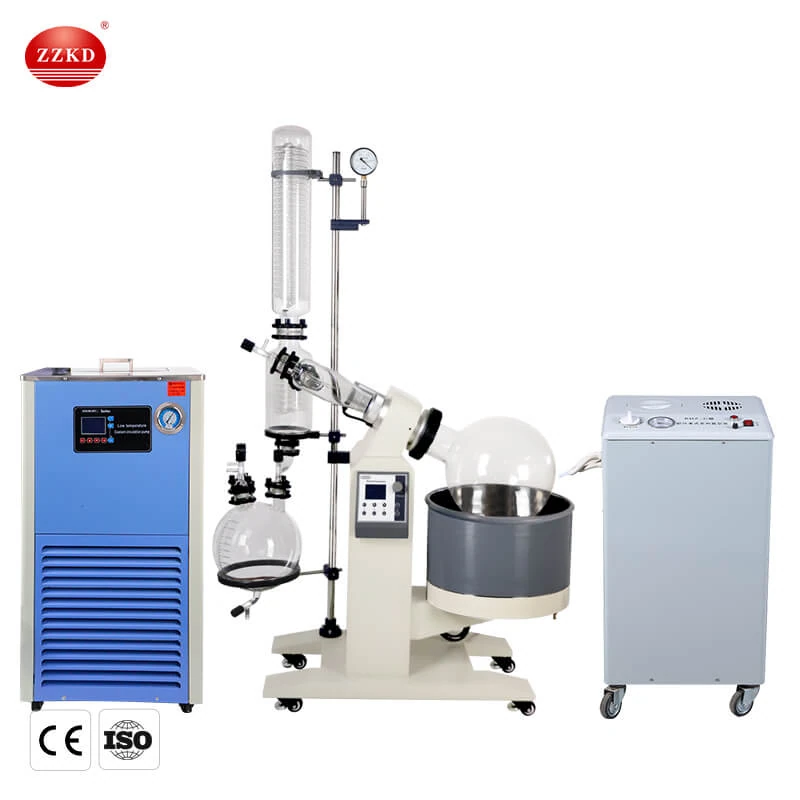
Optional Equipments
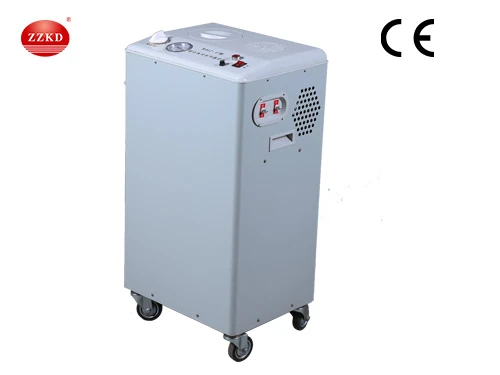
Circulating water vacuum pump: Used to provide a vacuum source.
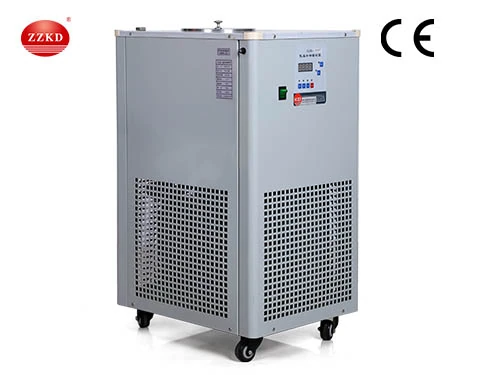
Low temperature cooling liquid circulation pump: For condensation and reducing waste of materials.
Circulating Water Vacuum Pump