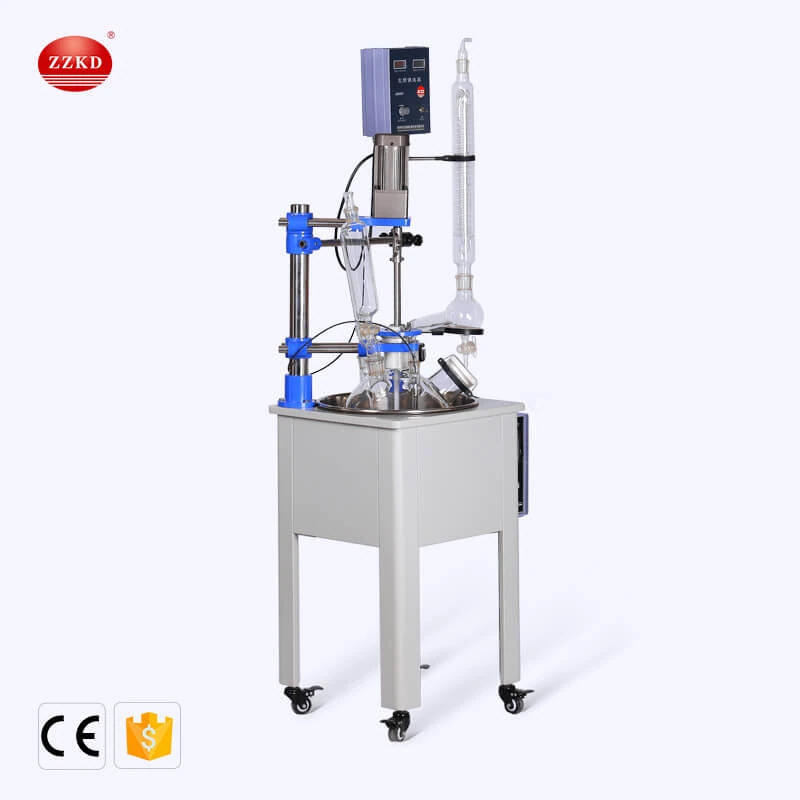
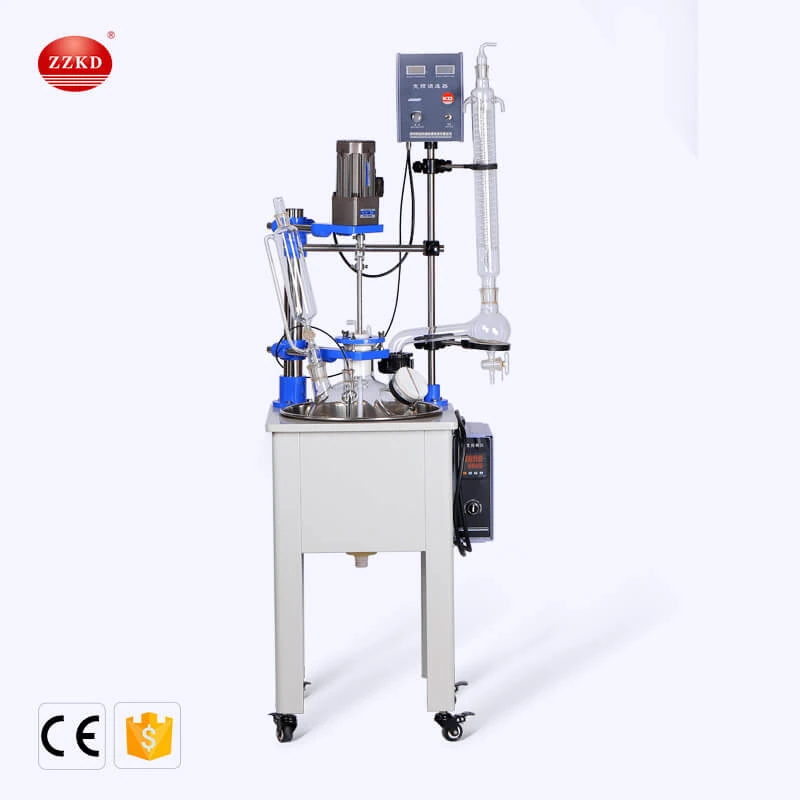
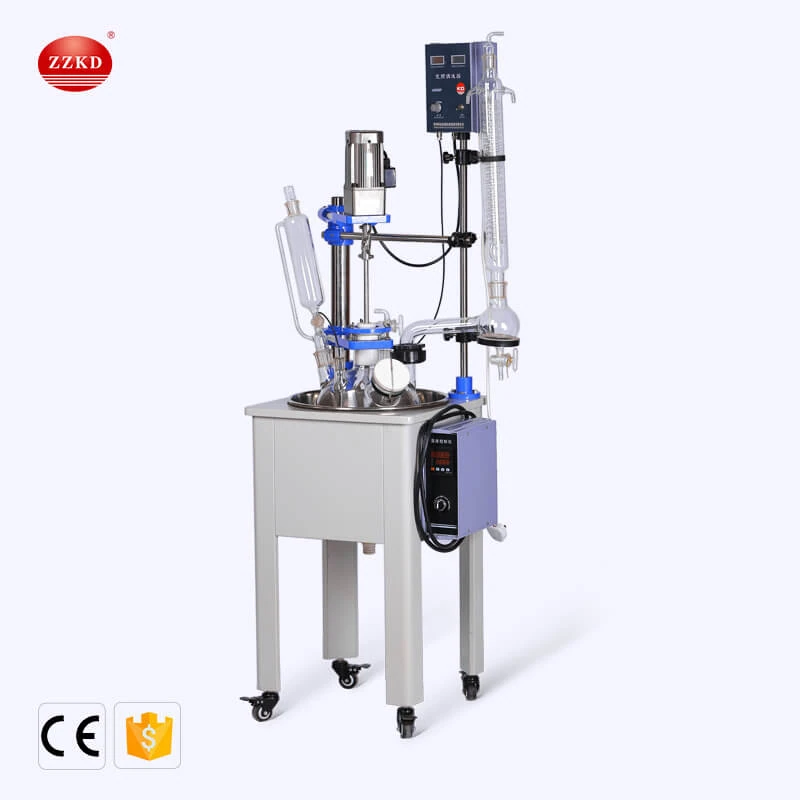
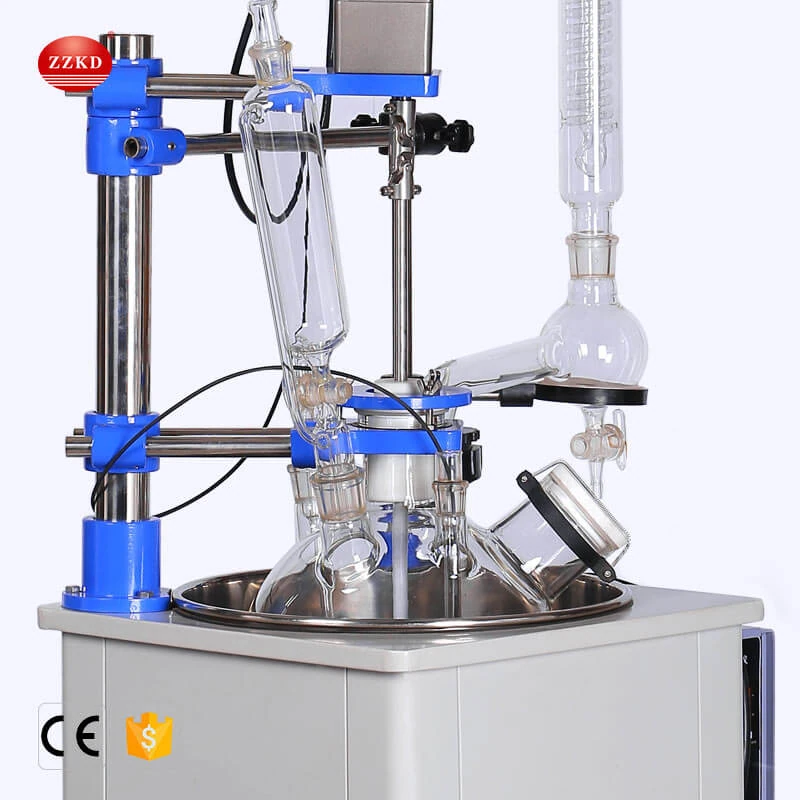
Overview
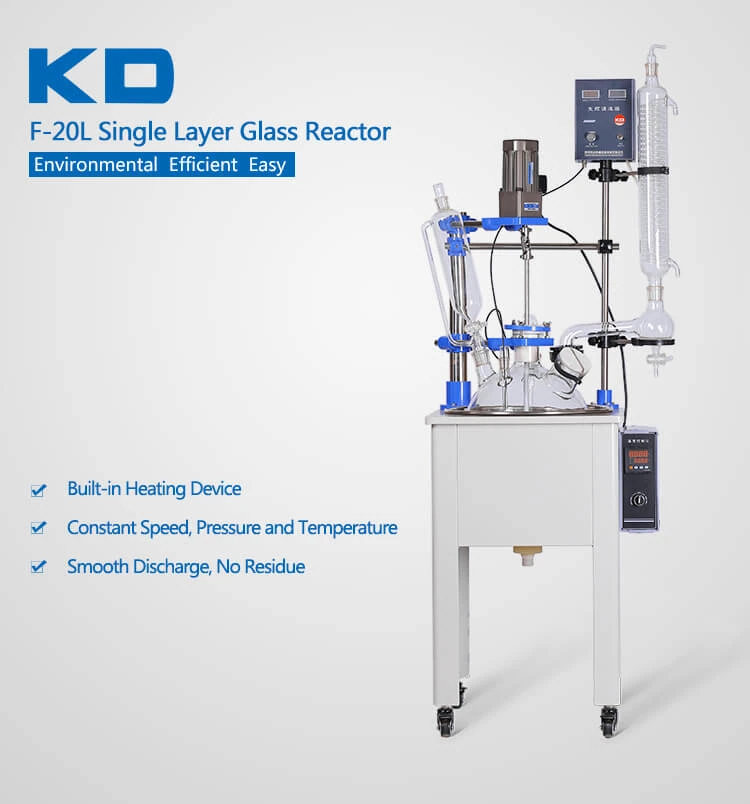
The borosilicate glass reactor passes through the interlayer of the double-layer reaction kettle, and the constant temperature hot solution or cooling liquid is passed into the system to heat or cool the materials in the reaction kettle at a constant temperature, and can effectively control the reflux of the solution during the evaporation reverse reaction. The discharge port at the bottom of the kettle is released. It is an ideal teaching equipment for modern chemical sample synthesis, petrochemical, small test/pilot test sample, biotechnology pharmaceutical and new material enterprises.
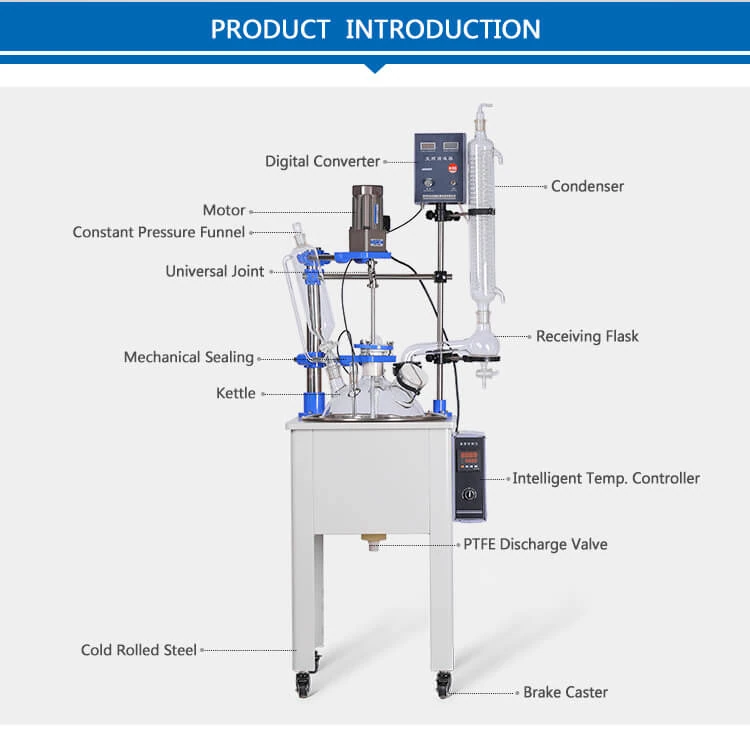
Basic configuration of borosilicate glass reactor:
1. The kettle cover is made of polytetrafluoroethylene.
2. The main bracket is made of square steel anti-corrosion spray + aluminum alloy + stainless steel.
3. Glass + PTFE discharge valve, no liquid side discharge.
4. The parts in contact with materials are all made of high-quality glass and polytetrafluoroethylene, which has stable performance and is not easy to chemically react with materials.
5. The gold cover and the part above the kettle cover can be lifted and lowered electrically, and the kettle body can be rotated 150° to the left by the hand wheel.
6. Low-speed field force motor, variable speed regulation, fine-tuning through rotary motion, double-display speed regulation, digital display of speed and temperature of internal materials.
7. The stirring system adopts ceramic bearings and mechanical seals to prevent the stirring rod from being worn and chipped.
8. Buffer device: connect the inlet and outlet ports with stainless steel hoses, fix them to the bracket, and then connect them with the external circulation pipe to reduce the pressure of the inlet and outlet fluid, and also avoid the glass layer and the face ring. Set the accessory damage of the osteosynthetic component.
For which media or materials borosilicate glass reactors cannot be used:
1. It is not suitable for any reaction process in which acid and alkali are carried out alternately.
2. Hydrofluoric acid or media or materials containing fluoride ions in any concentration and temperature.
3. Any alkaline medium or substance with a pH value greater than 12 and a temperature higher than 80 °C.
4. The effect of any one concentration is greater than 30%, and the temperature change is greater than 180°C. Phosphoric acid is used as a medium or material.
5. When the temperature changes drastically, excessive stress will cause the porcelain to explode and damage the equipment. Therefore, attention should be paid to heating or cooling during use, and strictly prevent too much cold and too much heat.
Operating skills of borosilicate glass reactor:
1. To react with different media in a borosilicate glass reactor, first check whether the media corrodes the main material.
Special orders are required for severe transient reactions, large amounts of gas or high-temperature inflammable and explosive chemical reactions, as well as high-pressure, high-temperature or medium containing chloride ions, fluorine ions, etc. that cause severe corrosion to stainless steel.
Except for borosilicate kettle body and jacket which are made of transparent glass, others are made of stainless steel or other metal materials;
2. When loading the reaction medium, it should not exceed 2/3 of the liquid level of the kettle body.
3. During work or at the end, it is strictly forbidden to disassemble under pressure! It is strictly forbidden to work under the condition of overpressure and overtemperature.
4. The jacket is heated by heat transfer oil. When adding heat transfer oil, be careful not to mix water or other liquids into it. Check the oil level of the heat transfer oil from time to time.
5. If there is abnormal sound inside the isolation sleeve during operation, stop the machine and release the pressure, and check whether there is any abnormality in the mixing system. Regularly check the swing of the stirring shaft. If the swing is too large, replace the bearing or sliding sleeve in time.
6. Connect the corresponding voltage according to the operating voltage of the controller, single-phase 220V, three-phase 380V, do not reverse the live wire and neutral wire of the controller; do not perform wiring work during power transmission to prevent electric shock!
In order to ensure the normal operation of the controller and the personal safety of the staff, please connect the grounding wire! The controller itself is not explosion-proof, so it should avoid flammable and explosive environments such as oil and gas.
7. After the final reaction temperature is determined, it is not allowed to change the temperature setting value during the heating process to avoid a large overshoot of the temperature.
Features
Borosilicate Glass Reactor Features
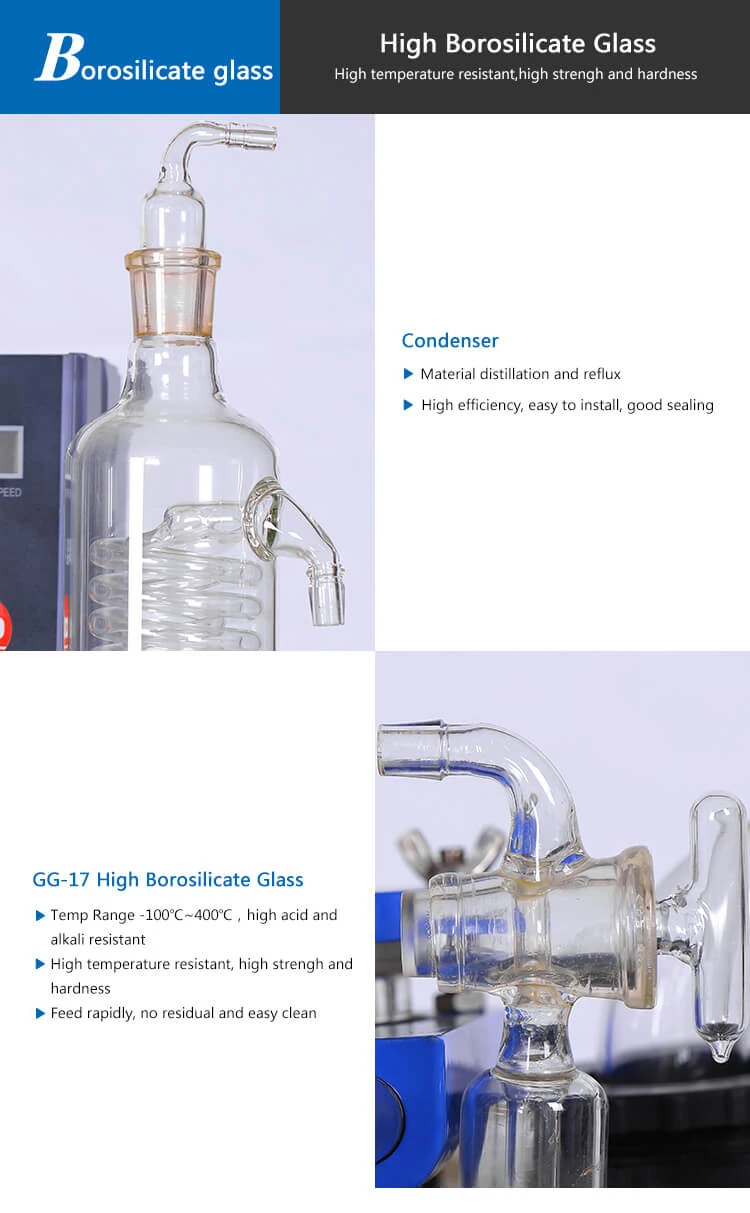
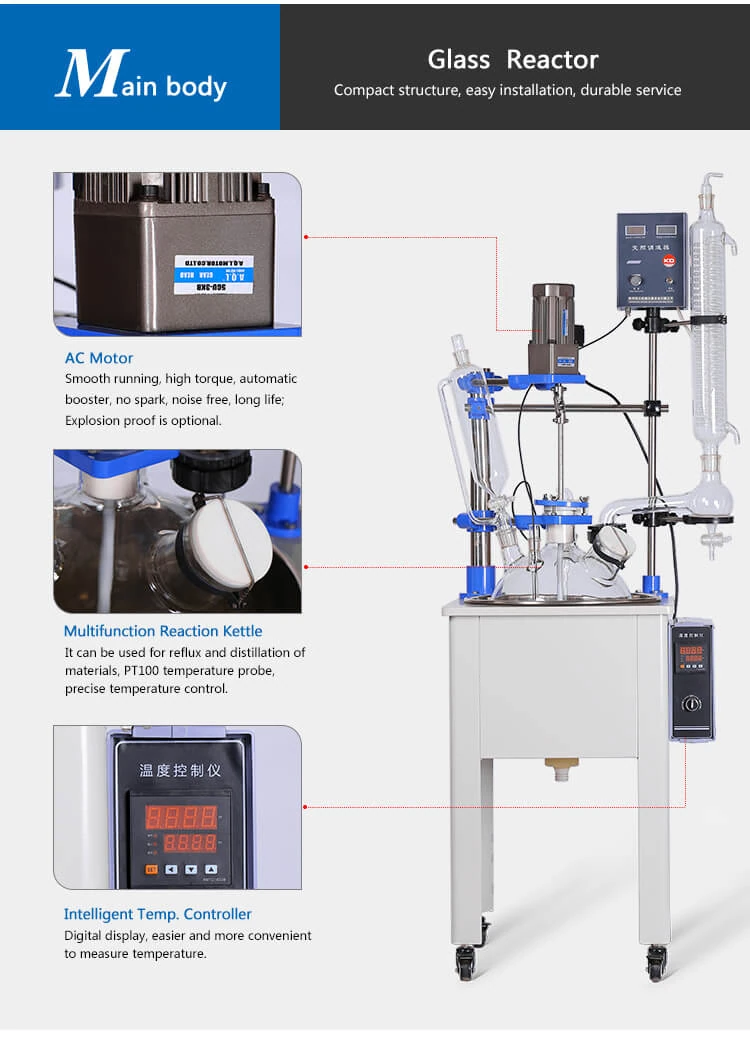
1. GG17 high-borosilicate glass with nice physical-chemical properties; experiment temperature -100 to 400 degree C; Resistant to strong acidic properties of materials; only touching with glass parts & PTFE, no cross-contamination. Precision Mechanical seal stirring to keep high vacuum degree.
2. Glass(PTFE)discharge valve, no-dead angle mixing, fast no residue discharge. Frequency control speed gear motor, smooth running,high torque, automatic booster , no spark, noise free, long life.
3. SUS frame and cast aluminum material kettle body support, simple as well as strong; stable structure. Circulating water/oil bath, heating mantle can supply the heating origin; Cooling mode machine:cool chiller, convenient and practical.
4. Scientific & innovative structure, practical, strong. Explosion-proof is optional.
Precautions for using borosilicate glass reactor:
1. When using vacuum grease on rotating parts such as glass cocks or feeding tubes, please choose a smooth and sticky brand.
2. If the grinding mouth has been fastened or stuck to death, forcibly dismantling it at this time will cause the glass to break, which is very dangerous. When sticking occurs at the grinding mouth, please use heating methods (hot water, blowtorch) to soften the solidified vacuum grease before disassembly.
3. The reaction medium loaded should not exceed 2/3 of the liquid level of the kettle body.
4. When the work is over, it is strictly forbidden to disassemble under pressure! It is strictly forbidden for the reactor to work under overpressure and overtemperature.
Precautions for maintenance of borosilicate glass reactor:
1. Before using the borosilicate glass reactor, check the instrument carefully, whether the glass bottle is damaged, whether the interfaces are consistent, and handle with care.
2. Wipe each interface of the borosilicate glass reactor with a soft cloth and napkin, and then apply a little vacuum grease. (Vacuum grease must be covered after use to prevent lime sand from entering.)
3. The interfaces of the borosilicate glass reactor should not be tightened too tightly, and should be loosened regularly to avoid long-term locking and causing the connectors to bite dead.
4. Do not over-tighten the PTFE switches everywhere, as it is easy to damage the glass. Turn on the power switch first, and then let the borosilicate glass reactor run from slow to fast. When stopping, make the machine stop, and then turn off the switch.
5. Turn on the power switch first, then let the borosilicate glass reactor run from slow to fast. When stopping, make the machine stop, and then turn off the switch.
6. Unscrew each PTFE switch after stopping the machine, and the PTFE piston will be deformed if it is still in the working state for a long time. After each use, you must use a soft cloth to wipe off all kinds of oil stains, stains, and solvent residues left on the surface of the borosilicate glass reactor, and keep it clean.
7. After each use, you must use a soft cloth to wipe off all kinds of oil stains, stains, and solvent residues left on the surface of the borosilicate glass reactor, and keep it clean.
8. Clean the sealing ring regularly. The method is: take off the sealing ring, check whether there is dirt on the shaft, wipe it off with a soft cloth, then apply a little vacuum grease, and reinstall it to keep the shaft and the sealing ring smooth.
9. The electrical part must not enter the water, and it is strictly forbidden to be damp.
10. It is necessary to purchase authentic accessories from the original factory. Random use of other accessories will cause fatal damage to the machine.
11. When doing any repair or inspection on the borosilicate glass reactor, be sure to cut off the power supply and water source first.
Specifications
Technical Parameter
|
Model |
F-20L |
|
Voltage(V) |
AC220V |
|
Mixingpower(W) |
GM120W1/3 |
|
Speed |
60~600rpm |
|
Torque |
1200g/cm |
|
Capacity |
20L |
|
Heatingpower |
5KW/3.5 |
|
Temperatureusingrange |
0-250℃ |
Tips:
1.Voltage 110V or 380V is available.
2.Stirring power, torgue, refrigeration components can be customized.
3.Cusomized configuration is available.