Jacketed Glass Reactor

100L Jacketed Glass Reactor

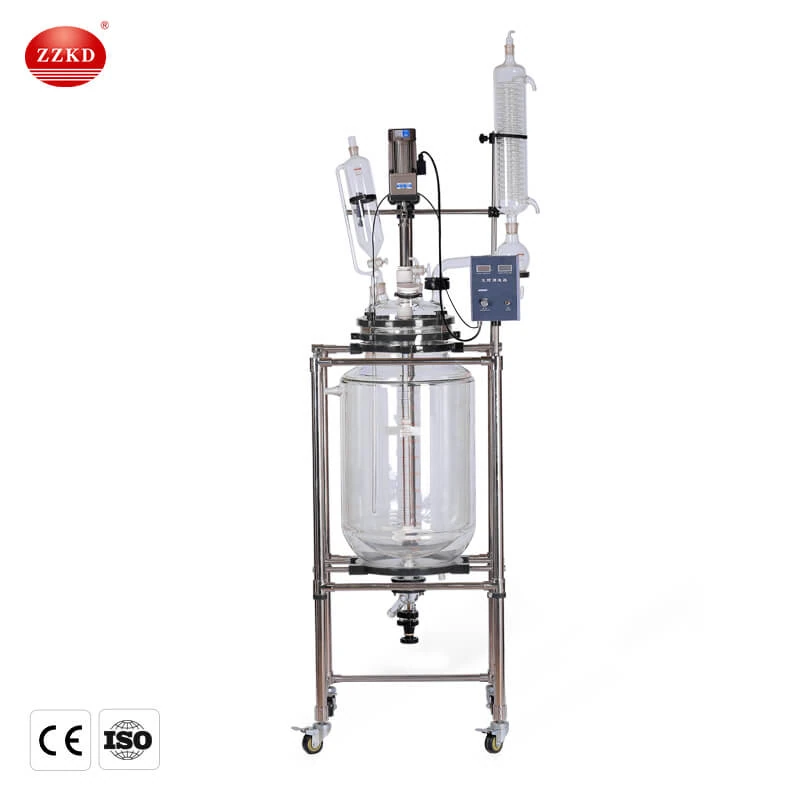
The 100L jacketed glass reactor can be vacuumed and stirred at the same time, and the interlayer can be introduced into the freezing liquid, water and high-temperature liquid to heat up and cool the materials. It is used for experiment, pilot test and production of chemistry, fine chemical industry, biopharmaceutical new material synthesis, etc.

Overview

The 100L jacketed glass reactor passes through the interlayer of the double-layer reactor, injects constant temperature (high or low temperature) heating or cooling liquid, and performs constant temperature heating or cooling on the reactor. In the closed reaction kettle, stirring and reaction are carried out under normal pressure or negative pressure, and the evaporation and reflux of the reaction solution can be controlled. After the reaction is completed, the material can be discharged from the outlet at the bottom of the kettle, and the operation is very convenient. It is an ideal equipment for modern chemical sample experiments, biopharmaceuticals and new material synthesis.
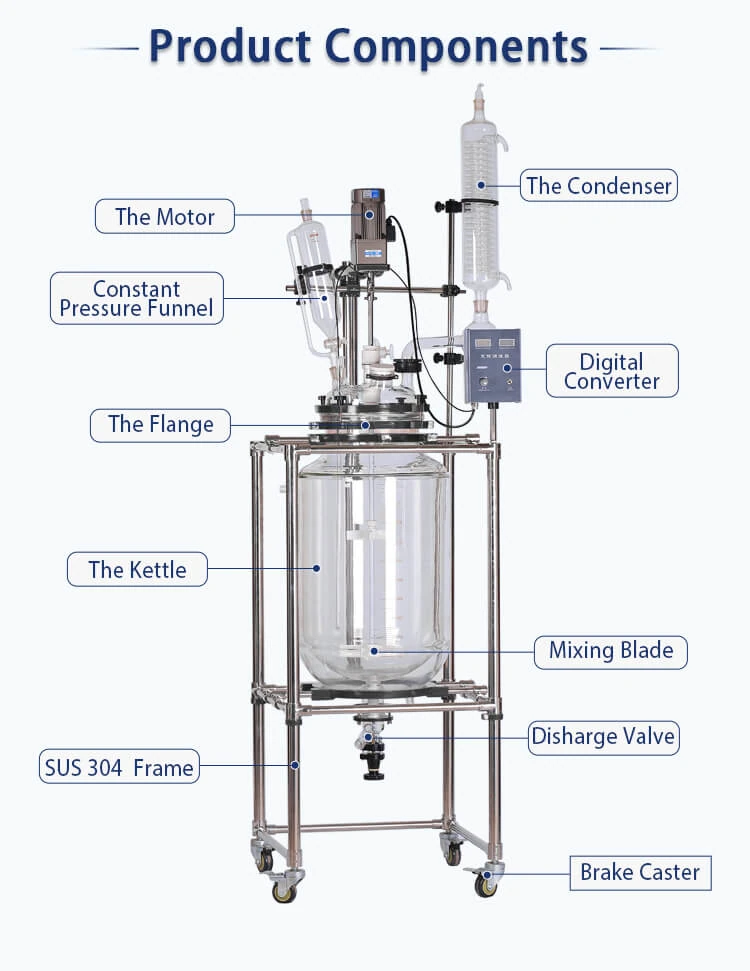
100L jacketed glass reactor

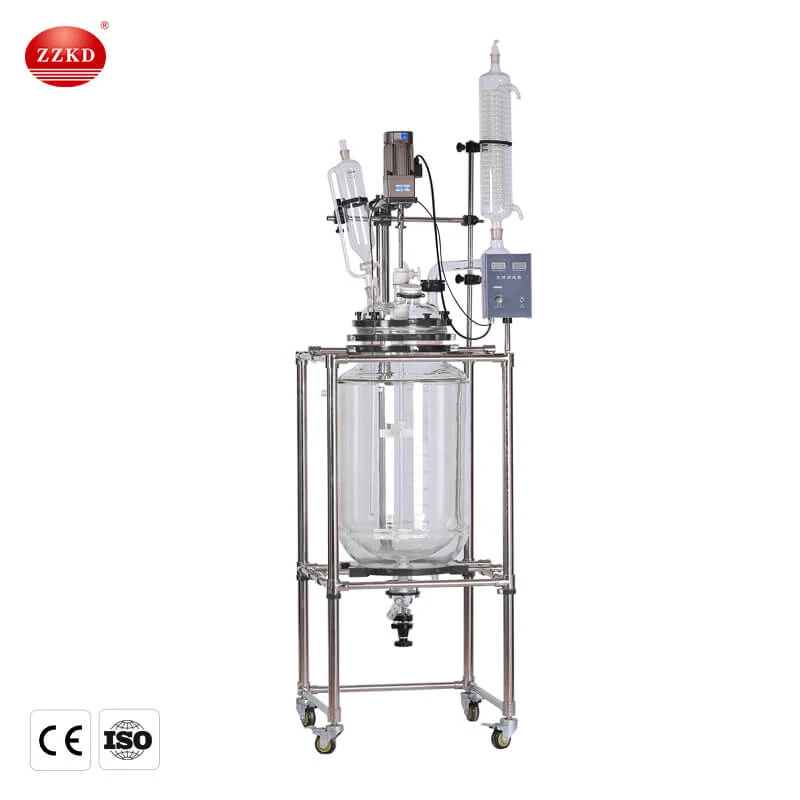
The body of the 100L jacketed glass reactor has double layers, and the heat source and cooling liquid are used in the middle of the interlayer to provide the needs of the reaction. The first layer is the vacuum interlayer kettle body for insulation, and the second layer provides heat and cold for the reaction. The fully transparent reaction bottle can make the reaction process clear at a glance. It can maintain the vacuum degree of similar products in the market, and the discharge valve can release concentrated liquid and trace solid materials. The material is made of high borosilicate glass, which has excellent physical and chemical properties, strong corrosion resistance, and maintains the aesthetics and longevity of the whole machine.

100L jacketed glass reactor operating procedures:
The 100L jacketed glass reactor is widely used in the laboratory, and its use must be strictly in accordance with the correct operating procedures:
1. Before use, check whether the power supply voltage is consistent with the specification provided on the nameplate of the machine.
2. Plug in the power plug, turn on the power switch on the inverter, and use the speed control knob to select a suitable speed. The flow of materials and the power of the motor speed may resonate at a certain point, please change the speed of the motor to avoid resonance.
3. After the stirring rod is installed, it must be rotated by hand, pay attention to whether the concentricity is good, if the concentricity is not good, loosen the heavy clamp, and then turn on the power after clamping it, and adjust it gradually from slow to fast.
4. Using the stirring rod regulator, the stirring blade can be moved up and down by 5cm as required.
5. If the sealing performance of the 100L jacketed glass reactor is found to be reduced, please check the rotating bearing in the agitator sleeve.
6. The glass parts of the 100L jacketed glass reactor are all made of GG.17 low expansion coefficient and high temperature resistant borosilicate glass. Users provide glass instruments such as reaction bottles by themselves. Please confirm the glass material to ensure safe use.
7. The interlayer on the 100L jacketed glass reactor is externally connected to the circulation port, which can be connected with hot oil for heating reaction, and can be fed with cooling liquid for low-temperature reaction. If steam heating is used, the temperature should not exceed 0.5K-1K. (Try not to use pressure steam to heat).
8. When the test is carried out at low temperature, the discharge valve at the bottom will be frosted. When using the valve, it must be partially thawed first to prevent the glass from being broken.
9. If there are particulate objects in the solution of the 100L jacketed glass reactor during use, the residue may accumulate on the PTFE piston of the valve when discharging, and the airtightness will be affected when it is used again. Be sure to discharge every time Then wash it before using it again.
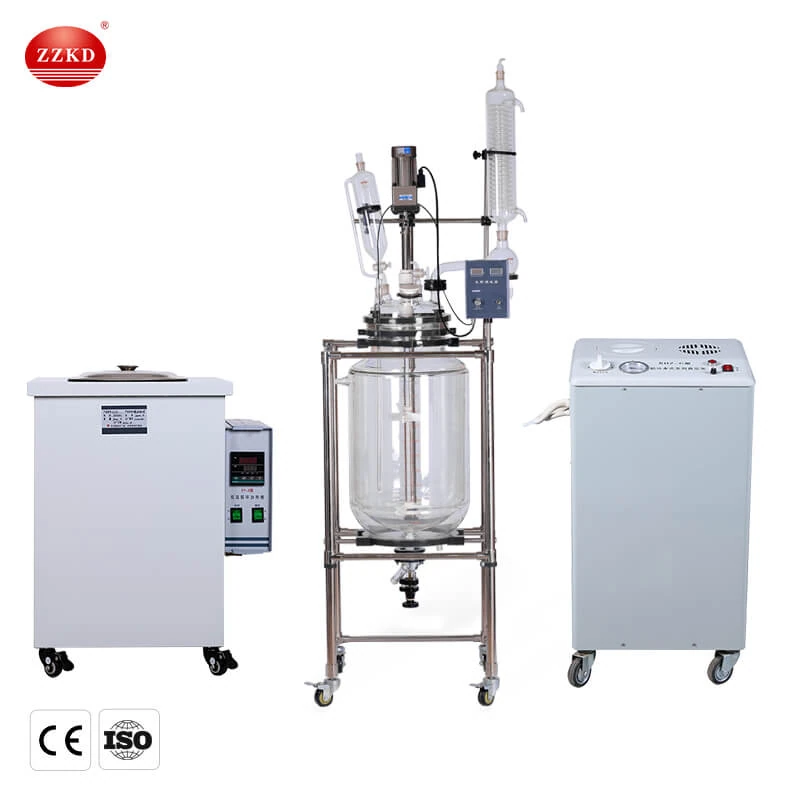
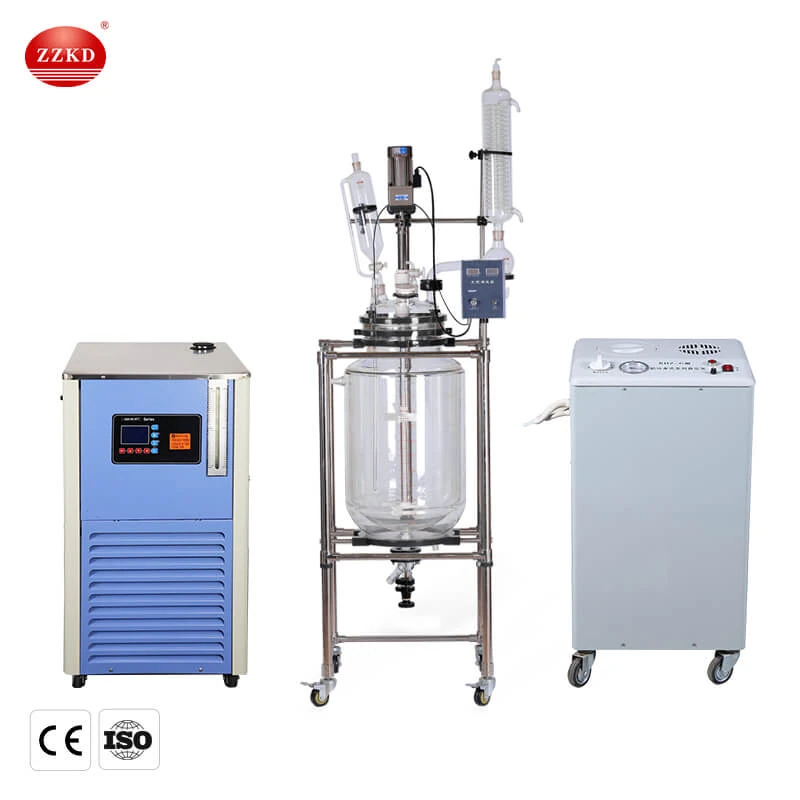
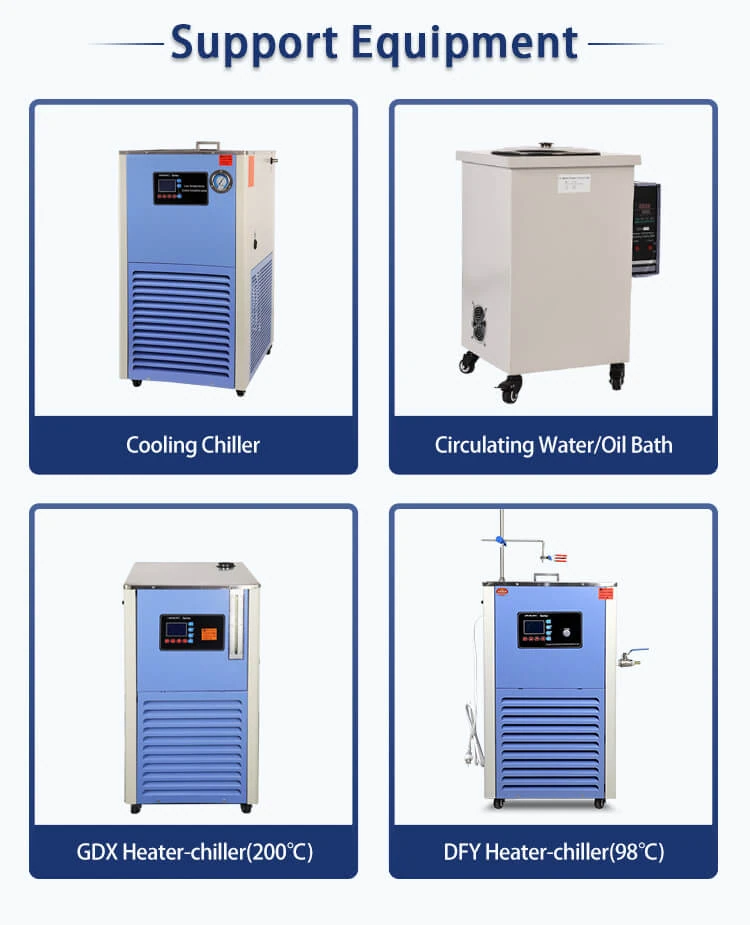
The 100L jacketed glass reactor can be combined with circulating water multi-purpose vacuum pump, diaphragm vacuum pump, circulating cooler, constant temperature circulator, low-temperature cooling liquid circulating pump, closed refrigeration and heating circulation device, etc. to form a system device.

100L jacketed glass reactor Ancillary Equipment

Features

Features of 100L jacketed glass reactor:
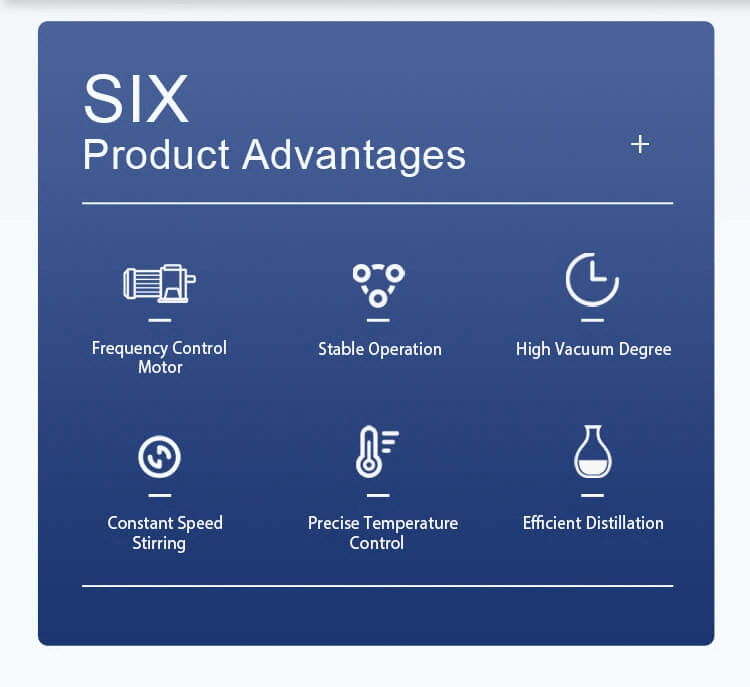
1. Frequency conversion speed regulation, geared motor, constant speed, no brush, no spark, safe and reliable, and can work continuously.
2. All glass is made of GG173.3 high borosilicate glass, which has excellent chemical and physical properties.
3. The overall stainless steel column type mobile frame structure, six-port reaction kettle cover. Large mouth design, easy to clean, the standard mouth can be equipped with distillation and synthesis devices such as reflux, liquid addition, and temperature measurement.
4. The 100L jacketed glass reactor has a stainless steel-coated PTFE stirring paddle, which is suitable for mixing liquids with low viscosity.
5. The flange of the lower discharge port and the PTFE valve, inside the container, the lower discharge material can be disassembled, which is convenient for the safe and fast discharge of solid materials.
6. Alloy steel mechanical seal, PTFE connection port, maintain high-precision sealing during work.
7. The Pt100 sensor probe has high temperature measurement accuracy and small error.
100L jacketed glass reactor

How to improve the working efficiency of 100L jacketed glass reactor?

1. Insulation medium.
The thickness of the interlayer in the middle of the 100L jacketed glass reactor is small, so the thermal insulation performance is poor. When using high and low temperature processes, it is necessary to use thermal insulation materials to protect the kettle body. The kettle body and the liquid guide pipe of the reaction kettle must be covered with insulation materials, and attention should be paid to the thickness of the insulation layer to ensure a good insulation effect.
2. Selection of temperature control medium.
Choose temperature control media with different properties, and use them as reaction heat transfer media according to the required reaction temperature. When the temperature is low, choose an ice-alcohol bath; when the temperature is normal, choose a water bath; when the temperature is high, choose an oil bath.
When using low temperature or high temperature, we should pay attention to choose the appropriate medium, the key lies in the viscosity. If the viscosity of the medium is too high, the circulation pump may not be able to drive, the circulation effect of the medium is poor, and the required temperature control effect cannot be achieved. You're done, the circulating pump that's done, the pressure of the pressurized medium is too high, it is easy to damage the lining of the 100L jacketed glass reactor, resulting in the rupture of the reactor. Generally, manufacturers will also choose corresponding heating media according to their own products.
3. Storage location.
The scale-up test uses a 100L jacketed glass reactor, and the specific capacity can be adjusted according to user requirements. Therefore, the scale of the test should not be underestimated. Because the body of the 100L jacketed glass reactor is made of glass, stainless steel is used as the bracket, and the legs are casters, so the storage location should be carefully selected.
Although the casters can be fixed with foot buckles, the stability is not good. Therefore, when storing, pay attention to choosing to lay it flat. When laying it flat, keep the 100L jacketed glass reactor consistent with the mechanical stirring center, otherwise it will easily shake and become unstable, and a safety accident will occur. The height of the 100L jacketed glass reactor is about 1.5m, and it is equipped with a straight top condenser. The height of the whole reactor is about 2m. Ordinary floor ventilated kitchen utensils cannot be placed, but must be placed in a well-ventilated place.
4. Precautions for feeding.
The 100L jacketed glass reactor is an independent reaction frame, which is different from industrial reactors. Its preset feeding port is small, and the feeding process is more difficult.
The 100L jacketed glass reactor should not be fed too much at one time. It should be evaluated according to the reaction temperature, reflux and pressure, and the appropriate materials should be added.

Specifications

Main technical datas:

Model (EX)S-100L
Power supply AC220V
Stirring power(W ) 250  1/3 Gear Motor
Rotary speed(rpm) 0~600
Torque(g/cm) 30000
Capacity(L) 100
Discharge method Discharge from bottom, discharge valve

Detailed technical datas:

Model S-100
Shaft diameter 18mm
Stirring neck (flange) Φ40mm  60mm
Thermometer (taper) 24#*Φ34
Inlet/outlet volume gas (taper) 34#*Φ45
Solid feeding neck (flange) Φ60mm  80mm
Condensing neck (1-5taper10-100round) 50#*Φ60
Liquid feeding neck(taper) Φ40mm  50mm
Bottom discharge neck(flange) Glass Φ30mm  70mm
Jacket liquid Inlet/Outlet Φ16mm  28mm
Stirrer length,diameter,weight 1150mm  Φ250mm  2.1kg
Thermowell length,diameter,weight 880mm  Φ15mm  0.2kg
Stirring seal (heitht,diameter,weight, ) 190mm  Φ50mm  0.55kg
Funnel (height diameter,weight,) 555mm  Φ95mm  1kg
Condenser (length,diameter,weight) 600mm  Φ120mm  2.9kg
Glass Bottom discharge 230mm  Φ170mm
TALK TO OUR TEAM

Send an inquiry.

Share your application, equipment model or technical question. We will help you find the information you need.

+8617324835373[email protected]

19/F, Block B, Guohong Mansion, Hi-Tech Development Zone, Zhengzhou City, Henan Province, China

Fields marked * are required.

Sending your inquiry…

Please wait. You will be redirected when your inquiry has been submitted.