Overview
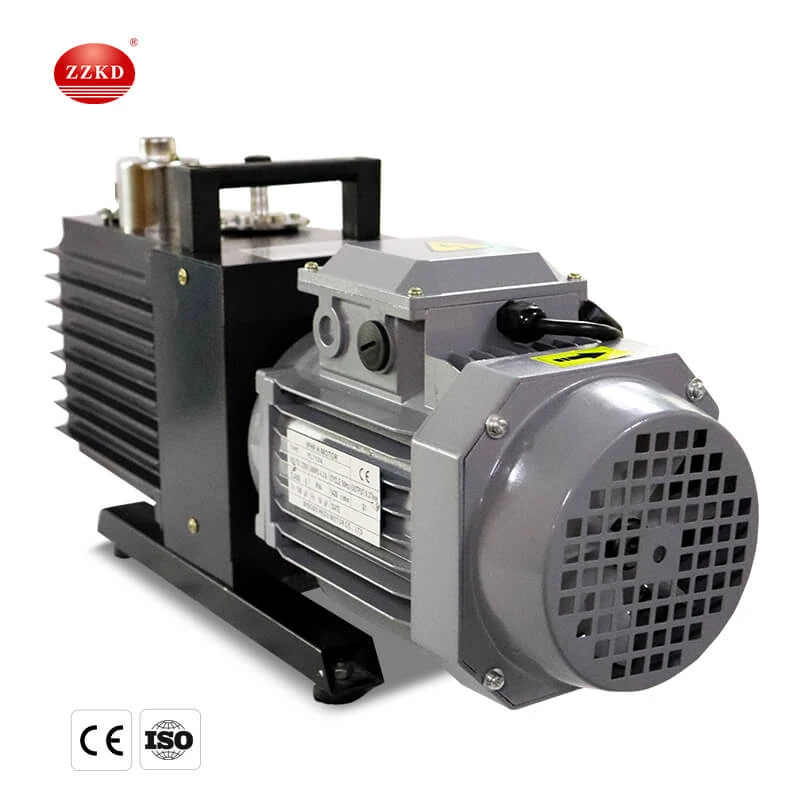
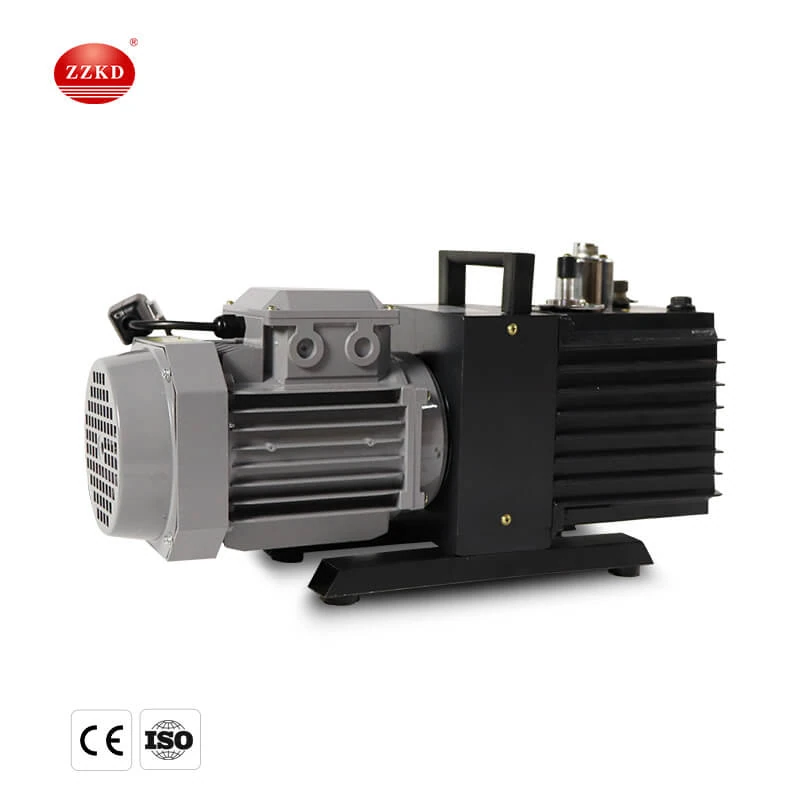
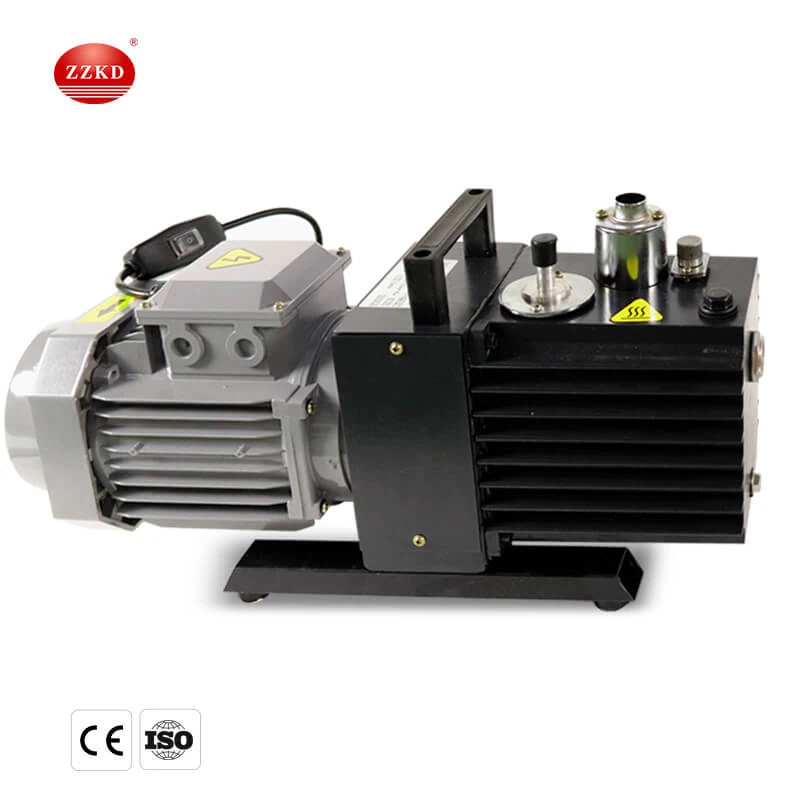
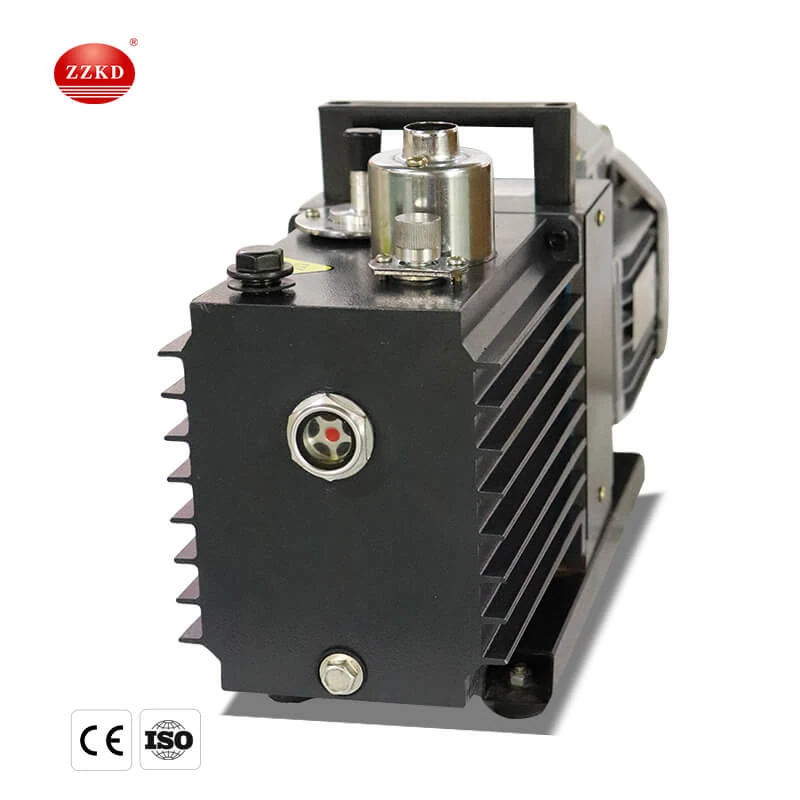
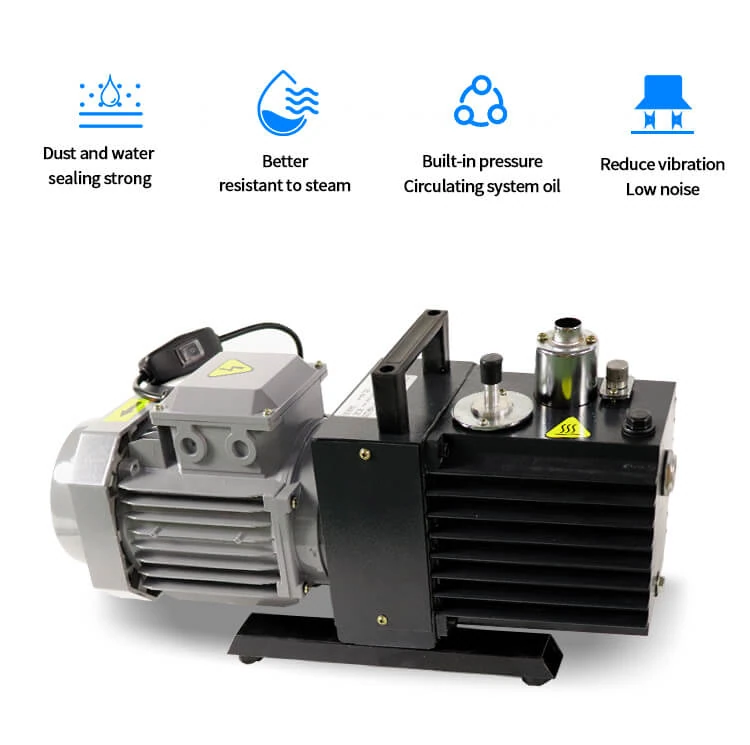
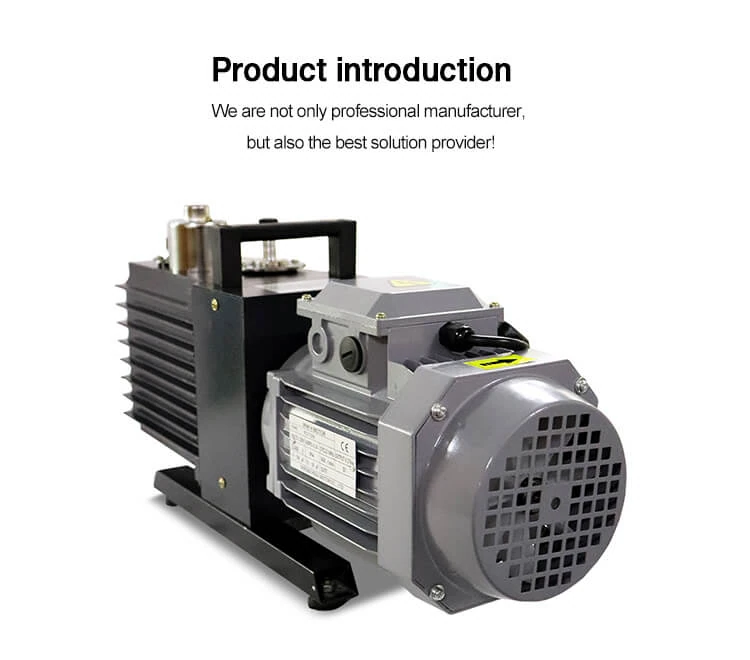
Vacuum pump for laboratory is one of the main types of low and medium vacuum pumps. It can be divided into oil-sealed pumps and dry pumps. According to the required vacuum degree, single-stage pumps and double-stage pumps can be used, among which the application of two-stage pumps is more common.
Mainly used in electronics, refrigeration, electric light source, chemical industry, hospital, bottle liner, packaging, dehydration, drying and other industries. (However, it cannot be used to pump out explosive, corrosive to metal, chemically reactive to vacuum oil, and gas with particles and dust, nor can it be used as a delivery pump and compression pump).
The eccentrically installed rotor in the vacuum pump for laboratory is tangent to the fixed surface of the stator, and two (or more) rotary vanes slide in the rotor groove (usually radially) and contact the inner wall of the stator, dividing the pump chamber into several variable A rotary variable volume vacuum pump. Usually, the gap between the rotary vane and the pump chamber is sealed with oil, so the vacuum pump for laboratory is generally an oil-sealed mechanical vacuum pump.
The vacuum pump for laboratory can remove the dry gas in the sealed container, and if it is equipped with a gas ballast device, it can also remove a certain amount of condensable gas. But it is not suitable for pumping the gas with high oxygen content, corrosive to metal, chemical reaction to pump oil and dust particles.
How to use the vacuum pump for laboratory:
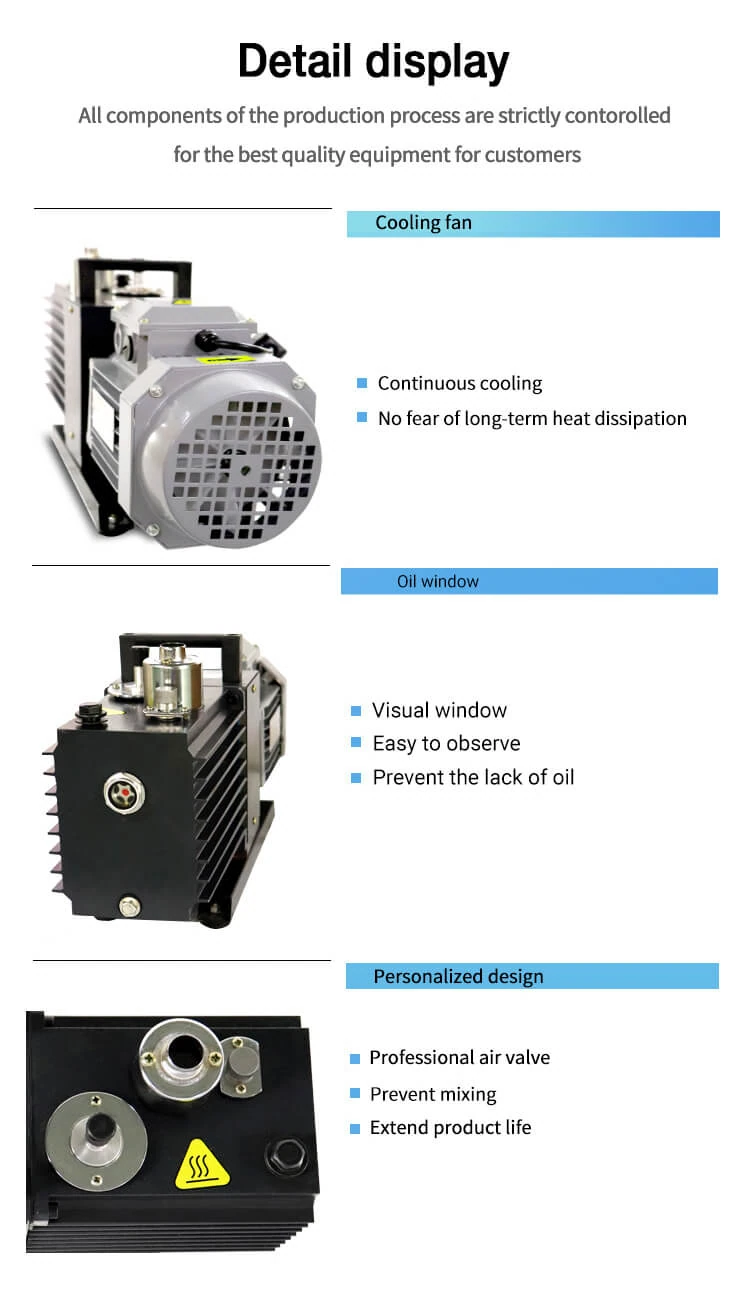
1. If it is too low, the exhaust valve cannot be used as an oil seal, which will affect the vacuum degree. If it is too high, it may cause fuel injection when starting through the atmosphere. The oil is clean vacuum pump oil of the specified brand, which is added from the oil filling hole. After refueling, the screw plug should be screwed on. The oil should be filtered to prevent debris from entering and blocking the oil hole.
2. The vacuum pump for laboratory can be started at one time with the atmosphere or any vacuum degree. If the pump port is equipped with a solenoid valve, it should act simultaneously with the pump.
3. When the ambient temperature is too high, the temperature of the oil increases, the viscosity decreases, and the saturated vapor pressure increases, which will cause a decrease in the ultimate vacuum, especially the total pressure measured with a thermocouple meter. If the ventilation and heat dissipation are enhanced, or the performance of the pump oil is improved, the ultimate vacuum can be improved.
4. Check the ultimate vacuum of the vacuum pump for laboratory with a compressed mercury vacuum gauge. If the meter is fully pre-pumped and calibrated, the pump temperature is stable, the pump port is directly connected to the gauge, and the ultimate vacuum will be reached within 30 minutes of operation. The value measured by the total pressure gauge is related to the errors of pump oil, vacuum gauge and regulation, and sometimes the error can be even large, so it can only be used as a reference.
5. If the relative humidity is high, or the pumped gas contains more condensable steam, it is advisable to open the gas ballast valve after connecting the pumped container, and close the gas ballast valve after 20-40 minutes of operation. Before stopping the pump, you can open the gas ballast valve and run without load for 30 minutes to prolong the life of the pump oil.
Features
Features of vacuum pump for laboratory:
1. Low noise, low vibration, long service life Magnet fixing method, safe and convenient
2. It can be equipped with a stainless steel oil mist filter, with an independent oil tank design and oil mist catcher to prevent the oil mist from dispersing in the air, thereby reducing air pollution in the laboratory
3. It can be used in experiments with high flow rate and medium to high vacuum degree in the laboratory, such as vacuum drying oven, vacuum filtration, vacuum oven, centrifugal concentrator, etc.
vacuum pump for laboratory maintenance and maintenance:
1. Keep the pump clean and prevent debris from entering the pump.
2. Maintain oil level.
3. After storage, when water or other volatile substances enter the pump and affect the ultimate vacuum, open the gas ballast valve to purify it, and observe the rise of the ultimate vacuum. If it is invalid for several hours, the pump oil should be replaced, and it can be replaced again if necessary. Oil change method: run the pump for about half an hour to make the oil thinner, stop the pump and drain the oil from the oil drain hole, then open the air inlet and run for 10-20 seconds, during which time a small amount of clean pump oil can be slowly added from the suction port, To replace the oil in the pump chamber.
4. When disassembling and washing the internal parts of the pump, generally wipe it with gauze. When metal debris, sand and mud or other harmful substances must be cleaned, they can be scrubbed with gasoline, etc., and can be assembled after drying. Do not soak in gasoline.
5. If the pump needs to be disassembled for cleaning or maintenance, attention must be paid to the disassembly and assembly steps to avoid damage to the parts.