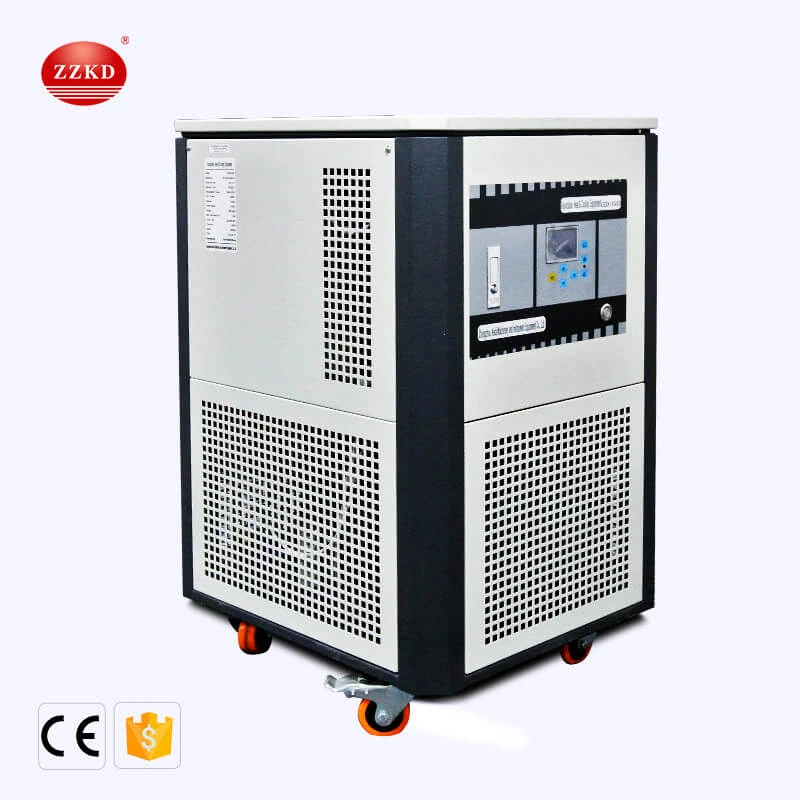
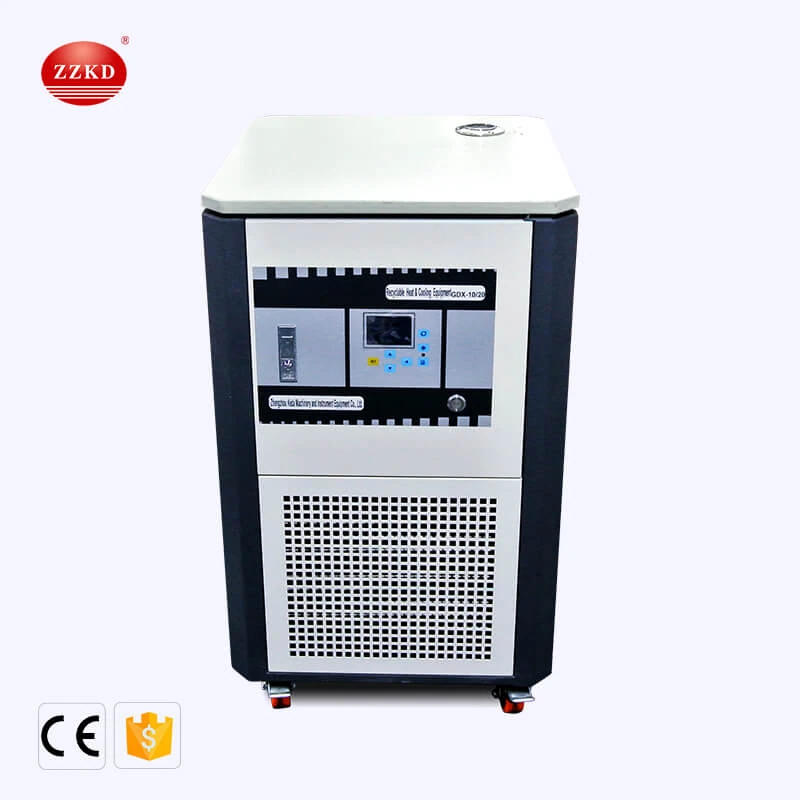
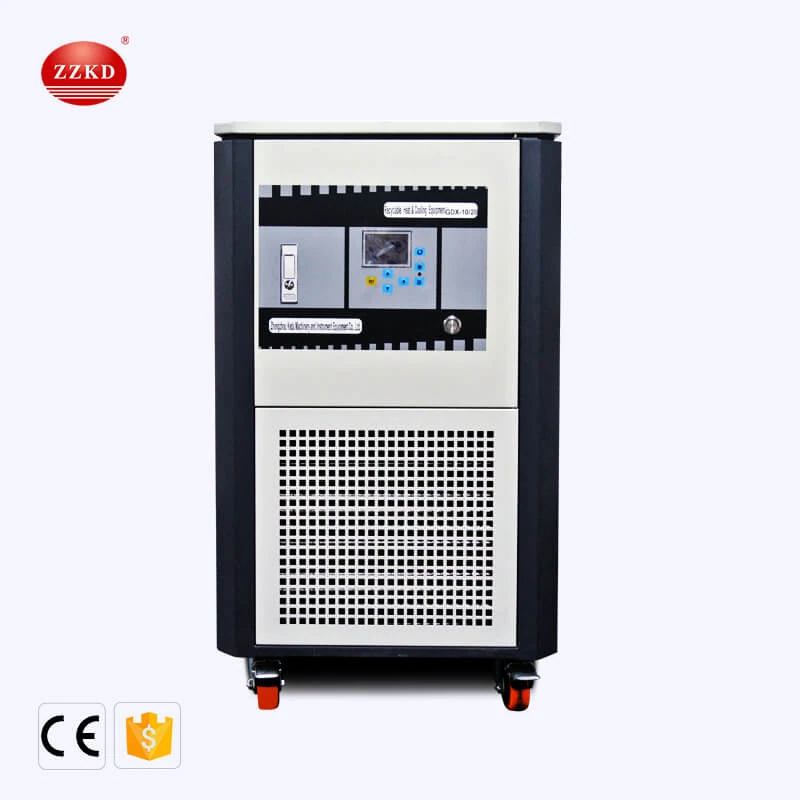
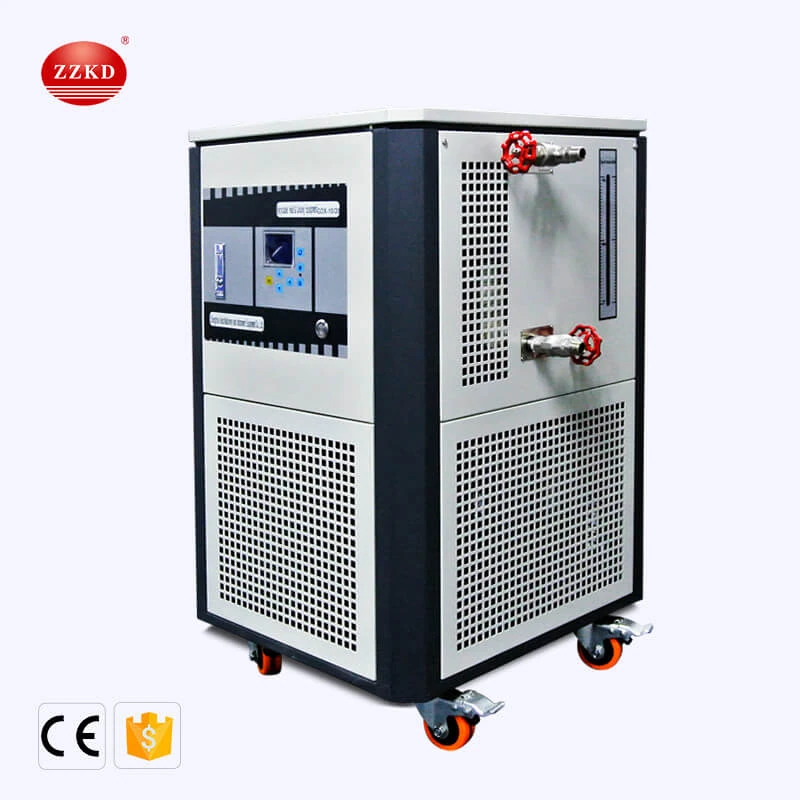
Overview
The recirculating chiller for rotary evaporator uses a pump to drive the heat transfer medium (usually water or oil) from the oil tank with a built-in heater to the temperature control device, and then returns to the oil tank from the temperature control device. Suitable for pharmaceutical, chemical, biological, physical, laboratory, university and other industries.
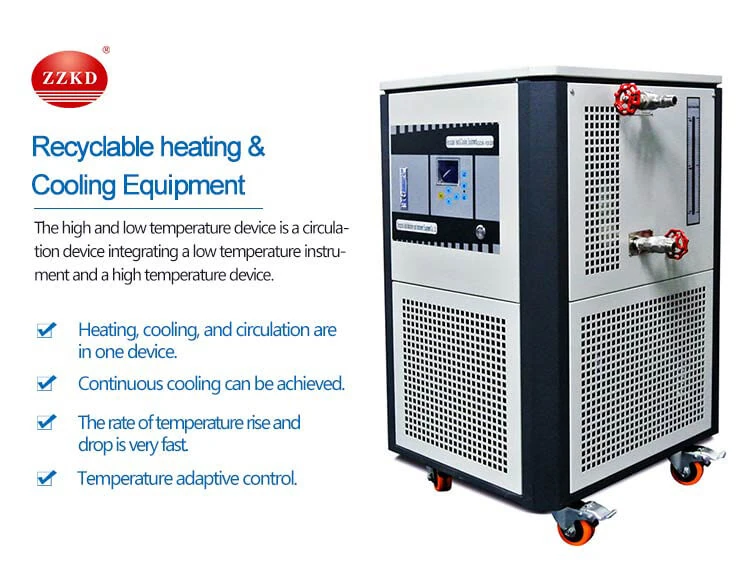
How to use recirculating chiller for rotary evaporator:
Before starting recirculating chiller for rotary evaporator:
1. Check whether the rotary evaporator, rotating parts, auxiliary equipment, indicating instruments, reliable valves, pipelines and valves meet the reliability requirements.
2. Check whether the water, electricity and gas meet the reliability requirements.
recirculating chiller for rotary evaporator booting:
1. Turn on the agitator of the rotary evaporator before adding materials, there is no noise and it is normal.
2. Before opening the steam valve, first open the return valve, and then open the intake valve. Open the steam valve slowly to preheat the jacket and increase the pressure gradually. The pressure in the jacket must not exceed the specified value.
3. The steam valve and cooling valve cannot be activated at the same time, and hammering and collision are not allowed when the steam pipeline passes through the gas.
4. When opening the cooling water valve, open the return valve first, and then open the water inlet valve.
5. For the water circulation vacuum pump, the pump should be turned on first and then the water should be supplied. When the pump is stopped, the pump should be stopped first and then the water should be stopped.
6. Check the operation of the rotary evaporator at any time, and stop it for maintenance if abnormalities are found.
7. When cleaning the titanium epoxy (enamel) reactor, it is not allowed to brush the reactor with alkaline water, and be careful not to damage the enamel.
After recirculating chiller for rotary evaporator shutdown:
1. Stop stirring, cut off the power supply, and close various valves.
2. When shoveling the pot, it is recommended to cut off the power of the mixer, hang a warning sign, and set up someone to monitor.
3. The recirculating chiller for rotary evaporator is recommended to carry out regular technical inspection according to the requirements of the pressure vessel. If the inspection fails, it is not allowed to start operation.
When choosing the matching reactor for recirculating chiller for rotary evaporator, you need to pay attention to the quality of the selection, and it is recommended to choose a better brand.
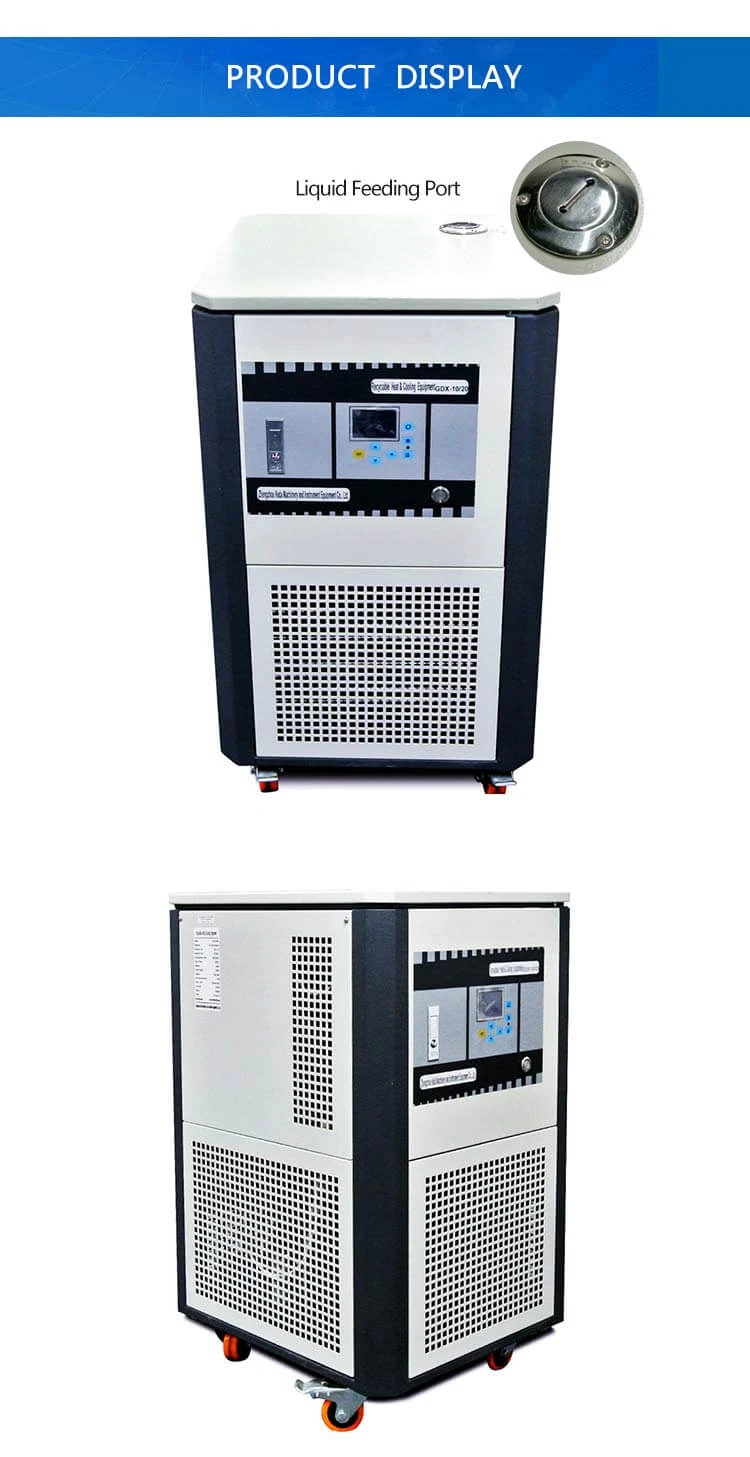
Features
Recirculating chiller for rotary evaporator features:
1. Heating and refrigeration circulator -20~200°C 10KW, temperature control accuracy ±0.5°C.
2. Refrigeration: Single-unit cascade refrigeration is adopted, and the cooling capacity: 1 to 1000KW is available.
3. Control system: programmable PLC plus touch screen.
4. With RS485 and R232 interfaces, it can communicate with the computer so as to accept the setting and control of the computer and transmit the measured temperature to the computer.
5. Imported heat transfer fluid can be used.
6. The transmission pump adopts a magnetic pump, which has no leakage, no pollution and high lift.
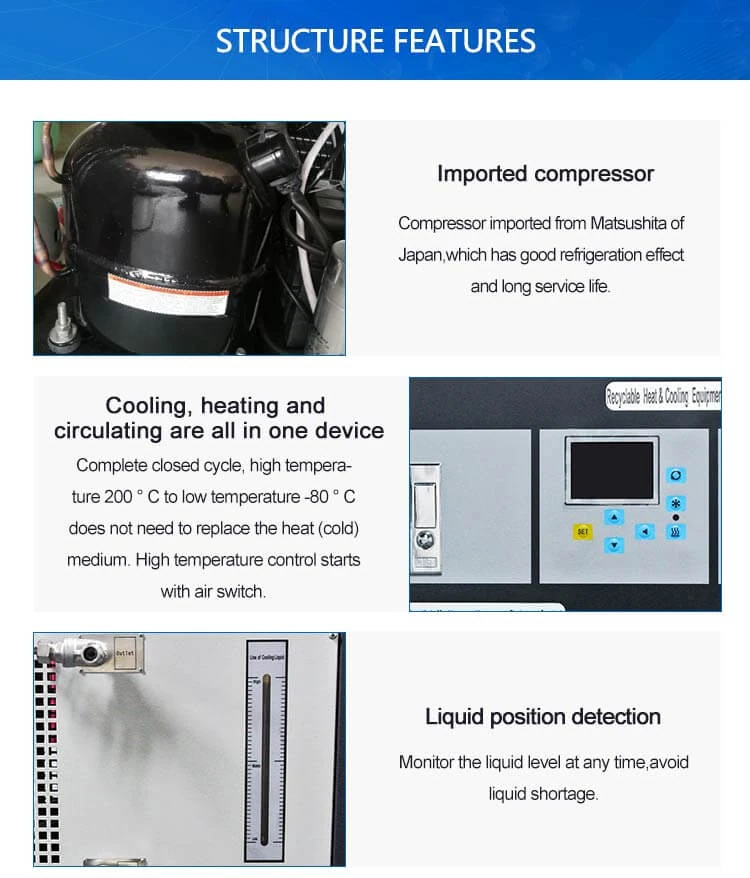
7. The liquid storage tank and the pipeline are sealed and pressure-bearing to prevent the volatilization, condensation and freezing of the refrigerant, and there is a liquid level indicator.
8. For small load heating, the hot gas bypass of the compressor can be used to heat the load.
9. Multiple alarm protections: water cut off, high water temperature, circulating pump failure, compressor overheating, high pressure, overcurrent, phase loss, phase continuity, etc.
10. Heat dissipation method: air-cooled and water-cooled are optional, and the air-cooled condenser can be placed outdoors; due to the many industries and uses of the unit, the model cannot be fixed, and most of them need to be tailored according to the actual situation of the user.
Notes for recirculating chiller for rotary evaporator:
1) Regardless of whether it is air-cooled or water-cooled, the temperature control device must be located in an operating environment with sufficient fresh air: a space greater than 30cm around.
2) When choosing a heat transfer medium, pay attention to its upper and lower temperature limits and whether it is suitable for the use of the internal pipeline of the instrument;
3) When selecting heat transfer pipes, the length should be as short as possible and the diameter as large as possible;
4) Do not use water as a heat transfer medium;
5) Unsuitable heat transfer media will have a negative impact on the equipment and may cause damage to the device.
6) After recirculating chiller for rotary evaporator is filled, the equipment adjustment parameters must be reset;
7) Do not knot the heat transfer medium pipeline of the recirculating chiller for rotary evaporator;
8) Regularly check the heat transfer pipes of the recirculating chiller for rotary evaporator to avoid material damage.
Specifications
Main technical data:
| Model | DLSB-50/10 | DLSB-50/20 | DLSB-50/30 | DLSB-50/40 | DLSB-50/60 | DLSB-50/80 | DLSB-50/120 |
| Bath volume(L) | 50L | ||||||
| lowest temp (°C) | -15 | -24 | -32 | -42 | -62 | -82 | -122 |
| Cooling capacity (W) | 9428-4188 | 15786-3694 | 7549-3540 | 10364-2565 | 1442-2780 | 1210-2620 | 1298-2562 |
| Flow (L/min) | 30L/min | ||||||
| Lift(m) | 10-12m | ||||||
| coolant temp (°C) | -10 | -20 | -30 | -40 | -60 | -80 | -120 |
| Temp stability(°C) | ±0.2 | ||||||
| Power Supply(V/Hz) | 380 | 380 | 380 | 380 | 380 | 380 | 380 |
| Ambient temp(℃) | 25 | ||||||
| Ambient humidity(%) | 60-80 Ventilation | ||||||
| Size(mm) | 650*550*950 | 650*550*950 | 700*600*980 | 700*600*980 | 900*700*1140 | 900*700*1140 | 1240*900*1140 |