Chemical synthesis · Equipment budgeting
Glass Reactor Systems for Synthesis Scale-Up: Budget for the Whole Setup
A cost-effective glass reactor system for chemical synthesis scale-up starts with a complete equipment budget—not simply the lowest vessel price. A jacketed glass reactor is one candidate for this work, but its practical suitability depends on the reaction, working batch, operating conditions, and supporting equipment.
The purchasing decision should account for the main reactor assembly, temperature-control equipment, vacuum system, condenser, and installation. Treating these as one coordinated setup makes quotations easier to compare and helps identify costs that a reactor-only listing may leave outside its scope.
Define the synthesis scale-up scope before comparing prices
Start with the process rather than a catalogue capacity. Record the intended liquid charge, solvent system, solids content, viscosity changes, addition sequence, and expected foaming or boiling behavior. Nominal vessel capacity is not the same as usable working batch volume: space may be needed for agitation, additions, vapor disengagement, and process control.
Also specify whether the operation involves reaction only, reflux, solvent removal, or crystallization. These requirements influence the accessories and utilities that belong in the budget. For broader planning context, the glass reactor pilot-plant overview is a relevant starting point.
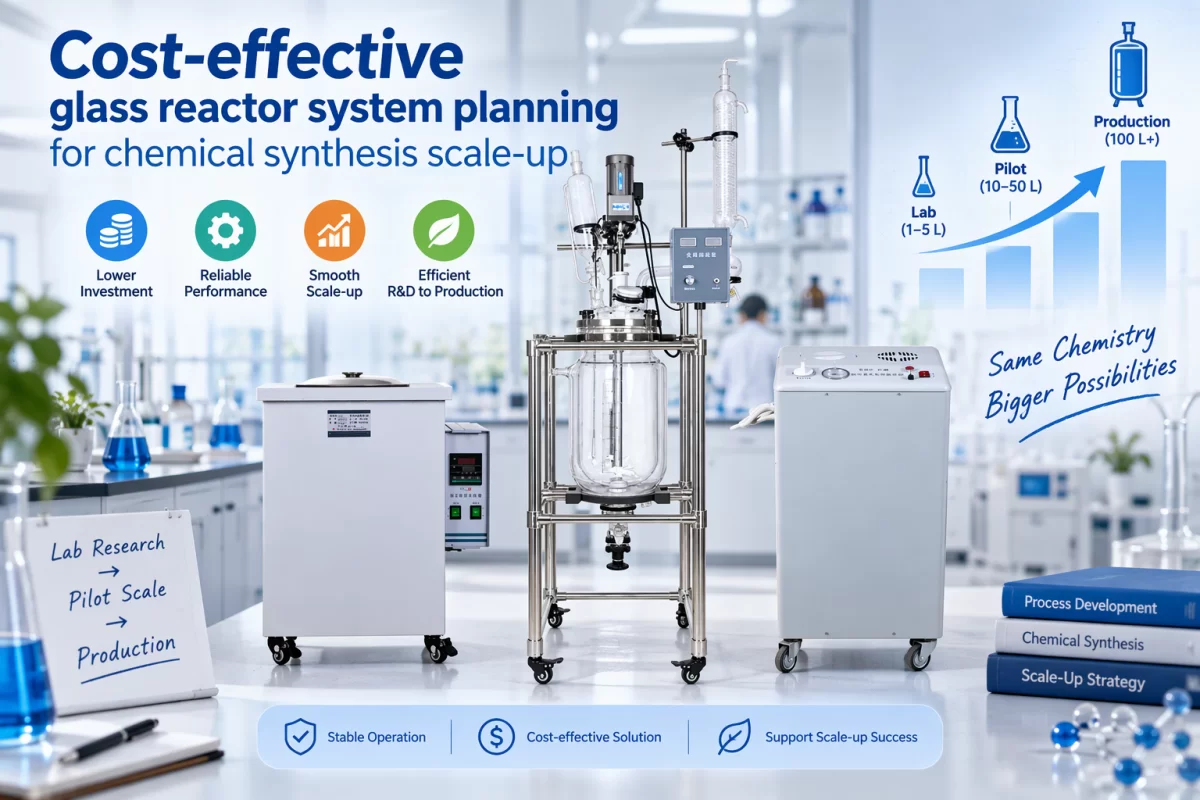
Does a larger vessel automatically make scale-up more economical?
My recommendation is to size the reactor around the intended working batch and process behavior. A larger vessel can introduce additional utility, handling, and accessory requirements. I would compare the complete installed scope before treating extra capacity as better value.
Budget the main jacketed glass reactor assembly
The main assembly budget should identify the vessel, support structure, stirring assembly, lid connections, seals, discharge arrangement, and supplied glassware. Ask for an itemized configuration so that an included component in one quotation is not mistaken for an optional accessory in another.
The supplied S-series model information identifies the nominal capacities below. These figures describe vessel capacity only; they do not establish a recommended working charge or a complete system configuration.
| Model | Nominal capacity (L) |
|---|---|
| S-1L | 1 |
| S-2L | 2 |
| S-3L | 3 |
| S-5L | 5 |
| S-10L | 10 |
| S-20L | 20 |
| S-30L | 30 |
| S-50L | 50 |
| S-100L | 100 |
For product-level inquiries, the 10L Glass Jacketed Reactor product page provides a route to discuss the required setup. When comparing reactor construction and accessories, the Borosilicate Glass Reactor product page is another relevant inquiry option. Compare each proposed configuration on its own specifications rather than assuming these products are interchangeable.
A reference price—not a complete-system total
Our company reference price is US$1,699. This is a budgeting reference, not a quotation for a particular S-series model or an installed package. The actual quotation depends on the selected configuration and inquiry results.
Request separate scope and pricing for temperature control, vacuum equipment, condensation, delivery, and installation before setting the total project budget.
Temperature control, vacuum, and condensation: budget the connected system
Temperature-control equipment
A jacketed reactor requires a suitable thermal-fluid supply for the intended heating or cooling duty. Budget for the circulator or chiller, compatible fluid, connecting hoses, insulation where appropriate, and control interfaces. Selection should consider the target process temperature, heat released or absorbed by the reaction, desired cycle time, and ambient conditions.
A temperature range alone does not describe the full thermal duty. The proposed unit must be evaluated at the intended operating conditions. Reactor temperature and pressure limits are specific to the model and configuration; neither should be inferred from nominal capacity.
Vacuum equipment and vapor handling
If reduced-pressure operation is required, include the pump, compatible tubing, pressure measurement, isolation components, and appropriate vapor protection. Solvent exposure, gas load, and the required operating pressure affect selection. Pump specifications alone do not establish the vacuum performance of an assembled reactor system.
Condenser and collection equipment
Reflux and solvent-removal operations require a condensation arrangement matched to vapor generation and the available cooling utility. The budget may include a condenser, coolant supply, receiving vessel, supports, and suitable connections. Account for condenser cooling separately from jacket temperature control unless the proposed system explicitly accommodates both duties.
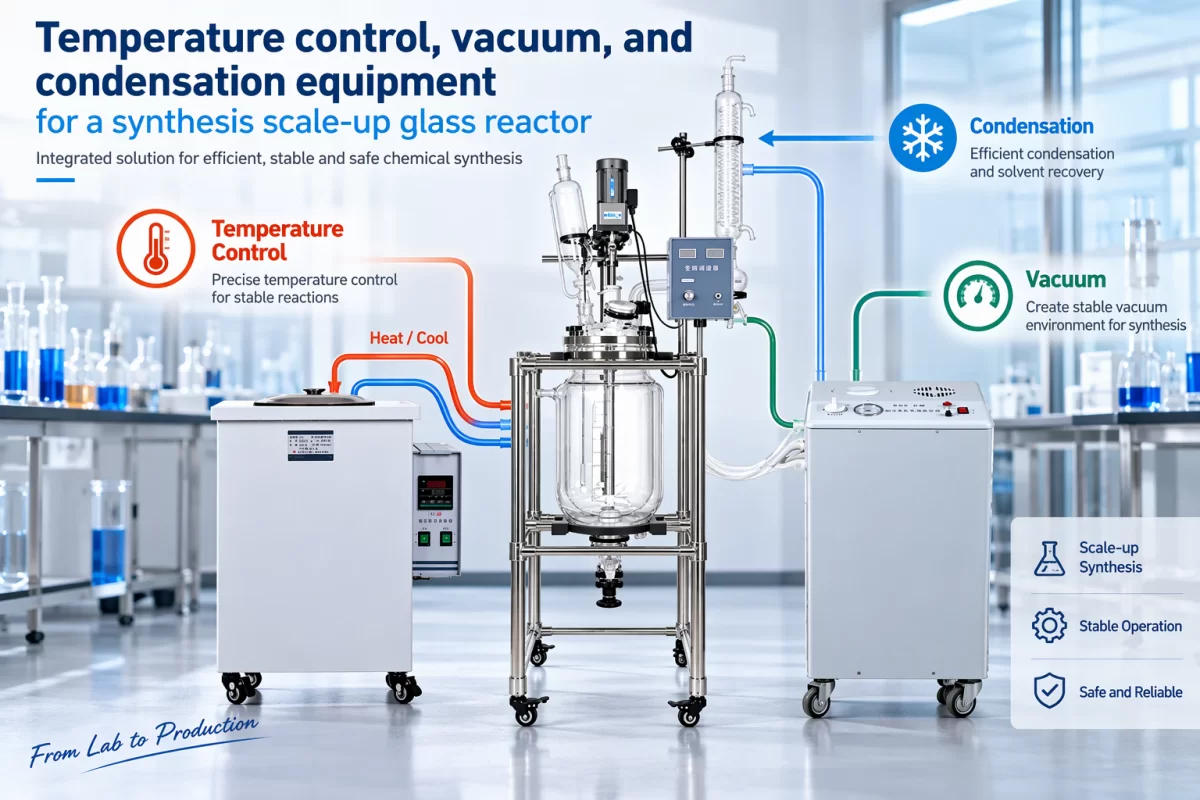
Can existing laboratory utilities reduce the purchase budget?
I would consider reusing equipment only after checking its compatibility, available duty, connections, and condition. An existing chiller or vacuum pump may reduce new purchases, but adapters, servicing, or insufficient capacity can change the economics. I would include those integration costs in the comparison.
Include installation and startup in the glass reactor system cost
Installation is more than positioning the vessel. Budget for delivery and unpacking, access to the installation area, assembly, utility connections, leak checks, commissioning, and operator familiarization. The site should provide suitable space for maintenance, charging, sampling, draining, and handling fragile components.
Electrical supply, ventilation, chemical compatibility, and site-specific hazard requirements should be addressed during selection. Where hazardous-area equipment is needed, request the documentation applicable to the exact supplied assembly rather than treating a general product description as certification.
| Budget category | Scope to request |
|---|---|
| Main reactor | Vessel, frame, agitation, seals, ports, discharge, and included glassware |
| Temperature control | Heating/cooling unit, thermal fluid, hoses, connections, and controls |
| Vacuum | Pump, vapor protection, tubing, valves, and pressure measurement |
| Condensation | Condenser, cooling supply, receiver, supports, and connections |
| Installation | Delivery, assembly, utility work, commissioning, and training |
| Ongoing use | Energy, fluids, routine servicing, seals, and replacement glassware |
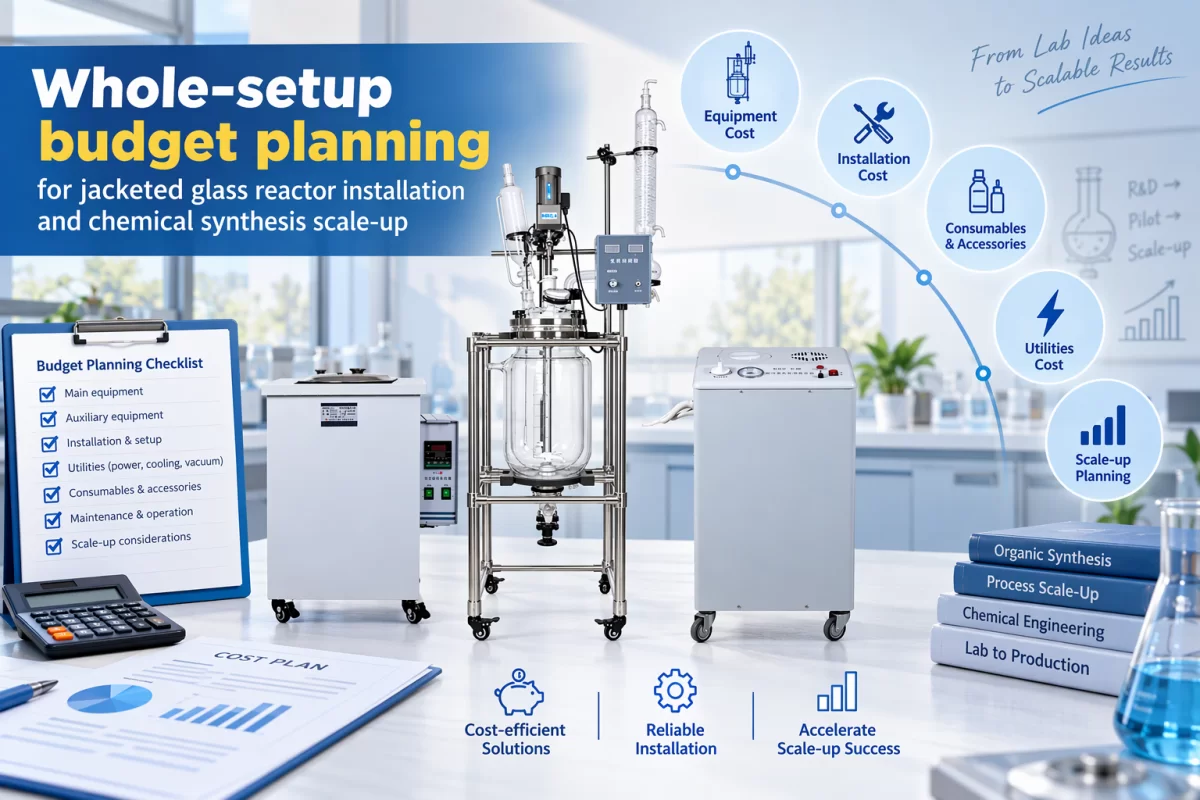
What makes two reactor quotations genuinely comparable?
I compare quotations against the same process requirements and inclusion list. Vessel capacity, accessory scope, utility duties, delivery terms, and startup services should align. I then separate optional items from essential equipment so a lower headline price does not conceal a less complete package.
Choose a cost-effective system, not just a lower-priced vessel
A cost-effective glass reactor system for chemical synthesis scale-up balances reactor suitability with thermal control, vacuum performance, condensation needs, and installation scope. The right comparison is the complete setup required for the process—not the vessel price in isolation.
To request a tailored jacketed glass reactor proposal, provide the materials and solvents, intended working batch, target temperature and pressure conditions, agitation needs, available utilities, and required accessories. Ask for an itemized quotation that distinguishes included equipment, options, and installation services. This creates a clearer basis for budgeting and selecting a configuration suited to the intended synthesis work.