Jacketed Glass Reactor · OEM Planning
OEM Glass Reactor Systems on a Budget: Prioritizing Configuration Changes
A cost-effective glass reactor system with OEM configuration options is not necessarily the system with the fewest accessories. Once a workable reactor specification has been established, the next budget decision is which requested changes deserve funding now—and which can wait without creating expensive rework.
A jacketed glass reactor can provide the platform for this staged approach. The useful question is not simply whether an option is attractive, but how a change affects existing interfaces, process performance, installation, and future expansion. Temperature limits, pressure limits, and available configurations depend on the specific model and selected assembly.
Start with a change order, not another initial equipment checklist
Initial selection establishes what a reactor must do. Budget-conscious customization begins after that baseline exists. Keep the agreed vessel model, process duties, site requirements, and operating envelope in one specification, then evaluate every proposed deviation against it. This prevents optional improvements from quietly becoming an entirely different project.
For a laboratory project, the Laboratory Jacketed Glass Reactor is a relevant starting point for discussing a model-specific OEM proposal. Describe the requested change separately from the underlying equipment: for example, an electrical adaptation, a revised connection arrangement, or a workflow improvement. Request an itemized proposal rather than assuming every proposed customization is available on every model.
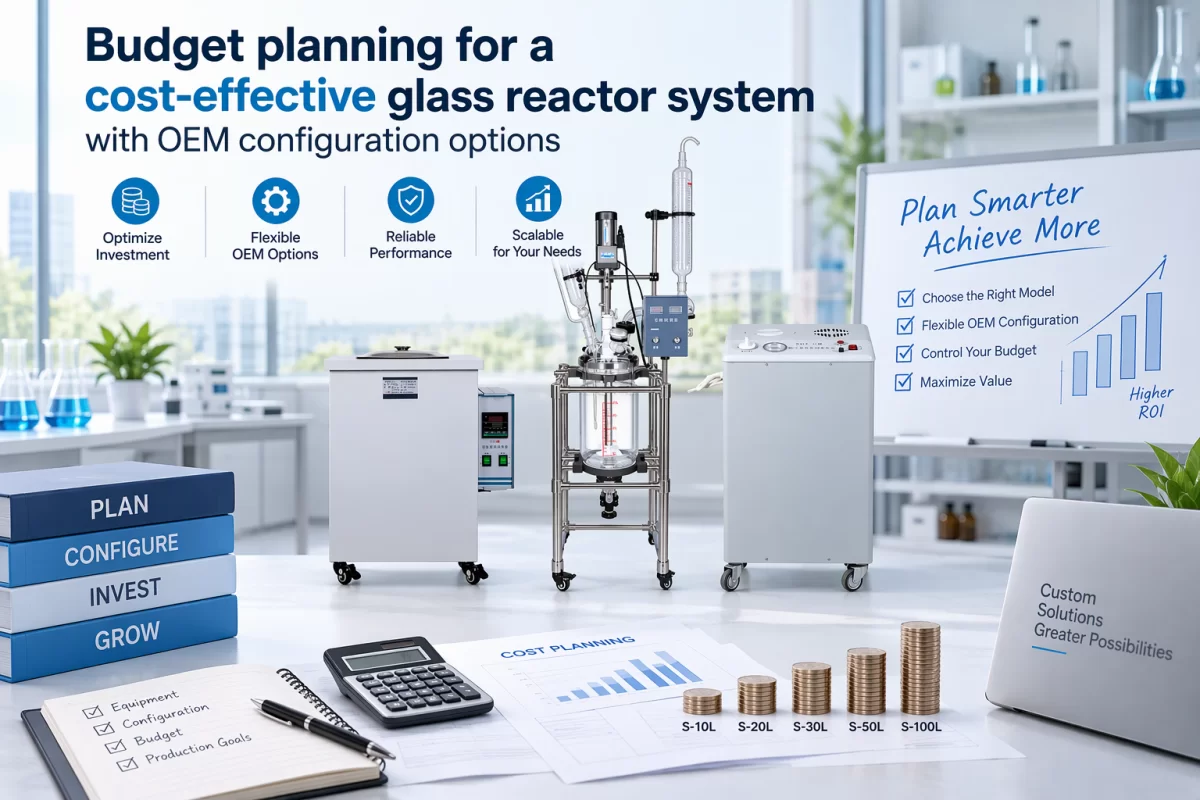
Prioritizing OEM configuration changes under a fixed budget
Resolve site compatibility and retrofit-sensitive interfaces
Review electrical supply, installation space, service access, and connections to existing equipment before committing funds to additional features. A late interface change can affect more than one component and may require a revised installation plan. The small-model documentation identifies customization to 110 V / 60 Hz for the S-1L through S-5L range; include that requirement in the quotation request when relevant to the site.
Treat proposed vessel openings, support arrangements, and discharge connections as early engineering discussions. Their feasibility and cost must be established for the chosen configuration. Preserving an existing interface may be more economical than replacing several connected items to accommodate one new feature.
Which OEM change should receive funding first when several upgrades compete?
I would first identify the change whose postponement would force the most avoidable reconstruction or prevent commissioning. After meeting applicable safety requirements, I would prioritize site and interface compatibility before spending on convenience. That order protects the usefulness of the whole system rather than improving one isolated feature.
Spend on a measured process constraint
Once compatibility is settled, focus on the limitation that affects the intended work. Describe the material, working batch size, viscosity behavior, solids content, and required heating or cooling sequence. These details are more useful than requesting the largest motor or the most elaborate control package without a process justification.
If cooling is the constraint, assess the reactor and external circulation equipment together. The low-temperature cooling liquid circulating pump page is relevant to that equipment discussion, but compatibility should be evaluated through the proposed operating conditions, connection requirements, and selected equipment specifications. A component upgrade alone does not establish the performance of the complete system.
Phase convenience and expansion changes
Additional monitoring, workflow refinements, and future expansion provisions can be considered after the main constraint is addressed. Ask whether each proposed item can be added later without changing the vessel or rebuilding the installation. If it can, deferral may preserve cash without closing off the next development stage.
For projects moving toward larger batches, the glass reactor pilot-plant overview provides a relevant next reading step. Keep expansion planning distinct from the current purchase: an anticipated future duty should not automatically justify funding every associated modification today.
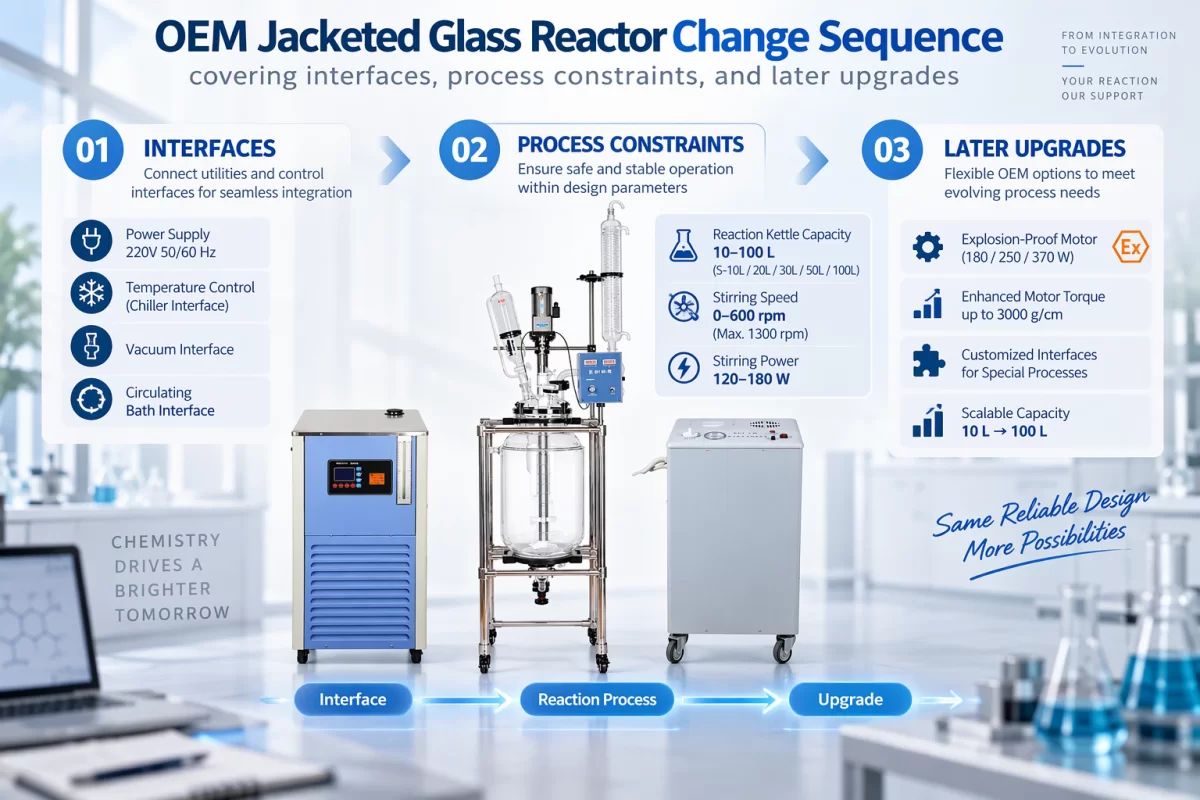
Keep model capacity separate from the upgrade decision
The documented S-series model capacities below provide a clear basis for identifying the reactor in an OEM inquiry. Vessel capacity is not a statement of recommended working fill, and a larger vessel does not by itself resolve a mixing or thermal-control limitation. Keep the model identity fixed while comparing changes so that quotations remain comparable.
| Model | Reaction kettle capacity (L) |
|---|---|
| S-1L | 1 |
| S-2L | 2 |
| S-3L | 3 |
| S-5L | 5 |
| S-10L | 10 |
| S-20L | 20 |
| S-30L | 30 |
| S-50L | 50 |
| S-100L | 100 |
Does increasing vessel capacity offer better value than changing the configuration?
I would consider a capacity increase only when the required batch size supports it. If the existing model accommodates the intended work, a targeted interface or process improvement may be the more focused investment. I would compare the complete installation consequences, not just the vessel size.
Use a reference price without confusing it with a configured quote
A budget needs a starting figure, but that figure should not be treated as the cost of a particular capacity, operating duty, or OEM package.
Our company’s reference price
US$1,699
This is a planning reference, not a quotation for a specific S-series model or a fully configured system. The actual quotation depends on the selected configuration and the outcome of the inquiry.
Ask for a baseline quotation and separately priced changes. For each change, request its scope, any dependent modifications, installation implications, and the proposed acceptance checks. Also establish what is included in the supply and what remains the purchaser’s responsibility. This makes a seemingly inexpensive option easier to compare with a more complete proposal.
Maintain a short change register with three decisions: approve now, retain for a later phase, or remove. Record the process reason for each decision. Avoid approving several interacting changes solely because each appears affordable in isolation; their combined effect may alter the scope of commissioning.
Can phased customization reduce spending without limiting future development?
I would use phased customization when later additions have a defined installation path. The important step is to agree on interfaces and dependencies now, even if the accessory purchase comes later. Deferral is less useful when it leaves the future change requiring a replacement vessel or extensive rebuilding.
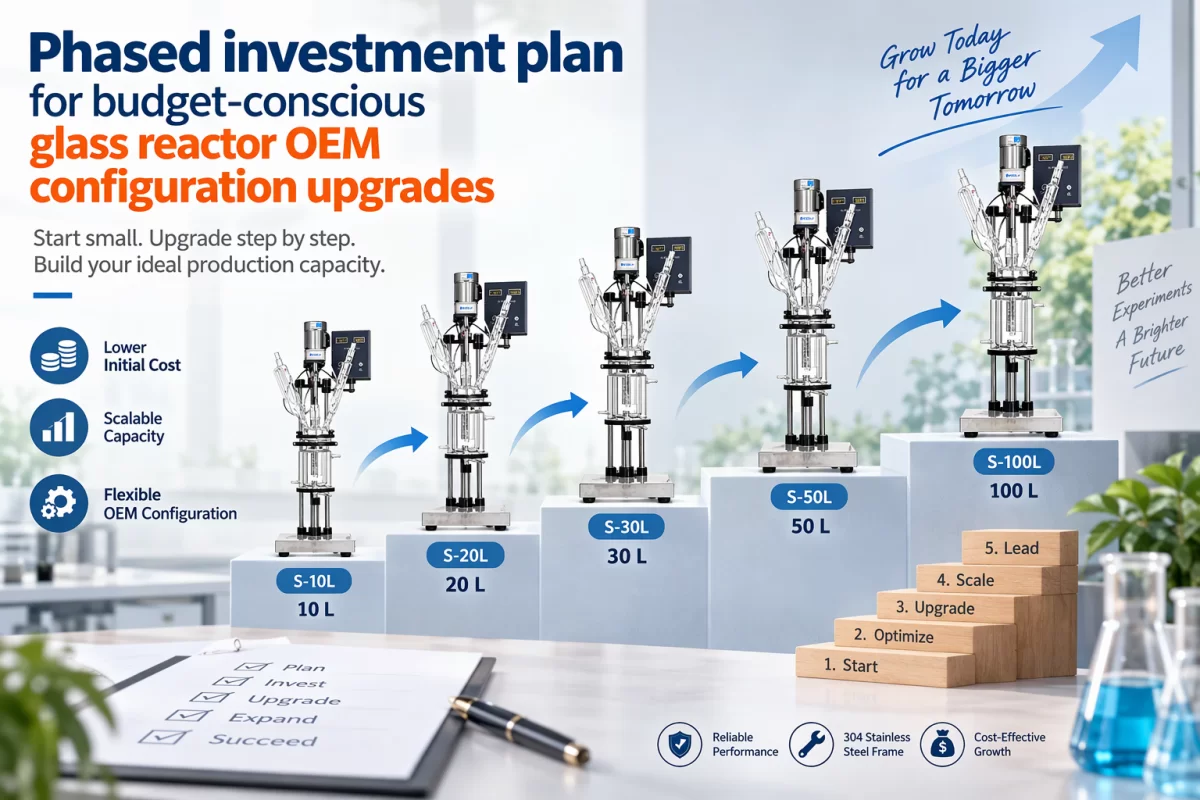
Prepare an inquiry that supports a useful OEM proposal
A focused inquiry helps connect the customization budget to a real laboratory task. Provide the following information rather than requesting a generic “fully customized” system:
- Baseline: selected model, intended working batch, and current configuration.
- Process: material characteristics, target temperature and pressure conditions, and operating sequence.
- Site: available electrical supply, installation space, and existing equipment interfaces.
- Change requests: the reason for each modification and its priority within the budget.
- Delivery expectations: required scope of supply, installation responsibilities, and acceptance criteria.
Target operating conditions are requirements for evaluating a proposal, not assumed ratings of the equipment. The selected model and assembly must support the intended temperature, pressure, and configuration before the project proceeds.
Build a cost-effective OEM reactor system one justified change at a time
A cost-effective glass reactor system with OEM configuration options comes from a disciplined sequence of changes: protect compatibility, address the demonstrated process constraint, and phase improvements that can genuinely wait. Keep capacity decisions separate from accessory decisions, and compare itemized proposals against the same baseline.
For a jacketed glass reactor proposal, submit the intended model, materials, working batch, target operating conditions, and ranked configuration requests. That information supports a model-specific solution and quotation while keeping the customization budget focused on useful, defensible improvements.