OEM Reactor Systems for Biotech and Pharma Process Development
Selecting OEM laboratory reactor systems for biotech and pharma process development starts with the experiment, not simply the vessel size. A jacketed glass reactor can be considered for laboratory workflows that require a stirred vessel and an external thermal-control interface, provided the selected model and configuration match the materials and operating conditions.
Where jacketed glass reactors fit in process development
Biotech and pharmaceutical development includes more than cell culture. Teams may investigate chemical reaction steps, solution preparation, solvent-based processing, precipitation, or crystallization as part of a broader development program. A jacketed glass vessel is a candidate for these non-sterile laboratory tasks when its construction, accessories, and operating limits suit the proposed procedure.
The jacket provides an interface for circulating a heat-transfer fluid around the vessel. However, the complete thermal setup must be evaluated as a system: the reactor, circulating equipment, fluid, connections, and process load all matter. No single temperature or pressure rating should be assumed across different models or configurations.
For the core vessel category, review the Laboratory Jacketed Glass Reactor when preparing an equipment inquiry. Define the intended operation before deciding which accessories belong in the package.
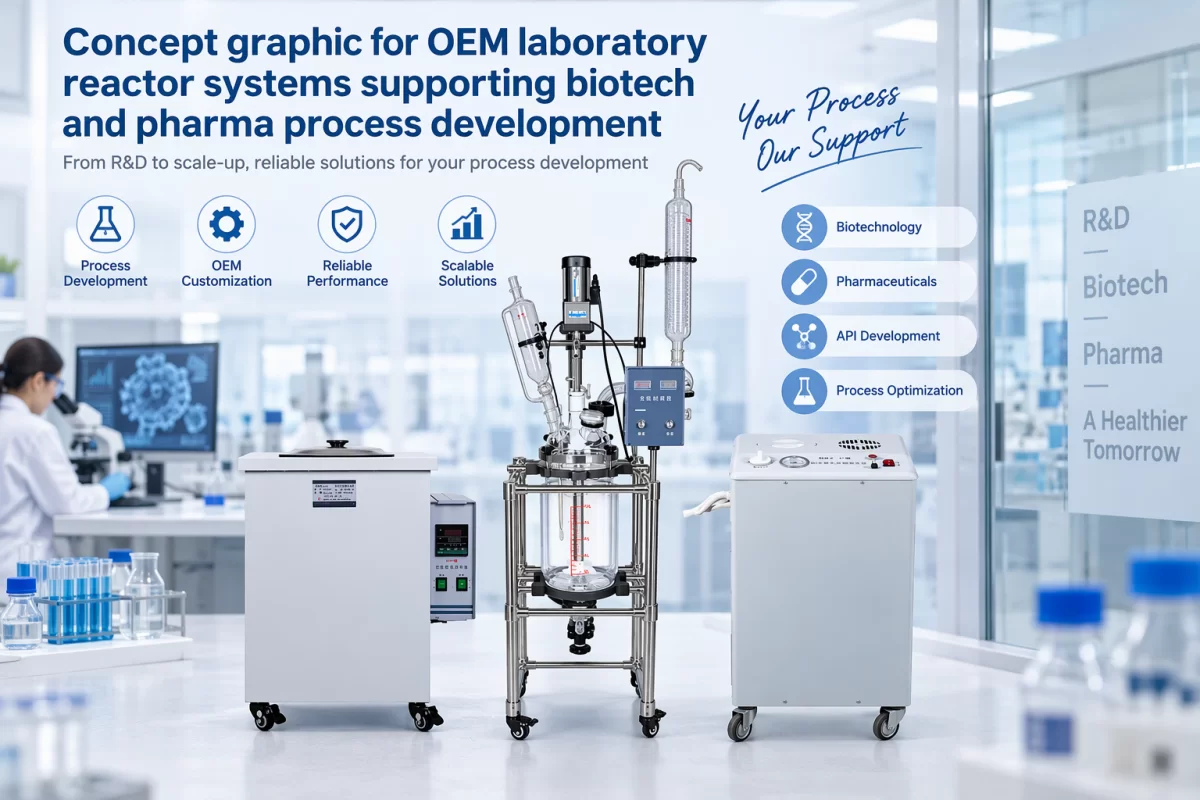
Laboratory reactor capacities for an OEM development plan
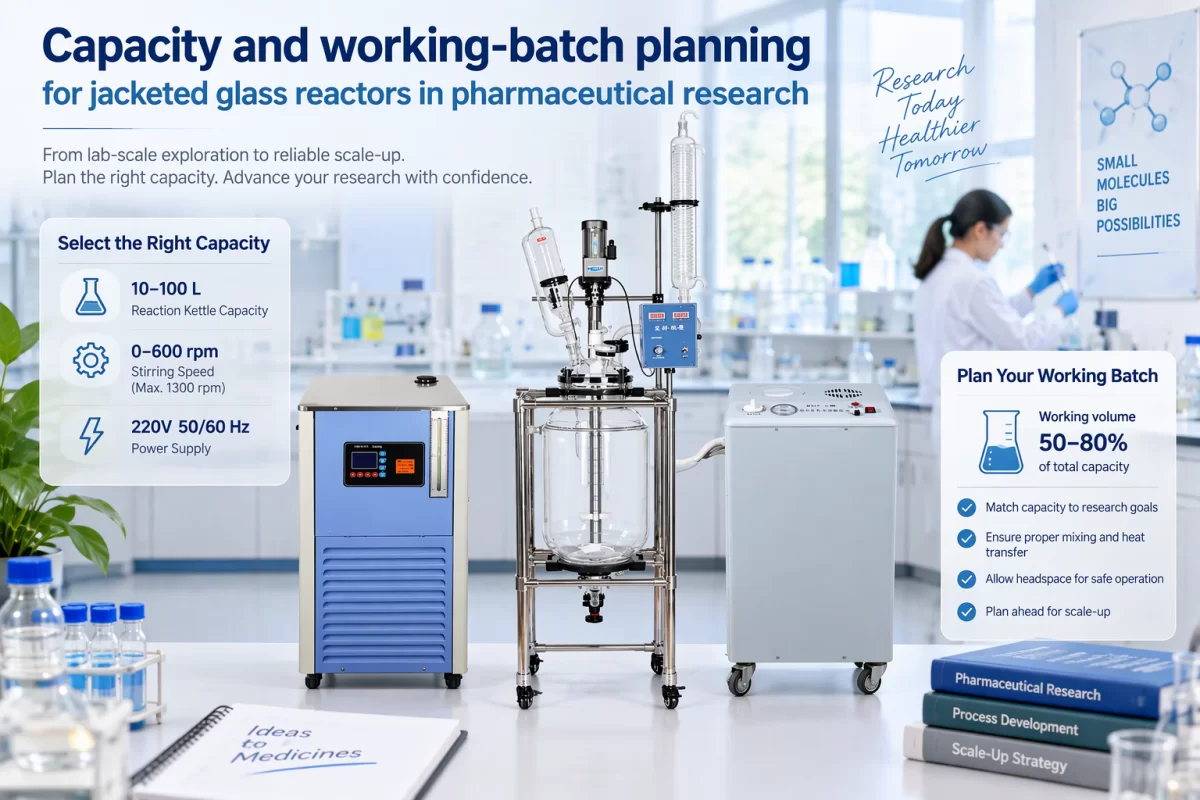
The S-series model options below provide a starting point for comparing vessel capacities. Reaction kettle capacity is not the same as a recommended working batch volume. The usable charge depends on the process, including headspace requirements, additions, foaming, and the behavior of the mixture during stirring.
| Model | Reaction kettle capacity (L) |
|---|---|
| S-1L | 1 |
| S-2L | 2 |
| S-3L | 3 |
| S-5L | 5 |
| S-10L | 10 |
| S-20L | 20 |
| S-30L | 30 |
| S-50L | 50 |
| S-100L | 100 |
These values describe reaction kettle capacity only. Working volume, temperature and pressure limits, and accessory selection depend on the specific model and configuration.
For early screening, a smaller vessel may help limit material consumption. Larger vessels may be considered when the development program needs more material for sampling or subsequent processing. Moving between capacities still requires a fresh review of mixing and heat transfer; increasing vessel size does not by itself establish equivalent process behavior.
Define the OEM reactor system beyond the vessel
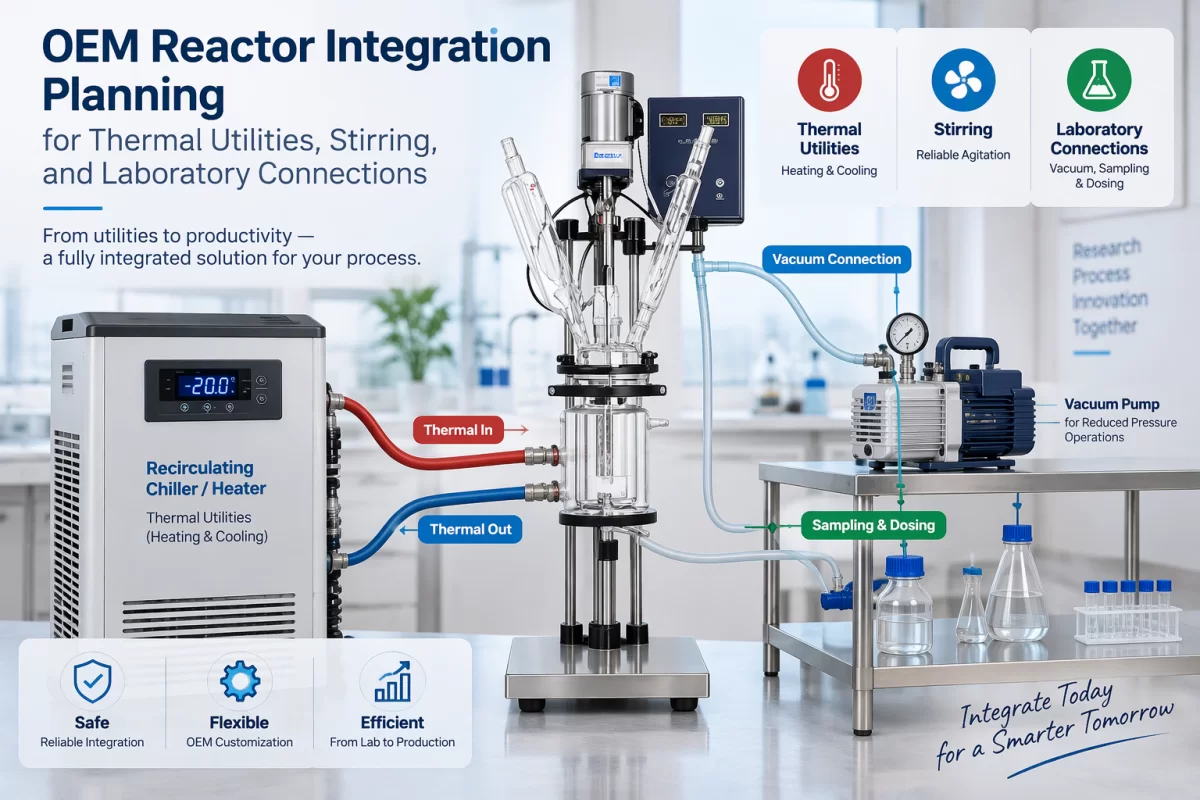
An OEM inquiry is more useful when it describes the interfaces and responsibilities around the reactor. Rather than assuming that every accessory or control function is included, identify the requirements that the proposed package must address.
- Process materials: Specify solvents, reagents, solids, and cleaning agents so that wetted components and seals can be assessed for compatibility.
- Mixing duty: Describe viscosity, suspension requirements, and expected changes during the experiment. Agitator selection should reflect the actual mixture.
- Thermal duty: Provide target temperatures, heating or cooling steps, and expected process heat loads. The required operating envelope must match the selected equipment.
- Connections and utilities: Identify available electrical service, thermal-fluid connections, laboratory space, and access requirements for charging, sampling, and discharge.
- Controls and records: State which measurements, alarms, and data outputs the development team needs. Treat these as configuration requirements, not assumed standard features.
If cooling is part of the workflow, the low-temperature cooling liquid circulating pump category is relevant to system planning. Compatibility must be assessed against the reactor jacket, heat-transfer fluid, connection requirements, and thermal load rather than the equipment name alone.
Where the experiment centers on crystal formation, also consider the crystallization reactor category. Define cooling profiles, solids handling, and sampling objectives before comparing equipment arrangements; the appropriate choice depends on the intended development procedure.
Reference pricing and a configuration-based quotation
Budget planning should distinguish a reference price from a quotation for a complete system. Vessel size, selected accessories, controls, and integration scope can change what is included in the final offer.
Our company’s reference price
US$1,699
This is a company reference price, not a fixed price for every S-series model or a complete OEM package. The actual quotation depends on the configuration and inquiry result.
Build the reactor specification around the development process
OEM laboratory reactor systems for biotech and pharma process development should be selected around practical experimental needs. The S-series capacity options offer a starting point for jacketed glass reactor evaluation, while the complete configuration must address material compatibility, mixing, thermal control, and laboratory integration.
To request a suitable proposal, provide the intended materials, working batch volume, target temperature and pressure conditions, and accessory requirements. Keep non-sterile process-development duties distinct from sterile biological manufacturing, and compare quotations against a clearly defined system scope.